 ™
™How to Handle an L.A. Traffic Ticket Before the Due Date
The due date is a deadline to act, not a court date, and you can see a judge without depositing bail.
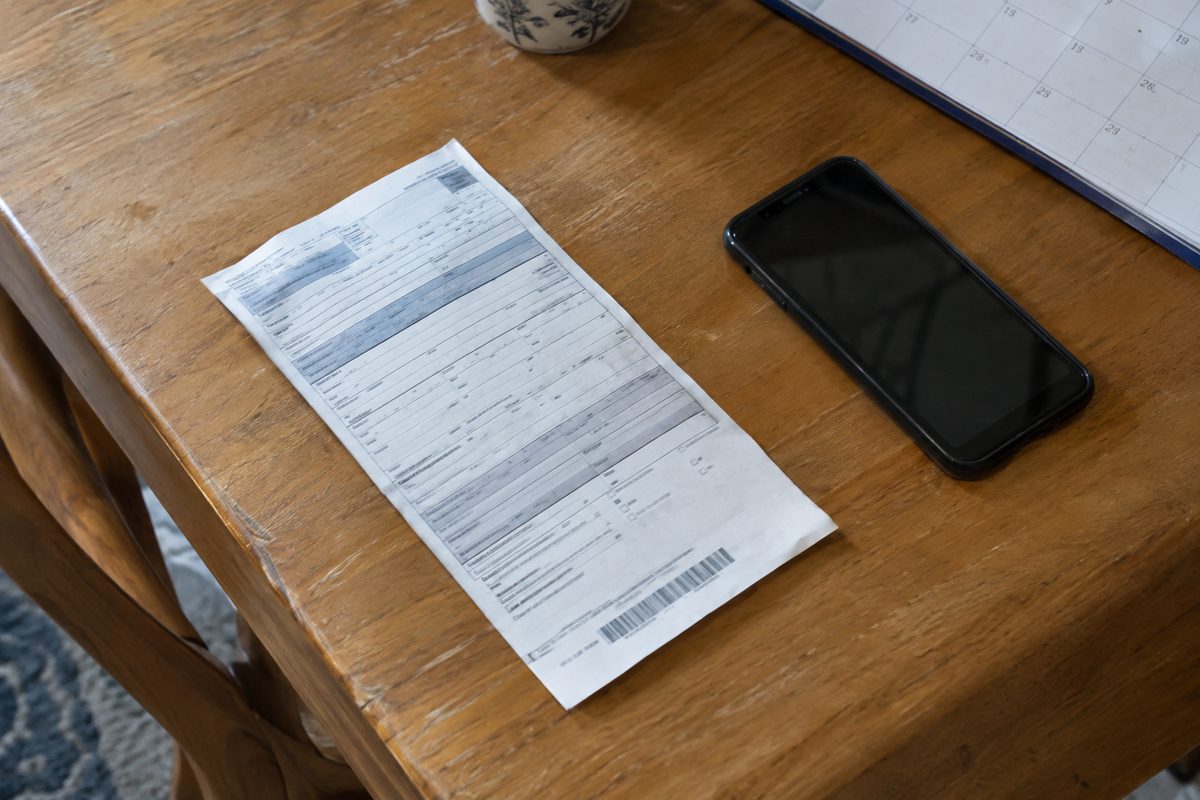
The date stamped on the notice is the one almost everybody misreads. It isn't the day you stand in front of a judge; it's the day by which you have to have done something: paid, asked for more time, signed up for traffic school, or asked for a hearing. The Superior Court of Los Angeles County prints the warning under the word IMPORTANT on “I Got a Ticket,” the one-page notice marked for mandatory use: “It is not a date for you to appear before the judge.” What a missed due date adds isn't more fine. By that notice's own account it can cost you your license and a late penalty on top.
You're wondering whether any of this can be done without taking a morning off. Since Aug. 17 it mostly can. On that date the court moved its traffic self-service into CourtHelp, the chat-style assistant at LACourt.ca.gov/help, and the court’s own announcement describes the point of it plainly: “the Court is meeting people where they are,” said Presiding Judge Sergio C. Tapia II. You type the words “traffic ticket,” then a citation number or a driver's license number. If the citation hasn't reached the court yet, the tool says so and offers to tell you when it does.
What the court will do for you online
The release lists nine actions CourtHelp can complete, and the menu you get is filtered to the ones your citation actually qualifies for: pay and close the ticket, enroll in a monthly payment plan, pay an installment on a plan you already have, request traffic school, make a partial payment, ask for more time to respond, ask for more time to pay, ask for more time to finish traffic school, and reserve an arraignment date. When an option is missing, the tool is supposed to tell you why and name the alternative.
Two things worth noticing about that list. A request for an ability-to-pay determination isn't on it, and neither is a trial by written declaration — both still run through the routes further down this page. And the court treats a due-date extension and a payment extension as separate requests on separate clocks; the printed notice offers a one-time 60-day extension to appear or pay, and a separate one-time 60-day extension exists for finishing traffic school.
Why the number is so much bigger than the fine
The figure in the “bail amount” box bears almost no relationship to the violation's base fine, and the court publishes the arithmetic that explains it. Its traffic fee table sets the penalty assessment at $29 for every $10 of fine or fraction of $10, and works the example itself: a $25 fine carries $87 in penalty assessment, because $25 is three fractions of $10 and three times $29 is $87.
Stacked on top of that, from the same table: a 20 percent criminal surcharge on the base fine, a $40 court security fee per bailable convicted violation, a $35 criminal conviction assessment for an infraction, and $4 for emergency medical air transportation. Run the table's own $25 example all the way down and the arithmetic — ours, from its posted figures, and not a number the court quotes for any particular violation — lands near $196 before anything specific to your case. A violation whose base fine sounds like pocket money arrives as a demand for a couple of hundred dollars, and the table is where that happens.
Traffic school: $64, and 64 days
Traffic school is not a discount. You pay the full bail amount on the notice plus a non-refundable processing fee of $64, and what the money buys is your record rather than your wallet: completing a course from a DMV-licensed school removes the point and can mask the violation from public view on your driving record. The court's own line on the clock is exact: “You will have 64 days to complete traffic school.”
Five conditions all have to be true, and the court lists them on its request page: you haven't attended traffic school for a ticket issued within 18 months of this one, measured violation date to violation date; you hold a valid driver's license; if you were speeding, you were not more than 25 mph over the limit; the offense is a moving violation carrying only one point; and you weren't driving a commercial vehicle or carrying hazardous material. The one-point test is what quietly excludes the big ones — driving on a suspended license, hit-and-run, speed over 100 mph, reckless driving and speed contests all carry more than a point.
You can request it online, by mail, by phone, at a clerk's window, or at an arraignment. What you cannot do is get it through the hardship route: the court's ability-to-pay page says traffic school isn't available through that program.
Contesting it, and the bail that comes first
Here is the part the notice buries in a cross-reference. California Rules of Court, rule 4.105 requires courts to let a defendant who got a written notice to appear be arraigned and tried without depositing bail. Three exceptions sit under it: a statutory procedure that itself demands a deposit, a defendant who won’t sign a written promise to appear, and a judge who finds on the record that this defendant is unlikely to come back. Otherwise, scheduling an arraignment and asking for a court trial costs you time, not a deposit. Both you and the officer show up; the trial itself gets scheduled at the arraignment.
A trial by written declaration is the exception to that rule, and it's the expensive-feeling one: you must post the full bail amount with the court before anything happens. You and the officer each write out your account on forms TR-205 and TR-200, the court sets a due date for your declaration, and a ruling arrives by mail. If it goes against you, the notice of ruling carries the fine and its due date, and the conviction goes on your record.
Losing a declaration trial isn't the end. You can ask for a new trial — a trial de novo, heard from scratch — if form TR-220 reaches the court within 20 calendar days of the date on the clerk's certificate of mailing, the TR-215. The 20 days run from the mailing, not from the day the envelope reached you, which is the whole reason to keep the certificate with its date showing.
If the money is the problem
Three separate things exist here and they are not interchangeable. A Traffic Payment Plan, under Vehicle Code section 40510.5, lets the clerk put you on installments without a judge: a minimum of 10 percent of the outstanding fines and fees down at sign-up, then monthly payments, with a $5 online transaction fee that the courthouse counter doesn't charge. A plan spreads the debt. It doesn't reduce it.
An ability-to-pay determination can reduce it. Since June 6, 2024, Los Angeles County citations run through the statewide tool at MyCitations.courts.ca.gov, and the court announced four kinds of relief you can ask for there: suspension of the fine in whole or part, a payment plan, a change to a plan you're already on, or community service instead of money. The same request can be made on paper with form TR-320 or in person by appointment.
The court names three ways to qualify: you receive public benefits, among them Medi-Cal, CalFresh, CalWORKs or Tribal TANF, and SSI; your income is under 250 percent of the federal poverty level; or you describe a hardship that keeps you from paying both your household's basic needs and the ticket. The dollar figures printed beside that second test are 2024's — $37,650 for one person, $78,000 for a household of four — so treat them as the shape of the line rather than this year's line, and file anyway if you're close.
The paper form is where the useful detail hides. Form TRAF 051 doubles as the ability-to-pay petition and the petition to reduce or vacate a civil assessment, and it says you may ask for an ability-to-pay determination at sentencing, while on an installment plan, while doing community service, or while the judgment is simply unpaid — “including when your case is delinquent or in collections.” Being late does not close this door. The order section on page two is a list of what a judge can check off, and one of the boxes is the release of a driver's license hold on that citation.
What the form says / what it means
Says: “a $300 civil assessment pursuant to Penal Code section 1214.1.” Means: up to $100. That sentence is on the court's “I Got a Ticket” notice, which carries a revision date of October 2019, and the $300 appears again on the traffic fee table, revised December 2021. Both predate Assembly Bill 199, which cut the maximum civil assessment from up to $300 to up to $100 effective July 1, 2022, and the Judicial Council's guidance to courts since then has been explicit: “Courts should change the notices to reflect the new amount is up to $100.” We looked for a page where this court states the current figure and didn't find one. If a notice quotes you $300, the ceiling in the statute is $100.
Says: “failure to appear.” Means: failure to do anything, including pay. The statute covers both, and so do the consequences the court lists on its page about missing a date: a bench warrant on violations that require an appearance, referral to the court's collection vendor, and a DMV suspension you are responsible for checking before you drive again. The court says it will review your ability to pay if the suspension came from an unpaid fine.
Says: “Petition.” Means: a deadline of its own, and no pause button. TRAF 051 gives you 20 calendar days from the action date on the court's notification to ask that an assessment be reduced or vacated, and warns that filing it “does not stay any order requiring payment of bail, fines, penalties” or anything else you owe, unless a judge says so. Allow up to four weeks for an answer. Send copies, not originals: the form says the court discards the supporting documents after a ruling unless you enclose a stamped, self-addressed envelope.
The three that matter
Of everything above, three provisions do most of the work, and none of them is the one people reach for first.
1. You can see a judge for free. Rule 4.105 means the choice isn't pay-or-fight-with-a-deposit. An arraignment costs nothing to schedule, and at it you can ask for an ability-to-pay determination, community service, or installments — the printed notice lists all three as things to request in court.
2. The 20-day windows are the real deadlines. Twenty calendar days to petition a civil assessment, from the action date on the notification. Twenty calendar days to demand a new trial after losing a written-declaration trial, from the date on the clerk's certificate of mailing. Both run from a mailing date printed on a piece of paper most people throw away.
3. A correctable violation can close for $25. Under Vehicle Code section 40611 the proof-of-correction fee is $25 per correctable violation, and the notice asks for $25 for each violation corrected. You get the correction signed off at any law enforcement office during business hours, then mail the signed proof with the payment coupon and a check payable to “LA Superior Court.” If your notice says “see below” in the bail amount box, that route is closed and an appearance is required.
Bring these
- The citation number, or your driver's license number. Either one is enough to find the case in CourtHelp, and the tool will list every citation attached to the number you give it.
- The notice itself, with the due date and the bail amount visible. The “see below” marking in the bail box is what decides whether you can resolve the ticket without appearing at all.
- Any envelope the court mailed you, with its date. Two of the three deadlines on this page run from a mailing date, not from the day you opened it.
- Proof of benefits or income, if you're asking for a reduction: the form names benefits letters, recent statements for fixed monthly payments like rent and utilities, pay stubs, disability or retirement income, bank statements, W-2s and tax returns.
- A stamped, self-addressed envelope, if those documents are ones you need back.
- The date you last did traffic school, if you ever have. The 18-month look-back is measured violation date to violation date, not by when you took the course.
Start here
Find the due date on the notice and count the days left. If there are more than a few, open CourtHelp and read the menu it builds for your citation — it is the only place that will tell you which of the nine actions your particular ticket qualifies for. If the date has already passed, the request to make is the extension or the ability-to-pay determination, in that order, and neither one is foreclosed by being late. If a civil assessment has already landed, the clock to watch is 20 days from the action date on that notification, and the form is TRAF 051.
If your car is gone rather than ticketed, none of this applies: a tow runs on different sections and much shorter clocks, and that process is laid out here. A parking citation is a different system again, run by the city rather than the court, and it's here.
Comments 0