 ™
Tax Credits Doubled Their L.A. Shoot Days. Filming Fell Anyway.
FilmLA counted 4,171 on-location shoot days from July through September, down 4.8%, as work outside the state program shrank.
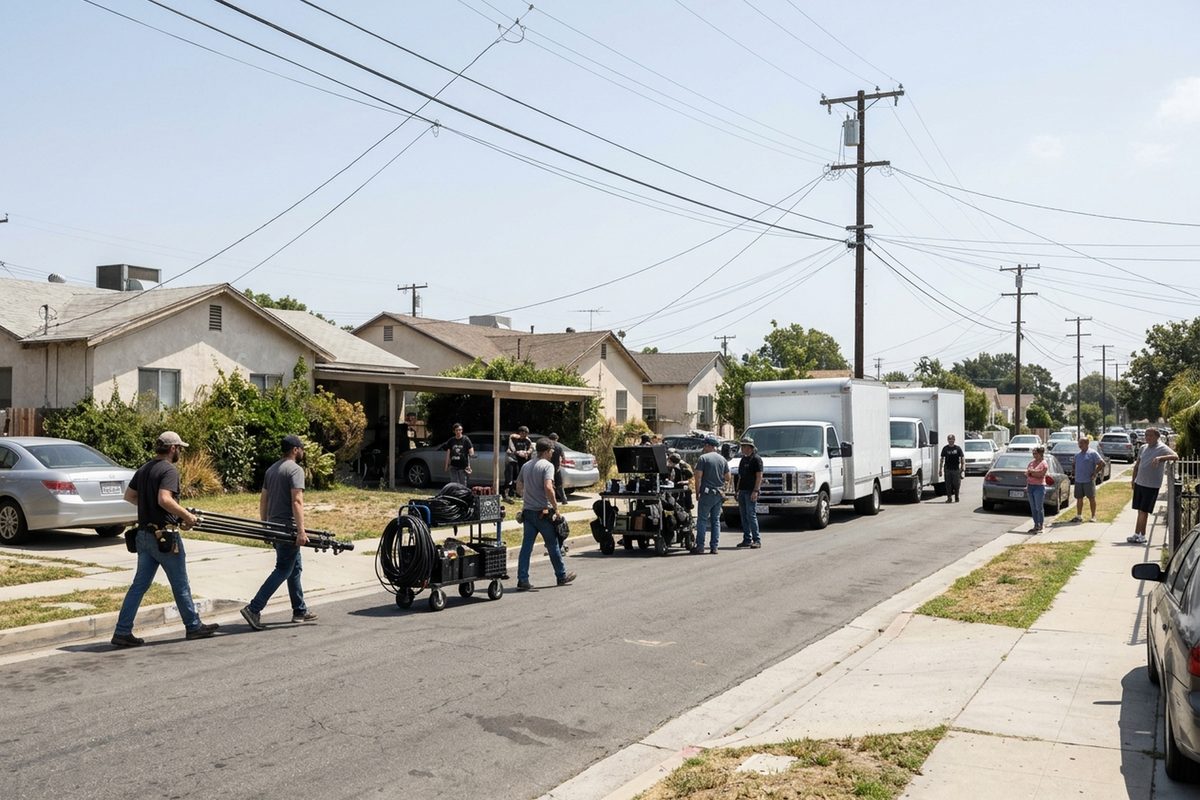
Elwood Reid moved Tracker, the CBS drama he runs, from British Columbia to Los Angeles for its fourth season, and he says plainly why. "California's incentive is what made it possible to bring Tracker here," he said in FilmLA's quarterly report, adding that a 22-episode season "brings a lot of steady jobs."
Shows like his did their part, but the overall number still went down. Projects in California's film and TV tax credit program logged 505 on-location shoot days in Greater Los Angeles from July through September, up from 242 a year earlier, FilmLA said Wednesday. Total filming still fell 4.8%, to 4,171 days, Deadline reported.
Subtract the subsidized work and the drop is steeper. Everything else fell from about 4,140 days to about 3,670, a loss of roughly 470 days in one quarter. "Overall production remains far below where Los Angeles needs it to be, and crews and businesses across the region are feeling it," FilmLA CEO Denise Gutches said.
The Hollywood Reporter said it was the city's second straight quarterly decline, with the total 36% below the five-year average. That's even though a record number of titles are getting credits: 214 projects since the program grew in July 2025, according to the California Film Commission.
The losses landed where the credit doesn't reach. Commercials can't qualify for the credit at all, and they fell 15.9% to 562 days, more than 41% under their five-year average, the Reporter noted. TV dramas fell 9.4% to 494 days, even though subsidized drama days more than doubled. Comedy jumped 143% to 192 days, but Deadline pointed out that a lot of comedy shoots on soundstages, which FilmLA's location count leaves out.
So what's City Hall's plan? Mayor Karen Bass, in a statement in FilmLA's report, pointed to "encouraging signs of progress" and said "we must do more." She called for an uncapped state credit that covers more kinds of productions and for the country's first federal film and TV tax credit. She also promised her administration would keep "cutting red tape, lowering filming costs."
Two of those three asks are decisions for Sacramento and Congress. Online content, including vertical videos and micro-dramas, rose 16.3% to 556 days, which FilmLA ties to a shift toward new formats. The one local tool FilmLA points to is a low-impact permit pilot, launched with the city in April, that gives those small shoots a cheaper route to a permit.
Sacramento hasn't stood still. Gov. Gavin Newsom signed two more bills in September, FilmLA said: SB 186 expands refundability so the credits are worth more and, from 2027, keeps some indie productions out from under a temporary cap on business credits, while AB 2319 sets up a separate credit just for post-production, a first for California. Then on Oct. 7, the Film Commission picked 35 more films for credits. Twenty-eight are independents, and together the batch is projected to bring 1,049 days of filming to the state.
Those films have 180 days to start, which means early April. Gutches expects the credit's impact to keep building. Until those cameras roll, the number crews and caterers depend on is the one that fell.
Source: Deadline, retrieved October 22, 2026. Other sources: filmla.com, The Hollywood Reporter.
Comments 0