 ™
Self-Flying Cargo Plane Startup Reliable Robotics Tops $1 Billion Valuation
The Mountain View company raised $115 million, but expects FAA approval of its first autopilot system in 18 to 24 months.
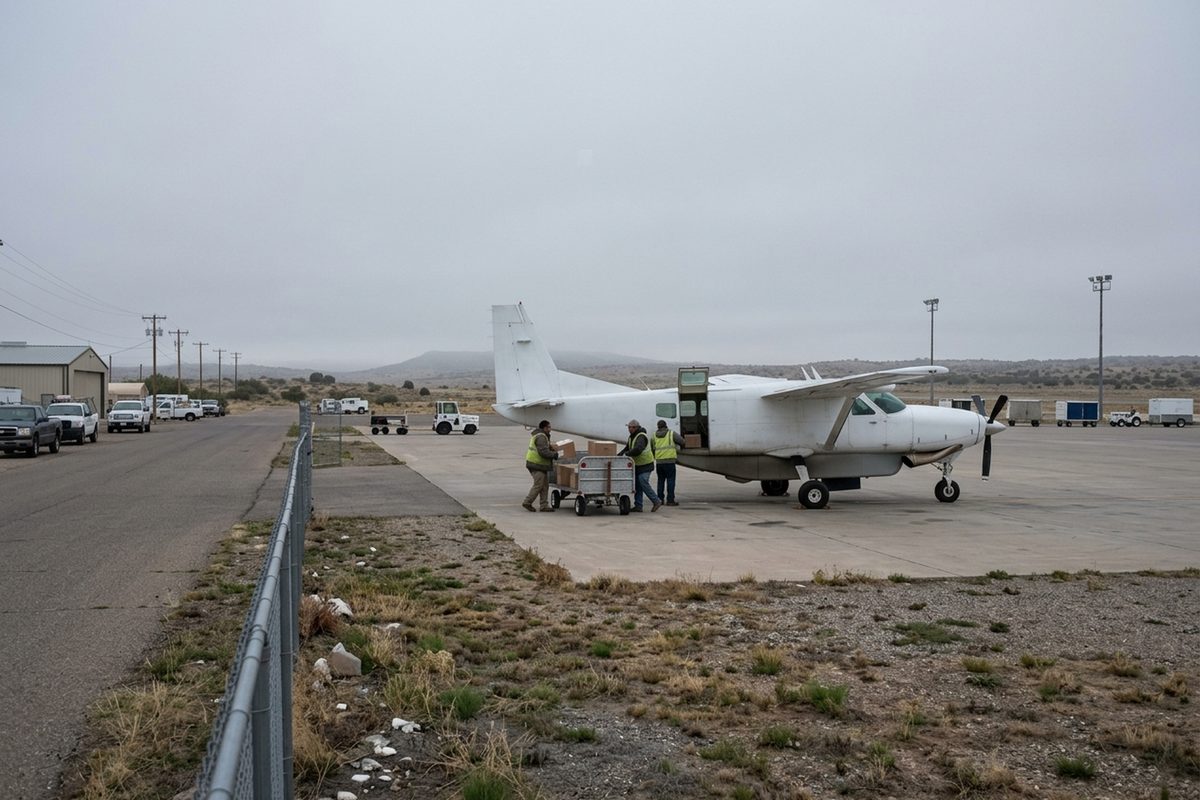
A Mountain View startup wants software to start, taxi, take off and land a Cessna cargo plane while the pilot just works a touchscreen. Now it has $115 million more to get there.
That new money pushes Reliable Robotics past a $1 billion valuation, TechCrunch reported Tuesday. In its own announcement, the company said it grew a Series D it had already announced at $160 million because more investors wanted in. What the money can't buy is the thing the company needs most: a yes from the Federal Aviation Administration.
It actually needs four of them, and the reason is how the FAA works. The agency approves equipment, and under a separate set of rules it approves the airline that flies it. So Reliable is chasing sign-offs on the autopilot, a setup that moves the pilot to the ground, a collision-avoidance radar and its own cargo carrier, Reliable Airlines.
That last one is already in the air. Based in Albuquerque, it flies freight six days a week on six Cessna Caravans, TechCrunch reported. The company says a spot in the FAA's Advanced Air Mobility Integration Pilot Program lets it run pre-certification flights to small and rural towns in New Mexico and Colorado.
The approval that may come first isn't the autopilot at all. Reliable built the radar in-house after it couldn't get established suppliers to take the job, according to TechCrunch. Where older radars sweep the sky with a moving antenna, co-founder and CEO Robert Rose says this one has no moving parts, sees farther and sharper, and costs less to buy and keep running. “This is of great interest to operators these days, given the collisions that we’ve had recently in commercial aviation,” he told TechCrunch. He expects it certified by the end of 2027.
The headline product runs on a longer clock. Rose, who used to run flight software at SpaceX, told TechCrunch he expects the FAA to certify continuous autopilot engagement, the touchscreen system, in 18 to 24 months. Getting the pilot out of the plane and into a ground-control station is at least three years away, he said. “Every day, we inch closer and closer,” Rose told TechCrunch.
Until then, the cash buys runway. Not all of the $115 million is investor money: Nimble Partners led $90 million in equity, and the other $25 million is a loan from Silicon Valley Bank, bringing the round to $275 million. Reliable says it'll spend it on more aircraft, bigger production facilities and more engineers, and it's opening offices in Seattle and San Diego, with Seattle as the home of its radar work. The team already tops 250 people, according to the company.
The company also pitches the system for military use and says it holds contracts with several branches of the U.S. armed forces.
The investors are betting the first approval opens the gate. “Once they get the first one approved, then everyone will realize this is going to be the path for the industry,” Nimble Partners founder John Burbank told TechCrunch. By Rose’s own count, that first approval could be as much as two years out.
Source: TechCrunch, retrieved October 20, 2026. Other sources: financialcontent.com.
Comments 0