 ™
More Than 20,000 Graffiti Removal Requests Are Still Open in L.A.
City 311 records count 192,293 graffiti removal cases filed this year, and the median closed case took zero days to close.
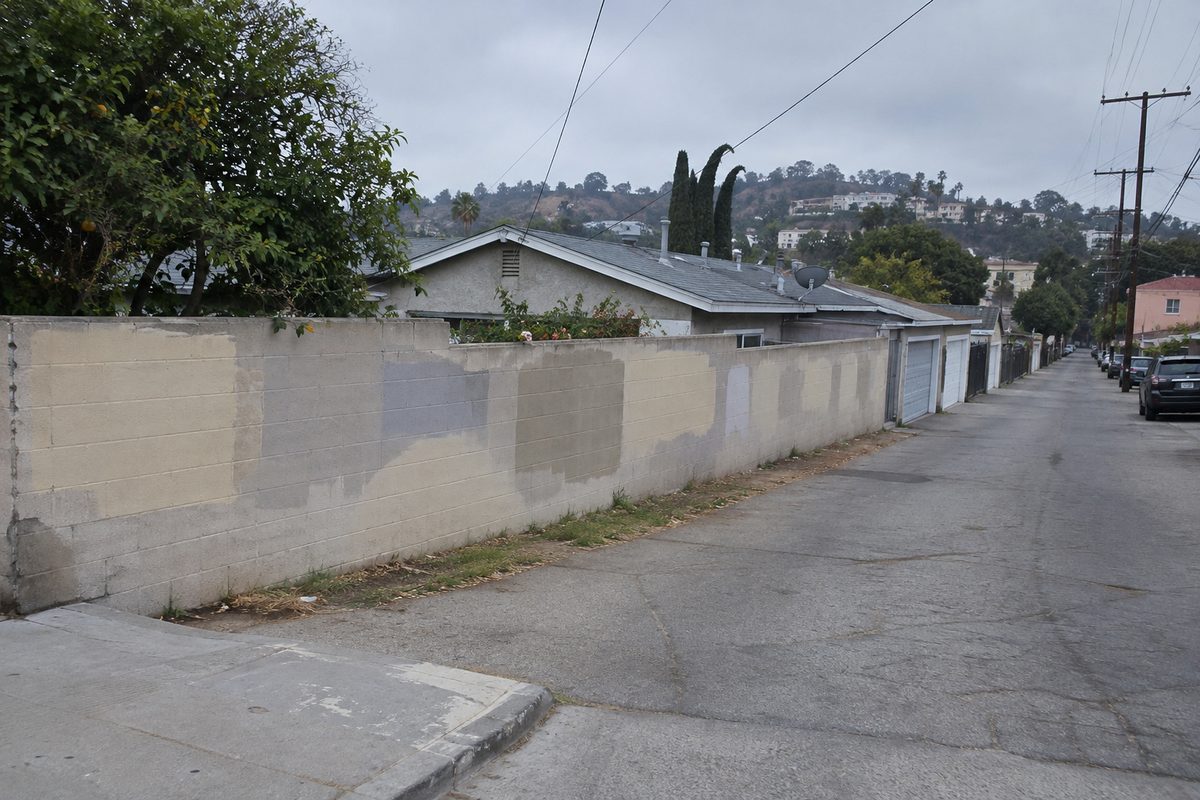
Somebody in Los Angeles asks the city to clean up graffiti about 590 times a day.
That's the pace in the MyLA311 Cases 2026 records published by the City of Los Angeles Information Technology Agency, which count 192,293 graffiti removal cases filed from Jan. 1 through Nov. 22. Most close fast: the agency's records show 171,577 closed, with a median of zero days to close. But 20,528 are still open in the same records, more than one in 10.
A request starts with a report. A resident spots a tag on a wall, a curb or a light pole and reports it on the MyLA311 website, the MyLA311 app or by dialing 311. The phone line is staffed 7 a.m. to 7 p.m. Monday through Friday and 8 a.m. to 4:45 p.m. on weekends and holidays, according to the Office of Community Beautification, which runs graffiti removal for the city.
The people who show up aren't city crews, exactly. The office contracts with community-based nonprofits spread across the city, and their workers include people putting in court-ordered community service hours, supervised by the programs' permanent staff.
The fix depends on the surface. Painted walls get fresh paint, color-matched as closely as the crew can manage. Bare concrete, like curbs, sidewalks and cinder-block walls, gets sand or water blasting. On a light pole, a street sign, a traffic control box or a tree trunk, crews strip the tag with a chemical remover.
The standard the office publishes is a week. Its stated goal is to clear graffiti within seven days of the report, though it warns that circumstances can stretch that. Once a request has been open longer than a week, residents can check its status with the office directly. The agency's MyLA311 counts don't show how long the 20,528 open cases have been waiting.
Private property is its own question. The office posts a consent form owners can fill out, but says filing it doesn't guarantee a contractor will come, and the office makes the final call. For walls that keep getting hit, it runs a Paint Bank that hands out 5-gallon containers in generic colors; residents ask its staff for supplies.
Some graffiti isn't the city's to clean at all. Freeways and their on- and off-ramps belong to Caltrans, which takes graffiti reports through its own online customer service request form, the office says. Tags in other cities go to those cities' own hotlines.
Murals get special treatment. Registered murals carry a permanent protective coating that can last about 10 years, so a tag sits on the coating instead of the paint. The city sends a specialty contractor that loosens the tag with chemicals and power-washes it off, leaving the coating, and the mural under it, intact.
And when the graffiti comes back after the crew leaves, the office's answer is the same as the first time: call 311 and ask for it to be removed again. If a spot keeps drawing taggers, its coordinators can talk through other options.
Source: data.lacity.org, retrieved November 23, 2026. Other sources: laocb.org.
Comments 0