 ™
™L.A. County Declares an Emergency Ahead of a Possibly Record El Niño
NOAA gives 75% odds this El Niño tops every one since 1950, and crews are readying the county's 14 dams.
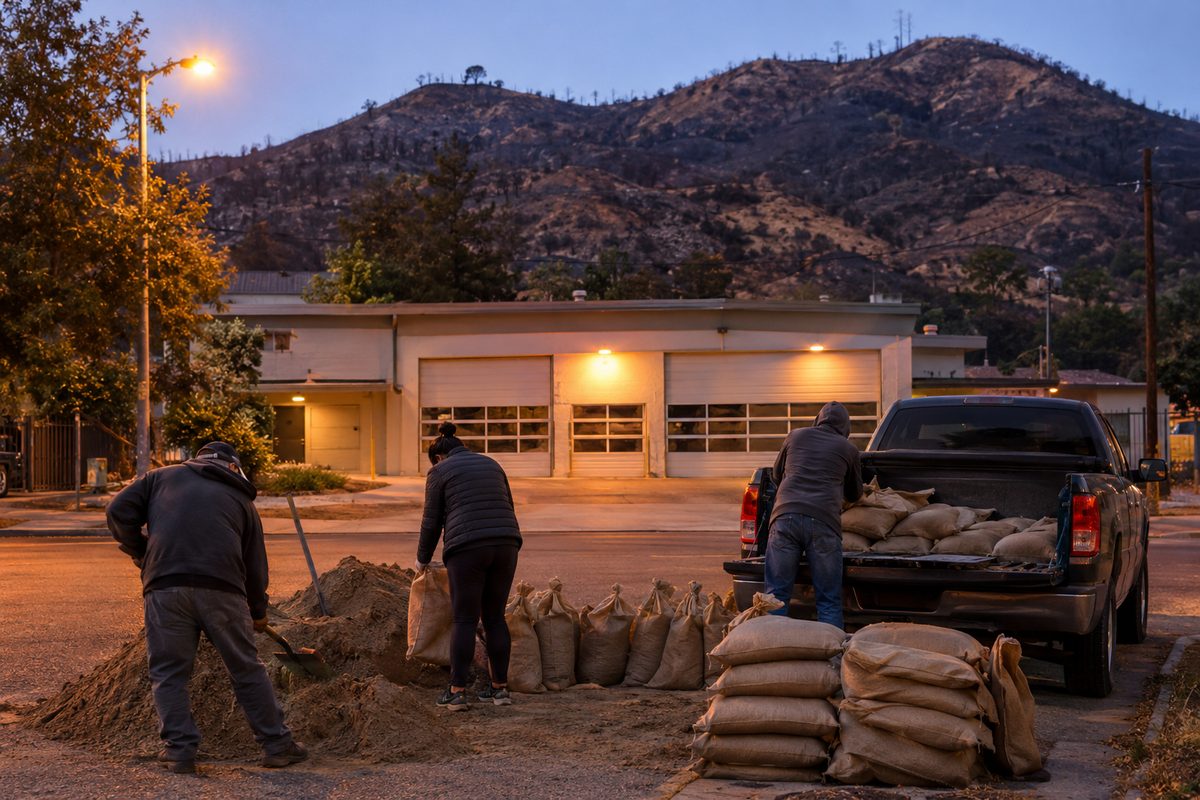
County crews are knocking on doors in the Palisades and Eaton burn scars, briefing property owners before what could be the strongest El Niño on record. Those hillsides haven't healed enough to hold back heavy runoff. Any land that burned in the last five years sits at the top of the county's storm list.
The legal machinery is already running. Hilda Solis, chair of the Board of Supervisors, proclaimed a local emergency on Sept. 23, and supervisors ratified it the week of Sept. 28, the Santa Monica Daily Press reported. That frees the county to move money and equipment quickly, line up mutual aid and ask Sacramento and Washington for help. California's governor has proclaimed a statewide emergency as well.
Department heads walked through the plan Thursday, Oct. 1, at the Hall of Administration. Solis put it bluntly: "We're not going to wait for flooded roads, evacuation orders or power outages to figure out who is responsible for what," she said, the Daily Press reported.
The record talk comes from federal forecasters. In its Sept. 10 El Niño discussion, NOAA's Climate Prediction Center put the odds of a very strong event this fall and winter at better than 90%. It gave a 75% chance that from October through December, this one would outrun every El Niño measured since 1950. The bar for that is a three-month reading at least 2.5 degrees Celsius above normal on the agency's ocean index. So it's a strong bet, not a measured record yet.
The homework for households starts now. Each of the county's 176 fire stations has empty sandbags on hand, and some also have sand to fill them, the Daily Press reported; the map at ready.lacounty.gov/rain shows which ones. Officials want families to keep up to 10 days of food, water and medicine stocked, the Daily Press reported.
Homeowners worried about one particular slope or drain can call Public Works at 800-933-0930 to talk it through with an engineer, Pasadena's Colorado Boulevard newspaper reported. And Dr. Muntu Davis, the county health officer, advised waiting 72 hours or more after any rain before getting back in the ocean.
The heavy lifting started in spring. Mark Pestrella, the county's Public Works director, said his department began sizing up flood risk around April. Crews have since emptied debris basins, cleared channels and worked with the Army Corps of Engineers to ready the county's 14 dams. The whole system is built for roughly a 100-year storm, the kind with a 1% chance of hitting in any given year.
The beaches are moving early. Beaches and Harbors crews plan to start piling up seasonal sand berms at Dockweiler, Venice and Zuma the week of Oct. 5, about six weeks before their usual mid-November start. Sheriff's deputies will patrol near the burn scars. The department's homeless outreach team will find people living in riverbeds and washes ahead of big storms, while county homeless-services workers try to bring people camped beside flood channels indoors.
Some roads near burn scars may shut during storms, and Pestrella asked drivers to respect the closures. In North County last year, he said, people got into serious trouble, some of it fatal, by attempting to ford a flooded waterway or force their way through mud. "More than half of those people were driving their vehicles," he said of the 140 Americans he said died in floods last year, the Daily Press reported.
Not everyone at the podium was selling a deluge. Ariel Cohen, the meteorologist in charge of the National Weather Service's Los Angeles office, spent part of the briefing cooling expectations. "It is not a storm, it is not an atmospheric river, and it is not a weather forecast for Los Angeles County," he said of El Niño, the Daily Press reported.
Very strong El Niño winters have pushed up the odds of flash floods, burn-scar debris flows and coastal flooding here, Cohen said, but none of that promises a single drop. NOAA's own discussion makes the same point in drier language: a bigger event makes the usual effects likelier, not certain. First, Cohen said, Southern California gets a significant heat wave.
The rain won't cancel fire season, either. Kevin McGowan, who directs the county's Office of Emergency Management, said red-flag fire weather is still possible and tends to peak from November through January.
The next read on the odds comes Thursday, Oct. 8, when the Climate Prediction Center is scheduled to publish its next monthly El Niño discussion. It'll be the first since the 75% call.
Source: 9news.com.
Source: smdp.com, retrieved October 4, 2026. Other sources: cpc.ncep.noaa.gov, coloradoboulevard.net.
Comments 0