 ™
™L.A. Summoned 2,060,474 Jurors Last Year. The New Permanent Opt-Out Starts in 2028, at 80.
Assembly Bill 1359 takes effect in 466 days, applies at 80, and still requires attesting to a permanent impairment.
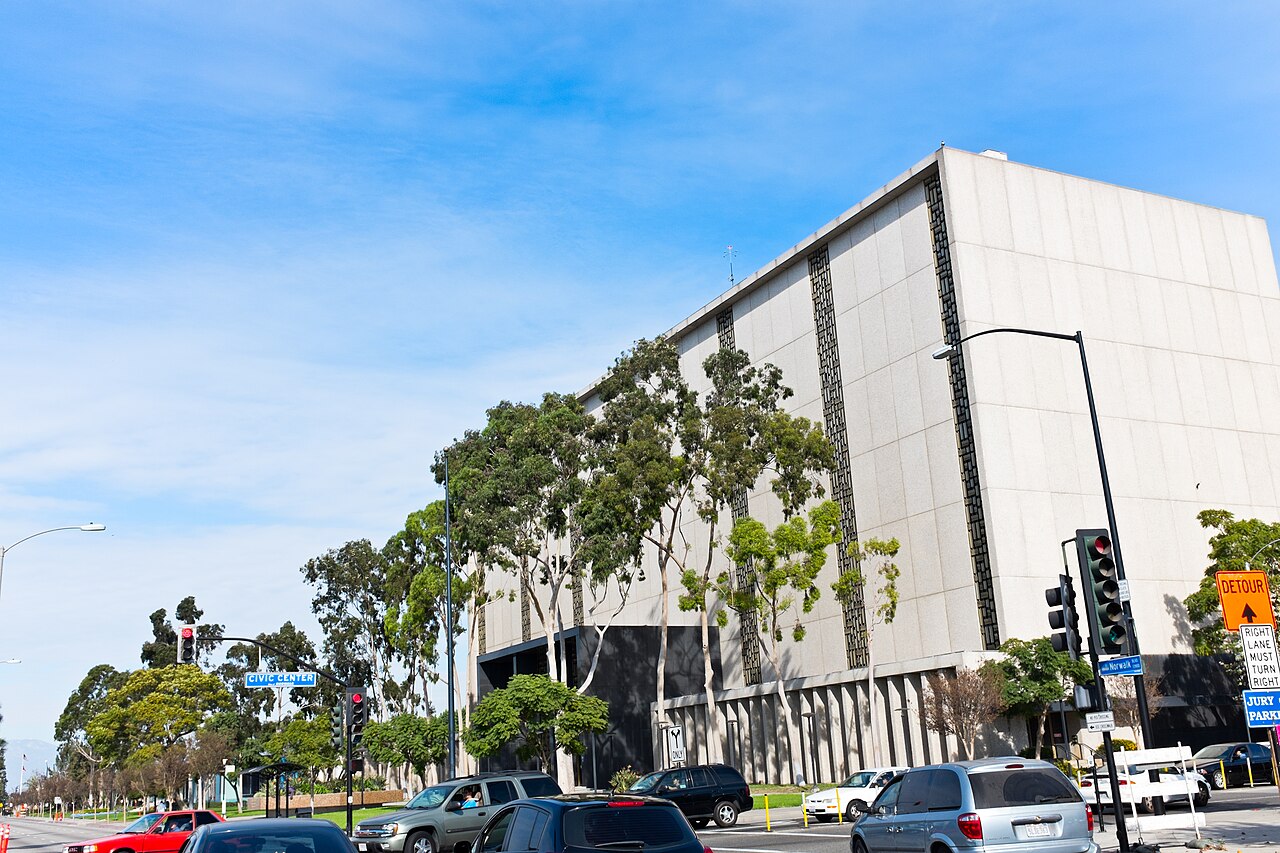
The governor signed Assembly Bill 1359 on Monday, September 14. It's Chapter 195 now, it rewrites one section of the Code of Civil Procedure, and it does roughly what a week of headlines says it does: it lets Californians take themselves off jury service for good. It becomes operative on January 1, 2028 — 466 days from today. Between now and then, Los Angeles County runs another fifteen months of summonses on the old rules. It sent 2,060,474 of them last year.
The operative language is four sentences long. The rewritten Section 204 lets an eligible person 80 or older seek a permanent excuse from jury service for a medical impairment, and does it by striking one requirement: the supporting "letter, memorandum, or note from a treating health care provider." The person gives the jury commissioner a written attestation that they have an impairment permanently rendering them incapable of serving, and at that point the court is out of the decision: they "shall be permanently excused." Additional medical documentation, the statute adds, "shall not be required."
So the age is 80, the ground is a medical impairment, and the thing that changed is the paperwork. Not the eligibility.
As quoted / in context
As quoted. Secret Los Angeles ran the law Tuesday morning under the headline "California just signed a new law allowing residents to opt out of jury duty permanently — here's how it works." Its own subhead names the 2028 start, and its first paragraph names the age; the body is careful. CalMatters, which reported the signing, put its qualifier in a pronoun — these Californians — and left the age to the story. Headlines travel further than subheads, and by the time a law reaches a group chat it is usually down to its verb.
In context. Three numbers do the narrowing. There are about 410,000 Angelenos aged 80 or older, per the California Department of Aging's 2025 Los Angeles County profile — roughly 4% of the county, and about 18% of its 2.3 million residents 60 and over. The start date is 466 days out. And the excuse is not granted for turning 80; it is granted for attesting, in writing, that an impairment permanently prevents service. The age only removes the doctor from the transaction.
What it excludes
- The ten years between 70 and 80. California already stopped asking septuagenarians for proof. Rule of Court 2.1008, which lists the undue-hardship grounds, lets the court require verification of a disability or impairment from everyone except a prospective juror aged 70 or older. What a 70-year-old doesn't get is permanence. The Senate Judiciary Committee's analysis of the bill puts it plainly: that person stays in the jury pool, can be summoned again, and has to assert the impairment again each time. AB 1359 doesn't move the 70. It draws a second line above it, at which the re-asserting stops.
- Everybody under 80, who still needs the letterhead. The permanent medical excuse is not new. Rule 2.1009, adopted effective January 1, 2019, already grants one — to anyone, at any age — on a written request plus a letter, memo or note from a treating health care provider, on that provider's letterhead, stating a permanent disability. That rule is untouched. The new subdivision drops the letter for one age band and leaves the route intact for everyone else, and the rewritten Section 204 says as much in its opening line, which excuses nobody from trial-juror service except under subdivisions (b) and (c).
- Every summons between now and 2028. The current Section 204 stays in effect only until January 1, 2028, and is repealed that day; the replacement becomes operative the same morning. There is no pilot, no early adoption and no transitional provision in the text — an 80-year-old summoned in Los Angeles next spring is working from the 2019 rule and needs the note.
- The list itself. The statute governs excuses, not source lists. Under Code of Civil Procedure Section 197, jurors are drawn from the registered-voter roll, the DMV's list of licensed drivers and ID cardholders, and — since January 1, 2022 — the list of resident state tax filers, substantially purged of duplicates. AB 1359 says nothing about any of the three.
- A cost, an argument, or a dissent. The bill was sponsored by the California Senior Legislature and supported by LeadingAge California and the Retired Public Employees Association of California; the committee analysis records no known opposition. The Senate passed it 38-0 on August 19 and the Assembly concurred 75-0 the next day, by the roll calls, with six members between the two houses not voting. The author's statement in the analysis argues the process as it stands "can induce stress, confusion, and potentially risk the physical and mental well-being of elderly individuals."
The number underneath
Los Angeles County operates the jury system this law will land in hardest, and it publishes its own arithmetic. In an April 2025 announcement of its redesigned juror portal, the Superior Court — the largest trial court in the nation, by its own description — printed two years of jury figures next to the software.
In 2024 the court summoned 2,060,474 people. It brought 315,173 of them in to serve. Those jurors supplied 2,348 jury trials. In 2023 the same three numbers were 2,155,807, 343,662 and 2,442. Run the division and both years land in the same place: just under one in six summonses produced a juror the court brought in to serve, and the county issues roughly 878 summonses for every jury trial that starts.
Set 410,000 next to 2,060,474 and the temptation is to call the new exemption a 20% haircut on the jury pool. It isn't, and the comparison is the kind this column exists to stop. One number counts people; the other counts summonses sent over a year to a rotating slice of a county of ten million. How many of those 410,000 are already excused under the 2019 rule, how many turn up on any source list, and how many intend to go on serving are three things nobody publishes. The court's table doesn't break summonses out by age either, so the honest answer to "how many" is that the record doesn't say.
What the record does say is which direction the demand is moving. The Department of Aging's county profile puts the 80-and-over share of Los Angeles County at 4% in 2025 and projects 8% by 2040. The Senate Judiciary analysis leans on a 2025 Public Policy Institute of California brief for the rest of the case: one in three adults over 80 will have difficulty staying in their homes without assistance, and one in five will have self-care limitations. That is the argument the Legislature voted on, and it is an argument about 2040 rather than about this year.
The verdict
The sentence going around is not false. It is unpriced. There is a new permanent opt-out; it begins at 80, it asks for a statement about your health rather than your birthday, it arrives on January 1, 2028, and it lands on a county list that ran to 2,060,474 names last year and yielded 2,348 trials. Nearly 85% of the people Los Angeles summoned in 2024 never came in to serve at all, under rules that have nothing to do with age, and the court's table doesn't say why.
The next move belongs to the Judicial Council, which the statute authorizes — "may," not "shall" — to adopt or amend a rule of court and publish the forms that turn four sentences of code into something a jury commissioner can process at a counter. It has 466 days. The mechanics of getting through a summons in the meantime — the five on-call days, the $15, the 4:30 Friday cutoff — we laid out in August. Until the Council writes the form, the route for an 80-year-old in Los Angeles is the one that has been there since 2019, and it still runs through a doctor.
Divide responsibly.
Comments 0