 ™
™Storms Open the Same Hyperion Pipe That Spilled 12.5 Million Gallons
The city's permit bars Discharge Point 001 except in five situations, one of them stormwater that outruns the plant's pumps.
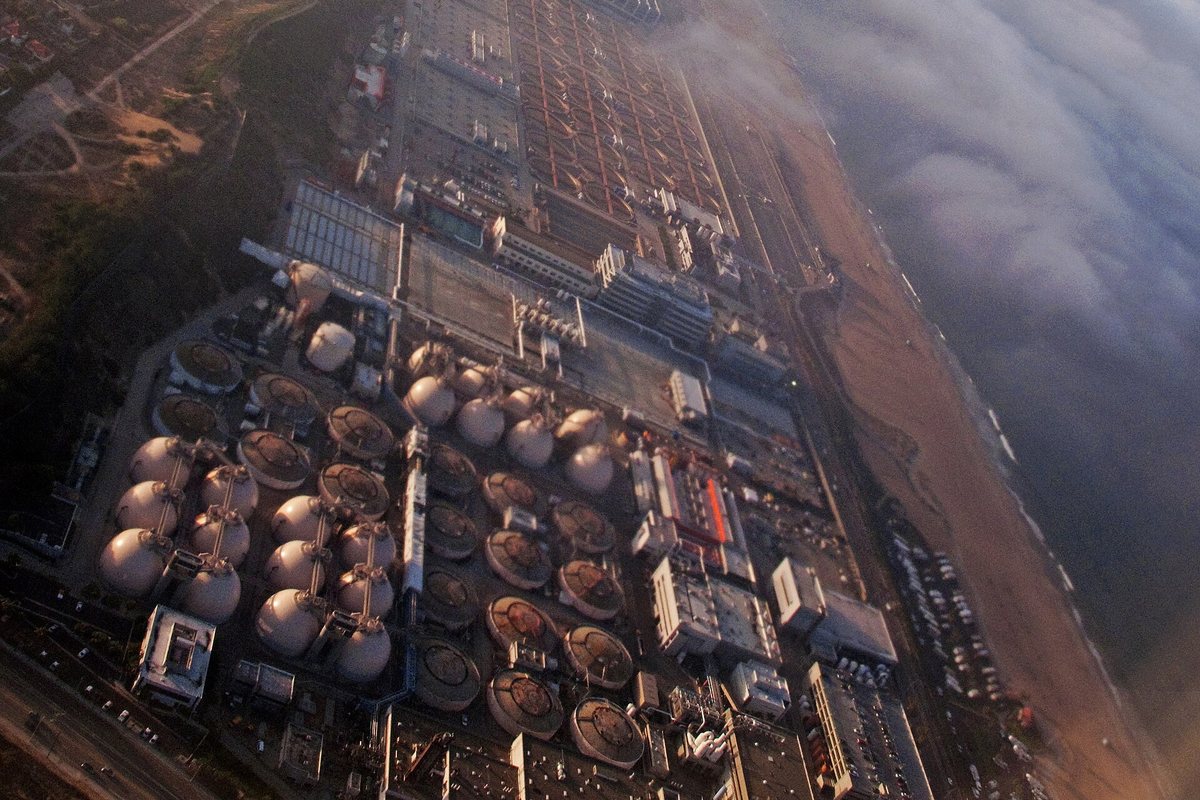
Hyperion is forbidden to discharge anything through its One-Mile Outfall, with five exceptions. The fourth, written into the plant's current discharge permit, is "discharge of stormwater flow during wet weather if the runoff rate of stormwater exceeds the capacity of the pumps at the North, South, or Central Stormwater Pump Stations." That outfall is the one through which 12.5 million gallons of raw sewage reached Santa Monica Bay on July 11 and 12, 2021.
The forecast for this winter is the reason that sentence matters now. In its September 10 diagnostic discussion, NOAA's Climate Prediction Center put the chance of a very strong El Niño this fall and winter above 90 percent, and gave October through December a 75 percent chance of what it calls a historic event — one that would beat every El Niño back to 1950. Sea surface temperatures in the eastern equatorial Pacific were already running more than 3 degrees Celsius above average; the next discussion is due October 8. The Los Angeles Times reported Friday that city officials are bracing for what that rain would do to the plant.
Hyperion is not a plant so much as a funnel. It treats the sewage of the entire city except the Wilmington–San Pedro area, the strip north of San Pedro and Watts, plus 29 contracting agencies including Beverly Hills, Culver City, Santa Monica and West Hollywood — a service area of more than four million people, according to the federal compliance order the city signed in 2024. The permit caps the monthly average dry-weather flow to the plant at 450 million gallons a day. All of it enters through one building.
That building is called the Headworks, and on the afternoon of Sunday, July 11, 2021, its eight bar screens — the rakes that pull debris out of the incoming flow — jammed and shut down. A high influent water surface level alarm fired at 2:11 p.m. EPA's findings state that the control room did not acknowledge the alarm in the plant's control system until the following day.
The staffing picture comes from the state's side of the case. The Los Angeles Regional Water Quality Control Board's complaint, citing a report the city commissioned from the engineering firm CDM Smith, says one operator was covering the Headworks that weekend, on a double shift scheduled from 6:30 a.m. to 10:30 p.m. The first screen tripped offline at 2 p.m. The operator did not realize it was offline until about 3:13 p.m., while troubleshooting a different pump. By about 3:40 p.m. all four of the screens then on duty were dead and sewage was already coming up out of a maintenance hole in the yard. Operators opened the emergency bypass channel at 4:30 the next morning. The overflow stopped at 8:40 a.m.
The volume is worth getting right, because two numbers are in circulation. The spill report filed that weekend estimated 17 million gallons. The city's 30-day report then accounted for 4.46 million gallons that never left the outfall pipe and were pumped back for treatment, leaving 12.494 million discharged. Both the Water Board's complaint and EPA's order use the second figure. The Times' Friday account uses the first.
On March 29, 2023, the Water Board's prosecution team proposed a penalty of $21,731,209 — the largest the board had ever proposed for violations of a waste discharge permit, by its own account. The complaint lists five counts: the discharge itself, 14 days without the required offshore sampling, 80 days of odors beyond the plant's boundary, 108 days of monitoring and reporting failures, and 60 violations of the plant's effluent limits between July 17, 2021 and May 31, 2022. Added up at their statutory maximums, the five counts come to $503,773,848,000. The complaint set a hearing "on a date to be determined."
The federal case produced the repairs. EPA's administrative order on consent, issued March 2024, gave the city dated obligations: integrate the Headworks equipment with the plant's control system by March 31, 2024; by June 30, 2024, strip out vestigial alarms, assign alarm priority levels, and require that high-priority alarms be acknowledged; and by December 31, 2025, finish building a high-level overflow that can reroute at least 600 million gallons a day away from the Headworks, including stainless-steel slide gates in channels 2 through 10 and a passive overflow in Channel 10 with a screen to catch large debris. The California Water Environment Association reported that the federal package, announced by the U.S. Attorney's Office, obliges the city to spend at least $20 million on the plant and more than $800,000 on testing, auditing and outreach.
Whether that December deadline was met is not something the public file answers. EPA's case page for the order carries the order and the 2024 news release and nothing else. The quarterly progress reports the order has the city sending the agency are not posted there, and neither is any finding that the work is finished.
The permit violations did not stop with the spill. On May 1, 2025, the Water Board sent the city a settlement offer covering 15 mandatory-minimum violations at Hyperion between March and October 2024 — chronic exceedances of limits on suspended solids and oxygen demand, and a run of settleable-solids readings in September 2024 that included 34 milliliters per liter against a 3-milliliter limit. The offered price was $45,000, or $3,000 a violation, the statutory minimum.
One line in the permit reads differently once you know what the One-Mile Outfall is for. Before any planned diversion to it — maintenance, a capital project — the city must give 30 days' notice and confirm that the diversion structure and surge chamber have been inspected for debris within the previous month. A storm does not file 30 days' notice, and the stormwater exception does not ask for the inspection.
The rest of the system is older than the plant's repairs. The city manages 6,700 miles of sewer pipe and another 1,200 miles of storm drain, the Times reported; roughly half the sewer pipe is more than 50 years old and about a third is past 90, LASAN general manager Joone Kim-Lopez told the paper. Sewer rates are doubling over four years, a schedule that began in 2024. Councilmember Eunisses Hernandez, who chairs the Public Works Committee, told the paper the city may have to charge the 29 outside agencies more rather than lean further on its own ratepayers.
Tracy Quinn, chief executive of Heal the Bay and a member of the technical panel that reviewed the 2021 spill, told the Times the city made many of the changes the panel asked for. "This will be the first time that the system is truly tested with extreme storms, and it's really going to depend on the ability of the staff that are working there to quickly address any issues," she said.
The permit's fourth exception needs no application, no notice and no signature. It needs rain.
Sources: the joint EPA–state NPDES permit for Hyperion (Order R4-2023-0033, adopted February 23, 2023); EPA's Administrative Order on Consent and its case page; the Los Angeles Water Board's Administrative Civil Liability Complaint No. R4-2023-0007 and its announcement of it; Settlement Offer No. R4-2025-0147; NOAA's ENSO diagnostic discussion of September 10, 2026; the California Water Environment Association; and Sandra McDonald's October 2, 2026 Los Angeles Times story, read in syndication. All retrieved October 2, 2026.
Comments 0