 ™
How to Transfer a Car Title in California When You Buy or Sell
Sellers get five days to file a release of liability; buyers get 10 to transfer, and the late penalty hits after 30.
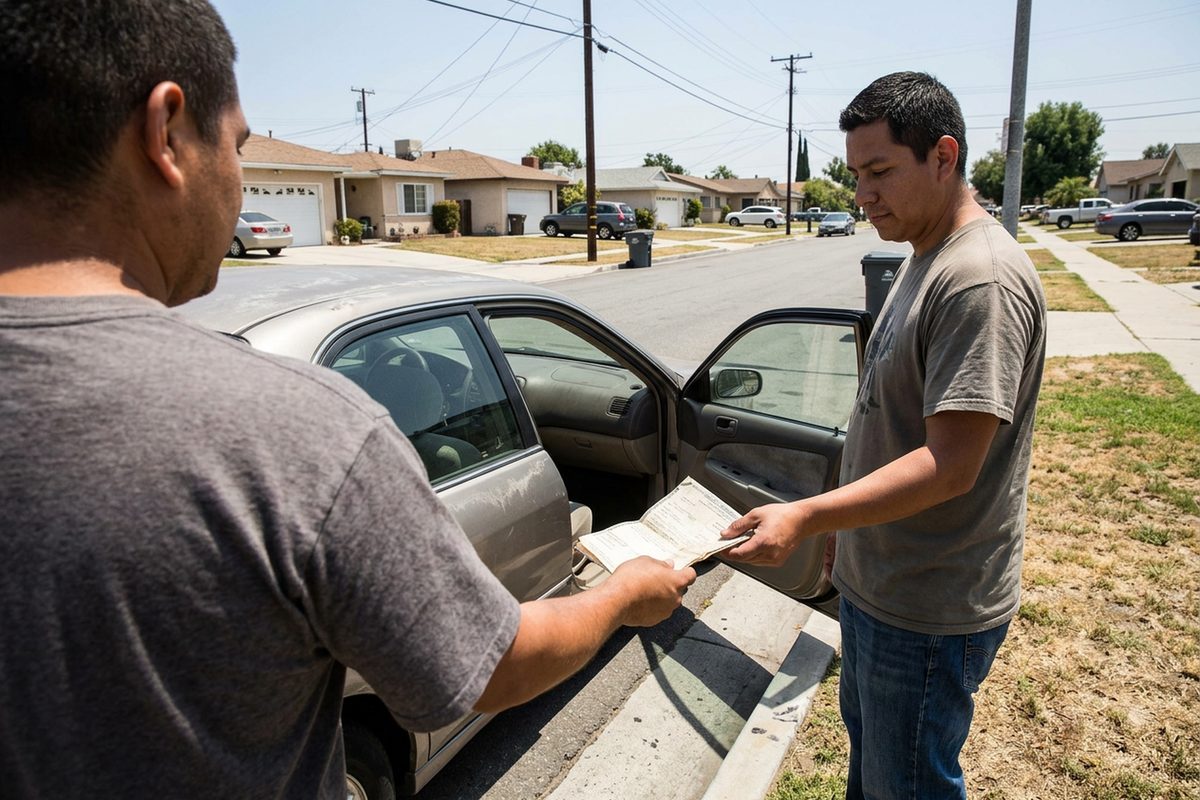
You've sold the car. The buyer drove off with the signed pink slip and your cash is on the kitchen counter. The clock that matters most to you started when the car left: you have five calendar days to tell the California DMV.
That notice, the Notice of Transfer and Release of Liability, is what moves parking tickets, traffic violations and civil lawsuits from after the sale date onto the buyer, the DMV says. The buyer runs on a separate clock: 10 days to transfer the title, according to the DMV's private-sale page, and a penalty if the fee isn't paid within 30.
If you're selling:
- Sign the title on Line 1. If the owners are joined by "and," each one signs. If they're joined by "or," one signature does it, according to the DMV's procedures manual.
- If a lender still has a lien, it releases its interest on Line 2 or on a Lien Satisfied/Title Holder Release (REG 166). For a California-titled car two model years old or newer, a REG 166 won't do; the lender has to request a replacement title.
- Give the buyer a valid smog certification. The DMV says that's the seller's job. The exception is a car less than four years old: it needs no inspection, and the new owner pays a smog transfer fee instead.
- Before the buyer pulls away, note the mileage on the dash, your plate number, the final five digits of the VIN, and the new owner's name and address. The online form asks for every one.
- File the notice within five calendar days. Online, the DMV says your record updates within one business day. On paper, it's a REG 138 by mail. Either way, keep a copy of the confirmation.
Don't skimp on the details. The DMV warns that missing or unreadable information can leave it unable to update the record, and that can cost you the liability protection. You're allowed to write "unknown" for a buyer whose name you've forgotten, but that carries the same risk.
If you're buying:
- Get the title signed by the seller on Line 1. If someone other than the named owner is selling it to you, ask for a bill of sale that carries two signatures: the seller's and the named owner's.
- Cars under 10 years old need the odometer reading written down. No mileage line on the title? You and the seller both sign a REG 262. That form isn't online because it's printed on security paper, so call 1-800-777-0133 and the DMV will mail you one.
- Fill in the new-owner section with your name, address and driver's license number. Add the price, or write "Gift" and put the car's estimated value on a Statement of Facts (REG 256).
- Pay the fees and use tax. As of Oct. 28, the DMV's fee schedule lists a $15 transfer fee and an $8 smog transfer fee for newer cars. Paying late adds a $15 penalty. Use tax and the other charges depend on the car and where you live, and the DMV's fee calculator estimates them.
- Submit within 10 days, either by mail to DMV, PO Box 942869, Sacramento, CA 94269, or in person at a field office. Book an appointment so you aren't waiting in line. The new title usually arrives by mail in 15 to 30 days.
If the seller can't find the title, they fill out an Application for Replacement or Transfer of Title (REG 227) first. If the car has a lienholder, section 5 of that form has to be notarized.
One more clock for buyers: if the registration expires soon after you buy, the procedures manual gives you 20 days from the transfer to renew without a penalty.
Sellers often make the same mistake: they file the notice and think they're done. The notice doesn't take your name off the car. According to the DMV, only the buyer's transfer application, made with the title you signed, does that.
If a renewal notice for that car shows up later, the DMV says your notice either never arrived or was incomplete. File another one. If you filed online, don't mail the renewal notice or your confirmation page to the DMV. Your confirmation page is your proof, so keep it.
Source: State of California, retrieved October 28, 2026. Other sources: State of California (2), State of California (3), State of California (4), State of California (5), State of California (6).
Comments 0