 ™
™L.A. County’s 23 Federal Landmarks, Ranked by How Hard It Is to Get In
The easiest is a free Little Tokyo street; the hardest that opens at all is the Eames House, at $2,500 for four.
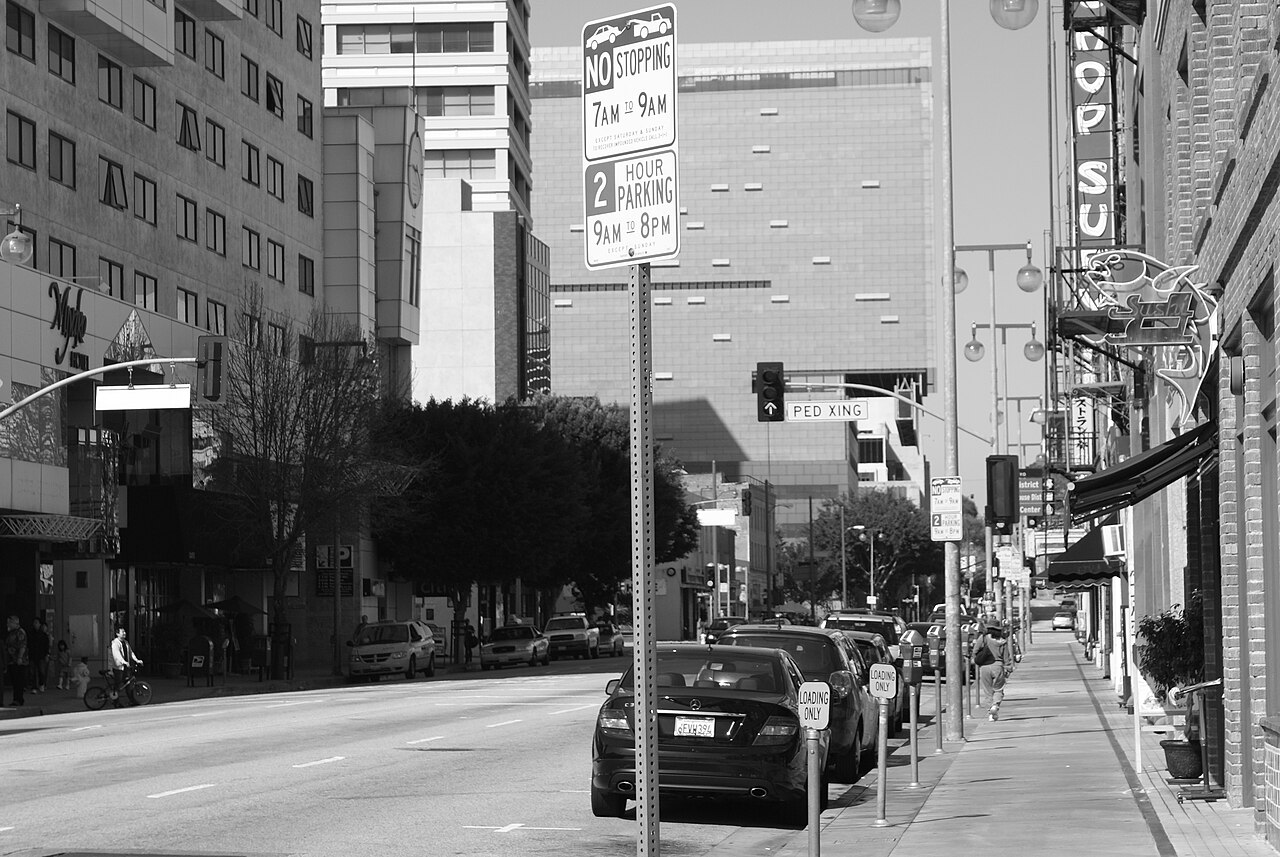
Of the twenty-three places in Los Angeles County holding the federal government’s highest historic honor, the easiest to visit is a sidewalk. Little Tokyo’s landmark block has no gate, no ticket and no closing hour. The hardest door that opens at all belongs to a house in Pacific Palisades, which will put four people on its ground floor for $2,500. And the newest of the twenty-three spent the year after its honor being taken apart.
The order below comes from one test: whether there’s a door, when it opens and what it costs to walk through it. Architecture doesn’t score here, and neither does fame, because a designation is a verdict on history, not a promise of access.
The roster is the National Park Service’s own list of National Historic Landmarks, read on October 7, 2026. Twenty-two entries print this county outright; a twenty-third, the U.S. Post Office and Court House on Spring Street, prints the city and leaves the county field blank. The terms of entry are whatever each landmark’s keeper posts about letting the public in.
Set side by side, the money runs backwards from reputation. The three that charge nothing are a street in Little Tokyo, an adobe in Long Beach and a church in Echo Park, and none of them is what anyone plans a trip around. Federal status obliges nobody to unlock anything: of the twenty-three, three are private houses or a private lab, two are hardware inside a NASA lab, one is a 68-acre housing complex and one has been dismantled.
1. Little Tokyo Historic District — thirteen buildings, no gate, no hours to miss
First place isn’t close: no fee, no schedule, nothing to book. The Park Service’s listing describes two blocks of the pre–World War II commercial heart of Little Tokyo — thirteen buildings of one to four stories, most of them from the early 1900s, running 301 to 349 East First Street with arms onto Judge John Aiso Street and Central Avenue. The Japanese Union Church and the Japanese American National Museum anchor its ends, and it was designated June 12, 1995.
Every other landmark on this page has a keeper deciding when it can be seen. This one is a public street, so those thirteen buildings are there at two in the morning and two in the afternoon, in any order, for nothing. A historic district is the cheat code of a ranking like this, and there’s no pretending otherwise.
2. Rancho Los Cerritos, Long Beach — free, five days a week, no reservation
The Long Beach adobe behaves like a branch library. Its visitor page posts Wednesday through Friday from 1 to 5 p.m., Saturday from 10 to 5 and Sunday from 1 to 5, closed Monday and Tuesday. Admission during public hours is free, donations welcome, and reservations are required only for groups of eight or more.
The federal list calls it the Los Cerritos Ranch House and dates its designation to April 15, 1970, the county’s second-oldest honor, behind an oil well. Free, five days, walk up: it misses first only because somebody still has to come unlock it.
3. Angelus Temple, Echo Park — free at ten on Sunday, on the building’s terms
The auditorium at 1100 Glendale Boulevard, designated April 27, 1992, lets anyone in every week — at 10 a.m. on Sunday, for a service, the only visit the temple’s visitor page advertises. There’s no ticket and no admission charge, there’s a parking structure on the campus, and no tour of the building is posted anywhere on the site. The church’s history page credits the evangelist Aimee Semple McPherson with founding it and dates its centenary to 2023.
With the price at zero, third place turns on terms. The temple asks a visitor to come at the hour it’s holding a service and sit through one, a narrower door than five afternoons in Long Beach and a far wider one than the paid doors below it.
4. Hollyhock House, East Hollywood — $12, three days, and a page that argues with itself
The city’s visit page posts self-guided admission Thursday through Saturday, 11 a.m. to 4 p.m., last entry 3:30, with the visitor center open 10:45 to 3:30. Adults pay $12; visitors 62 and over and students 18 and over with ID pay $6; anyone under 18 is free with a paying adult. A twenty-minute docent-led exterior tour bundled with admission runs Friday and Saturday at 11:30, noon, 12:30 and 1 p.m., at $24 for adults.
The same page then lists a one-hour guided tour on Sundays from 10:30 to 3, while also saying the museum is closed Sunday through Wednesday, and an FAQ underneath says traditional guided tours aren’t currently offered. That’s three statements on one page, no two of them compatible, and the Sunday is the one to ignore.
The Barnsdall Art Park Foundation’s house page supplies the rest: National Historic Landmark in 2007, the first UNESCO World Heritage Site in Los Angeles in 2019 and the third in California, more than 43,000 visitors a year and close to a hundred volunteer docents. The most decorated building on this list opens three days a week.
5. Watts Towers — $0 to $12, thirty minutes, and an escort you can’t decline
Simon Rodia’s towers, designated December 14, 1990, are the only landmark in the county nobody may approach alone. The Department of Cultural Affairs listing says the guided tour “is the only way to gain access to the towers.” It runs about thirty minutes, covers the thirty-three years Rodia spent building them, includes the Watts Towers Arts Center and costs anywhere from $0 to $12.
The same listing posts tour days as Thursday, Friday and Saturday, 11 a.m. to 3 p.m., last tour at 3, closed for lunch from 12:30 to 1:30. Then it schedules every one of its October and November dates on Sundays, Mondays, Tuesdays and Wednesdays.
With the escort mandatory, that calendar is the whole door, and the contradiction costs the towers two places they’d otherwise have won on price.
6. Santa Monica Looff Hippodrome — open five days, and the operator won’t print the fare
The building at the foot of the Santa Monica Pier was designated February 27, 1987, the same day as the Rose Bowl. Pacific Park’s carousel page says the U.S. government made the Hippodrome a National Historic Landmark in 1987 and posts hours of 11 a.m. to 5 p.m. on Monday and Thursday, 11 to 7 Friday through Sunday, closed Tuesday and Wednesday. It calls the ride “very affordable entertainment” and prints no price anywhere on the page.
The page does correct what most visitors assume. The carousel inside isn’t the Hippodrome’s original: it’s Philadelphia Toboggan Company Carousel #62, built in 1922 for the Venice Pier and moved in by Walter Newcomb in 1947. The building is the landmark; the horses are an import, and they commute.
7. SS Lane Victory, San Pedro — two days a week, plus a Sunday you have to arrange
The cargo ship, designated December 14, 1990, the same day as the Watts Towers, is the only landmark in this ranking that floats. The Lane Victory Maritime Center’s visit page posts Wednesday and Saturday, 10 a.m. to 4 p.m., with Sunday by appointment only, and prints every fare the Hippodrome won’t: $15 general admission, $10 for anyone 62 and over and for active U.S. military with ID, $5 for juniors 5 to 12 and for students with ID, free for children four and under.
The Port of Los Angeles’ landmarks page confirms the ship is open to the public for tours and has moved to the Outer Harbor, which is worth knowing before you drive to a berth it left.
No keeper on this page is more forthcoming, and the ship still finishes behind vaguer, more open landmarks, because this door opens twice a week.
8. Neutra VDL Research House, Silver Lake — four hours a week, Saturdays only
Richard Neutra’s own house and studio on Silver Lake Boulevard was designated December 23, 2016, and stayed the county’s newest National Historic Landmark for seven years. Neutra’s family gave the house and studio to Cal Poly Pomona in 1990, and the university’s College of Environmental Design maintains the property. The university’s own account of the designation says the house is open to the public on Saturdays for tours, often led by its architecture students.
One day in seven is what puts it eighth. The house sits on a residential block and couldn’t absorb a Tuesday crowd if it wanted one, and when we looked, the only page of its own site that would open was its home page.
9. L.A. Memorial Coliseum — Mondays and Tuesdays, 75 minutes, price behind a form
Designated July 27, 1984, the Coliseum opens to the paying public twice a week, and both days are weekdays. Its tours page posts public guided tours on Mondays and Tuesdays at 10 a.m. and 1 p.m.: 75 minutes through the Founders Suites, the 1923 Club rooftop deck, the locker room, the Player’s Tunnel, the field itself and the Peristyle. Instead of a price, the page hands over a booking link.
Two mornings and two afternoons, on the two days most people are at work, with the fare a click away: it’s a schedule built for someone with a weekday free, and it’s ninth place.
10. Eames House, Pacific Palisades — $2,500 for four people on one floor
This is the placement worth arguing about: the most beloved modern house in Los Angeles finishes last among the landmarks that open at all, and its own price list put it there.
Case Study House #8 was designated September 20, 2006. The Eames Foundation’s visit page sells four kinds of visit: grounds-and-studio visits and guided exterior tours, released a month at a time in the first week of the preceding month; a private exterior tour at $1,250 for up to ten people, $125 for every person past ten, sixty minutes; and a private interior tour, the only way into the residence itself, at $2,500 for up to four guests, ninety minutes, ground floor only, with access “limited and carefully managed under guidance from the Getty Conservation Institute.”
The foundation does more than most to blunt that. First Fridays carry reduced-rate tickets for people the price would otherwise shut out, released in two batches so a missed sale isn’t fatal; wildfire survivors and first responders are invited to write and ask about free visits; and the site warns plainly that there’s no parking at the house.
None of it moves the number. Six hundred and twenty-five dollars a head to stand on a ground floor is more than fifty times the Hollyhock House’s $12.
The one nobody can get into, at any price
Wayfarers Chapel in Rancho Palos Verdes was designated December 11, 2023, which makes it the youngest National Historic Landmark in Los Angeles County and the only one that currently isn’t anywhere. Its own history page says the chapel and grounds closed in February 2024 as the landslide worsened, that plans to take the building apart to save it from destruction were announced a few months later, and that the disassembly was completed in July 2024.
The banner above that history, on every page of the site, reads: “NO PUBLIC ACCESS ALLOWED ON PREMISES.”
It isn’t coming back where it stood. The chapel’s announcement of the new site describes a 4.6-acre former World War II coastal-defense installation called Battery-Barnes, next to the Rancho Palos Verdes City Hall complex, and says the board is working toward it with elected officials, with no date attached. The chapel closed two months after the federal government put it on the shortest list of nationally significant places it keeps, and by July it was in pieces.
Not ranked, and why
Twelve more never reached the ranking, and the reasons say as much as the order does.
Three are houses or a private laboratory with no public visiting hours posted that we could find: the Edwin Hubble House in San Marino (designated December 8, 1976), the Hale Solar Laboratory in Pasadena (December 20, 1989) and the Upton Sinclair House in Monrovia (November 11, 1971).
A fourth is housing at scale: Village Green in Baldwin Hills, carried on the federal list as Baldwin Hills Village and designated January 3, 2001. The Cultural Landscape Foundation’s profile describes a 68-acre planned community by Reginald Johnson, Fred Barlow Jr., Clarence Stein and Robert Evans Alexander, and people live in all of it.
Two more are hardware inside the Jet Propulsion Laboratory: the Space Flight Operations Facility and the Twenty-Five-Foot Space Simulator, both designated October 3, 1985. The lab keeps a page headed Free Public Tours, which, when we read it, carried that heading and nothing under it.
The Bradbury Building (May 5, 1977), built in 1893, posts no visiting hours of its own that we could find. The Los Angeles Conservancy walks past it on a Historic Downtown tour at 10 a.m. on Saturdays, and its page says, in those words, that “The Conservancy does not own or operate the Bradbury Building.”
The Gamble House in Pasadena (December 22, 1977) runs docent-led interior tours, but its own site wouldn’t open for us. The most recent account we could read, Pasadena Now’s from October 2025, put adult tickets at $15 and seniors and students at $12.50, and we don’t print a 2026 price we couldn’t check.
The Rose Bowl (February 27, 1987) is the strangest gap on the list. The stadium’s own Tours page dates the opening to October 1922 and calls the place a National Historic Landmark and a California Historic Civil Engineering landmark, then lists no tours.
The fireboat Ralph J. Scott (June 30, 1989) is on display near Fire Station 112 in San Pedro, according to the Port of Los Angeles, which makes it something to look at from outside. Well No. 4 in Pico Canyon (November 13, 1966), the oldest designation in the county by three and a half years, has no posted public hours that we found.
Then there’s the entry the federal list half-hides. The U.S. Post Office and Court House in Los Angeles was designated October 16, 2012, and because the Park Service prints its city with the county field left blank, the county is usually said to have twenty-two of these instead of twenty-three.
It’s a working courthouse: a Superior Court of Los Angeles County notice from February, republished by the legal-services firm First Legal, places the court’s Spring Street departments at 312 North Spring Street downtown. The court’s own site wouldn’t open for us, so there are no hours printed here for it either.
When the doors open
The calendar sorts the rest. Seven of the ten ranked landmarks are open on a Saturday — Little Tokyo, Rancho Los Cerritos, Hollyhock House, the Watts Towers as its series is posted, the Looff Hippodrome, the Lane Victory and the Neutra house. The Coliseum alone opens Monday and Tuesday and nothing else, which makes it the only landmark on this page a visitor with a weekday off can take and a visitor with a weekend can’t.
The tightest ranked doors, at the Neutra house and the Coliseum, open on one day and on two. Every unranked landmark is a private house, hardware inside a federal lab, housing, or a place whose keeper doesn’t post hours.
The cheapest way to stand inside a National Historic Landmark in Los Angeles County this week is Thursday afternoon in Long Beach, 1 to 5 p.m., for nothing.
Comments 0