 ™
™Jay Leno's Law Exempts Some Classic Cars From Smog Check. Eight Questions Decide If Yours Qualifies.
Nothing changes at your next renewal. The first cars go exempt in 2028, and only some of them.
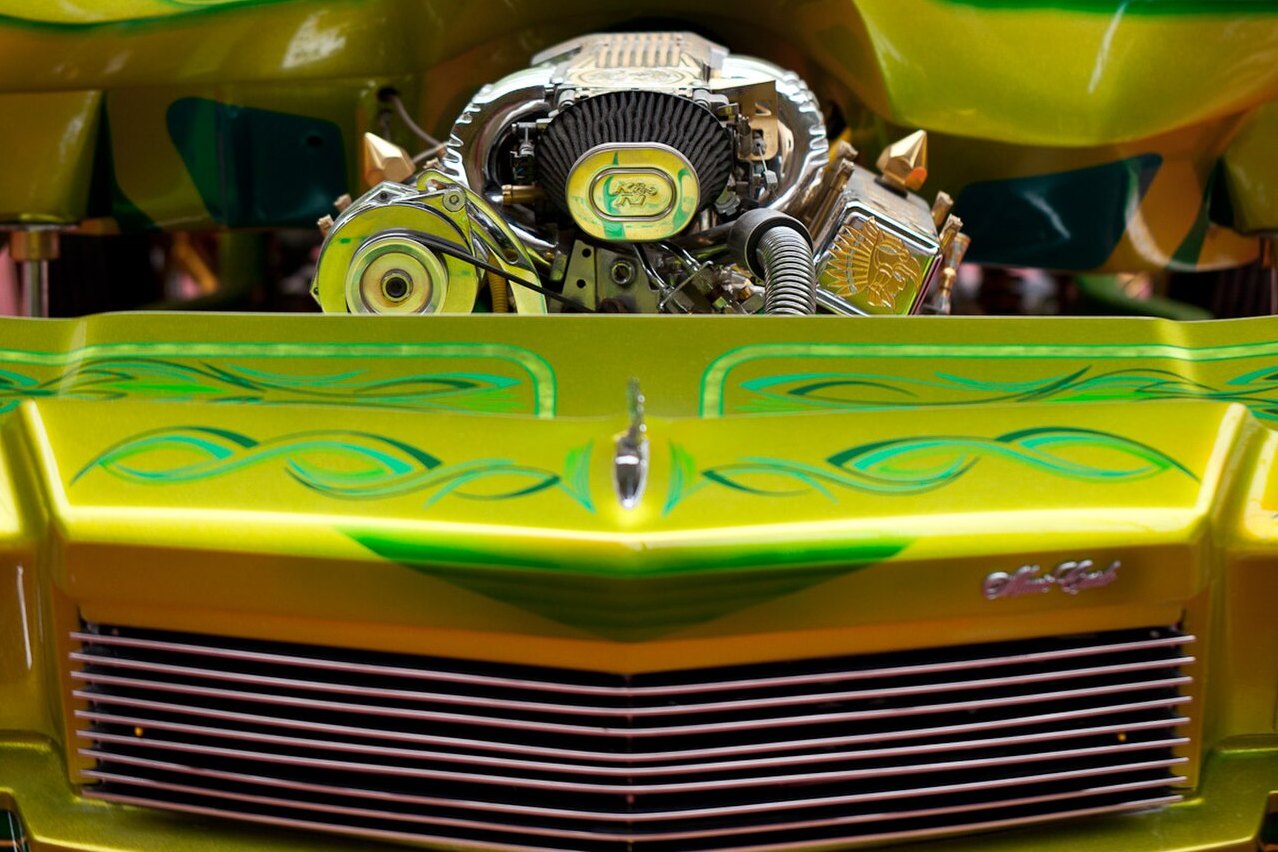
You're wondering whether this lets you skip the smog check on your next renewal. It doesn't. Governor Gavin Newsom signed Senate Bill 1392 on September 16 at Jay Leno's Garage in Burbank — a bill the Legislative Counsel's Digest credits to Senator Dave Cortese and the Governor's office describes as jointly authored by Cortese, a San Jose Democrat, and Senator Shannon Grove, a Bakersfield Republican — and the statute names itself in its very first sentence: "This act shall be known, and may be cited, as Jay Leno's Law." But the earliest date the new exemption carries is January 1, 2028. Until then, the smog check schedule you already have is the smog check schedule you still have.
What the law does after that is narrower than most of the coverage suggests, and it is narrow in four separate ways at once: by model year, by calendar year, by how the car is insured or driven, and by what the car is used for. Miss any one of the four and the exemption isn't yours. The good news is that all four tests are written down, in plain enough language, in three sections of the California codes. We read the chaptered bill end to end — five sections, one of which names the act, one amending the Health and Safety Code, two amending Vehicle Code sections and one adding a new article to that code — and what follows is those tests turned into questions you can answer about your own car.
Answer them in order. Any "no" that sends you out of the walk is a real no, and we say where each one comes from.
Question 1: Is your car a 1976 through 1985 model year?
If it's a 1975 or older: you already don't need a smog check, and you haven't for years. Health and Safety Code section 44011(a)(3) exempts "all motor vehicles manufactured before the 1976 model year," and the Bureau of Automotive Repair says the same thing on its own Smog Check page in the plainest possible words: model year 1975 and older is exempt. Jay Leno's Law does nothing for you, because there was nothing left to do. Stop here.
If it's a 1986 or newer: no, and not later either. The new schedule's last step, in 2033, reaches vehicles "manufactured before the 1986 model year" and then stops. There is no rolling provision that keeps walking the date forward after that. A 1987 car does not age into this exemption in 2034; the schedule simply ends.
If it's a 1976 through 1985: you're in the band the law was written for. Go to question 2.
Question 2: Has your model year's turn come up yet?
The exemption doesn't arrive for the whole band at once. It arrives one model year at a time, on six consecutive New Year's Days, and the schedule is printed as subparagraphs (A) through (F) of the new paragraph 44011(a)(9). Here it is, as dates you can look for on a calendar:
January 1, 2028 — cars manufactured before the 1981 model year. In practice that's 1976 through 1980, since 1975 and older were already out.
January 1, 2029 — before the 1982 model year, which adds the 1981s.
January 1, 2030 — before 1983, adding the 1982s.
January 1, 2031 — before 1984, adding the 1983s.
January 1, 2032 — before 1985, adding the 1984s.
January 1, 2033 — before 1986, adding the 1985s and finishing the job.
If you own a 1984 Corvette, your date is January 1, 2032, and every renewal before it is a renewal you test for. If you own a 1979 Monte Carlo, your date is the first one. Write your date down somewhere you'll find it, because this is the field most likely to be misremembered a year from now — the law was signed in 2026, and the coverage that told you about it will be four years stale by the time your turn actually comes.
Question 3: Is the car insured as a collector vehicle?
This is the qualifying route that opens first, and for two full years it is the only one. New Vehicle Code section 5040(a), added by the bill, says that on and after January 1, 2028, a qualifying vehicle "that is insured as a collector motor vehicle, if proof of that insurance is submitted to the Bureau of Automotive Repair," is exempt. Note where the proof goes. Not to the DMV, and not to the smog station — to the Bureau of Automotive Repair, the state agency inside the Department of Consumer Affairs that runs the Smog Check program.
If yes: go to question 5, and expect to file paperwork with an agency you may never have dealt with before.
If no: go to question 4, and read it carefully, because this is where the popular summary of this law is wrong.
Question 4: Do you drive it fewer than 1,000 miles a year — and is it 2030 yet?
The Governor's own announcement describes the qualification as a simple either/or — insured as collector vehicles, or driven less than 1,000 miles a year — and the Specialty Equipment Market Association told its members the same thing when the bill cleared the Legislature. Both routes are real. They do not open on the same day.
Section 5040(b) gives the mileage route a start date of its own: "On and after January 1, 2030." And it limits that route to the vehicles described in "subparagraphs (C) to (F), inclusive" of the phase-in — the 2030 step and later. The insurance route in 5040(a) carries no such limit; it reaches the whole schedule from 2028.
What that means at the curb: for the 2028 and 2029 model-year steps, mileage alone qualifies nobody. The owner of a 1978 coupe who drives it a few hundred miles a year and insures it on an ordinary policy waits until January 1, 2030 — by which point the schedule has moved on to pre-1983 anyway, so the wait costs them one biennial test, not the exemption. The route that gets anyone out in 2028 is the insurance route, and only the insurance route.
One more thing this question can't answer for you yet. Section 259 of the Vehicle Code, as amended, says the under-1,000-miles finding is made "through a process developed by the Bureau of Automotive Repair." That process does not exist today. Whether it will mean an odometer photograph, a signed statement, a referee inspection or something else is not in the statute, and there is no point guessing at it here.
If yes to both: go to question 5. If it isn't 2030 yet and you aren't collector-insured: your answer is "not yet," and question 2's date is the one that matters.
Question 5: Is this the car you drive to work?
Here is the test almost nobody mentions, and it can end the walk for a car that passes every other one.
Both exemption routes run through the definition of "collector motor vehicle" in Vehicle Code section 259, and that definition has two halves joined by an "and." The first half is the one everyone quotes: at least 35 model years old, plus the insurance or the mileage. The second half, subdivision (b), is a use test. The vehicle must be "used primarily in shows, parades, charitable functions, and historical exhibitions for display, maintenance, and preservation," and it must not be "used as the owner's primary mode of transportation."
The new section 5040 repeats the requirement rather than relying on it, naming "a motor vehicle that meets the criteria described in subdivision (b) of Section 259" in both the insurance paragraph and the mileage paragraph. The drafters put the use test in twice. That is not an accident, and it is the whole argument the Governor made at the signing. In remarks reported by ABC7, he said Leno "presented better arguments, better evidence, that these are not commute cars" — and the statute is written so that a commute car can't claim the exemption.
If the car is your daily driver: you don't qualify, and no amount of collector insurance changes that. Stop here.
If it's a show-and-weekend car: go to question 6.
Question 6: Is the car at least 35 model years old?
Yes. Every time. We include this question only because the 35-year figure is in the statute and you will see it quoted, and it is worth knowing it will never be the thing that stops you.
Section 259(a)(1) requires the vehicle to be "at least 35 model years old." The newest car the schedule ever reaches is a 1985, and a 1985 model year turned 35 in 2020 — eight years before the exemption's own first date, and thirteen before the 1985s come up. The model-year ceiling in question 1 is a tighter constraint than the 35-year floor for every car in the band, so the floor never binds. Go to question 7.
Question 7: Are you buying or selling it?
Answer this one even if you answered "no," because the exemption is wider than a renewal sticker in a way that is easy to miss.
California normally requires a valid smog certificate at transfer of ownership, and the certificate is only good for 90 days — which is why a private-party sale usually involves somebody driving to a test station on a deadline. Vehicle Code section 4000.1 is where that rule lives, and SB 1392 amends it too, adding the same six-step schedule as a new paragraph (d)(8). The Legislative Counsel's Digest printed with the bill is explicit that the exemption applies "upon initial registration, biennially upon renewal of registration, or upon transfer of ownership."
So a qualifying 1979 car sold in 2028 is exempt at the sale, not only at the renewal. And a qualifying car brought in from out of state is exempt at its first California registration, which is otherwise one of the hardest smog hurdles there is. Both still depend on every other answer in this walk, including the use test.
Question 8: Are you willing to pay for the exemption?
There is a fee. It is not optional, its amount hasn't been set, and we can tell you the ceiling.
New Vehicle Code section 5043(a) says the Bureau's regulations "shall provide for the collection of fees to recover the reasonable administrative costs incurred by the Bureau of Automotive Repair" — shall, not may. Subdivision (b) then caps the fee for the insurance route at "not more than twice the amount of the annual smog abatement fee" set by Health and Safety Code section 44060(d)(1)(B). That fee is $25. So the insurance-route fee lands somewhere between whatever the Bureau's costs actually are and $50.
Read the cap closely and you'll notice what it doesn't cover. By its own words it limits "any fees collected pursuant to subdivision (a) of Section 5040" — the insurance route. The mileage route is subdivision (b), and no ceiling in the statute names it. That may be an artifact of how the two routes were drafted at different times, and the Bureau may well price them the same. But the statute as chaptered caps one and not the other, and an owner planning around the mileage route in 2030 should know the number isn't bounded in law the way the other one is.
Set against a biennial smog test, a one-time or annual fee under $50 is still likely to be the cheaper path for most owners. It is not free, and the "exempt" in the headlines means exempt from the test, not from the state.
Your answer
You qualify if the car is a 1976 through 1985 model year whose step has arrived, it isn't your primary transportation, it's used mainly for shows and display, and you've filed proof of collector insurance with the Bureau of Automotive Repair — or, from 2030, proof it goes under 1,000 miles a year. The exemption then covers renewal, initial registration and sale alike.
You don't qualify if the car is a 1986 or newer, if it's the car you drive to work, or if it's any year at all before January 1, 2028. And you don't need to qualify if it's a 1975 or older, because it was already out.
You're in the gray zone in three situations, and we'd rather name them than smooth them over. First, if you're counting on the mileage route: the Bureau hasn't built the process that verifies mileage, so nobody can tell you today what proof will satisfy it. Second, if you're shopping for a policy: "insured as a collector motor vehicle" is defined by a Bureau regulation that hasn't been written, so which policies count is genuinely unsettled, and a policy bought in 2026 on the strength of this law is a bet. Third, if your car is heavily modified: the new route in section 259(a)(1) says nothing about originality, but the older collector categories it sits beside do — a "special interest vehicle" under Vehicle Code section 5051 has to be "unaltered from the manufacturer's original specifications." Which of those the Bureau leans on when it writes the forms is not yet decidable from the text.
The older exemption that didn't go anywhere
One thing the new law leaves standing, because owners of much older cars ask about it and it gets confused with this: there has been a partial break for collector vehicles for years, and it is still there.
A vehicle carrying Horseless Carriage or Historical Vehicle plates under Vehicle Code section 5004, or qualifying as a special interest vehicle under section 5051, gets out of one portion of the test — the part specified in Health and Safety Code section 44012(f) — if it's insured as a collector vehicle and at least 35 model years old. It still has to meet the exhaust standards for its class and model year, pass a functional check of the fuel cap and pass a visual inspection for liquid fuel leaks. That is a lighter test, not no test, and SB 1392 keeps it exactly where it was.
The difference worth holding onto: the old break shortens the test, and the new one removes it.
What to do, in this order
Now, and through 2027: test the car on schedule. Nothing in this law is in force before January 1, 2028, and a lapsed registration costs more than a smog test.
Now: find your model year on the list in question 2 and write the date down. That one date decides everything else.
Before your date, if you're taking the insurance route: confirm with your insurer that the policy is written as collector coverage, not as an ordinary policy on an old car. The statute wants proof of the former, and the two are not the same product.
Before your date, either route: watch for the Bureau of Automotive Repair's regulations. Section 5042 says they'll carry "any forms, procedures, and other requirements necessary" — which means the actual instructions, the actual fee and the actual mileage proof all arrive there, not in the law. The Bureau is the agency to check, and its Smog Check pages are where it publishes.
When your date arrives: file the proof with the Bureau before the renewal notice does its thing, and keep the confirmation with the registration. Section 5041 lets the Bureau and the DMV exchange information to sort eligibility out between themselves — but the filing is still yours to make, and an exemption the Bureau hasn't recorded is an exemption the renewal notice won't know about.
Comments 0