 ™
™The Civic Has Been Dark 13 Years. Tuesday's Vote Buys Six Months of Homework.
Santa Monica's council decides whether to hand Goldenvoice|AEG Presents an exclusive look at the shuttered Civic Auditorium. Item 11.C grants no development rights, no lease and no project — and that is the most honest thing about it.
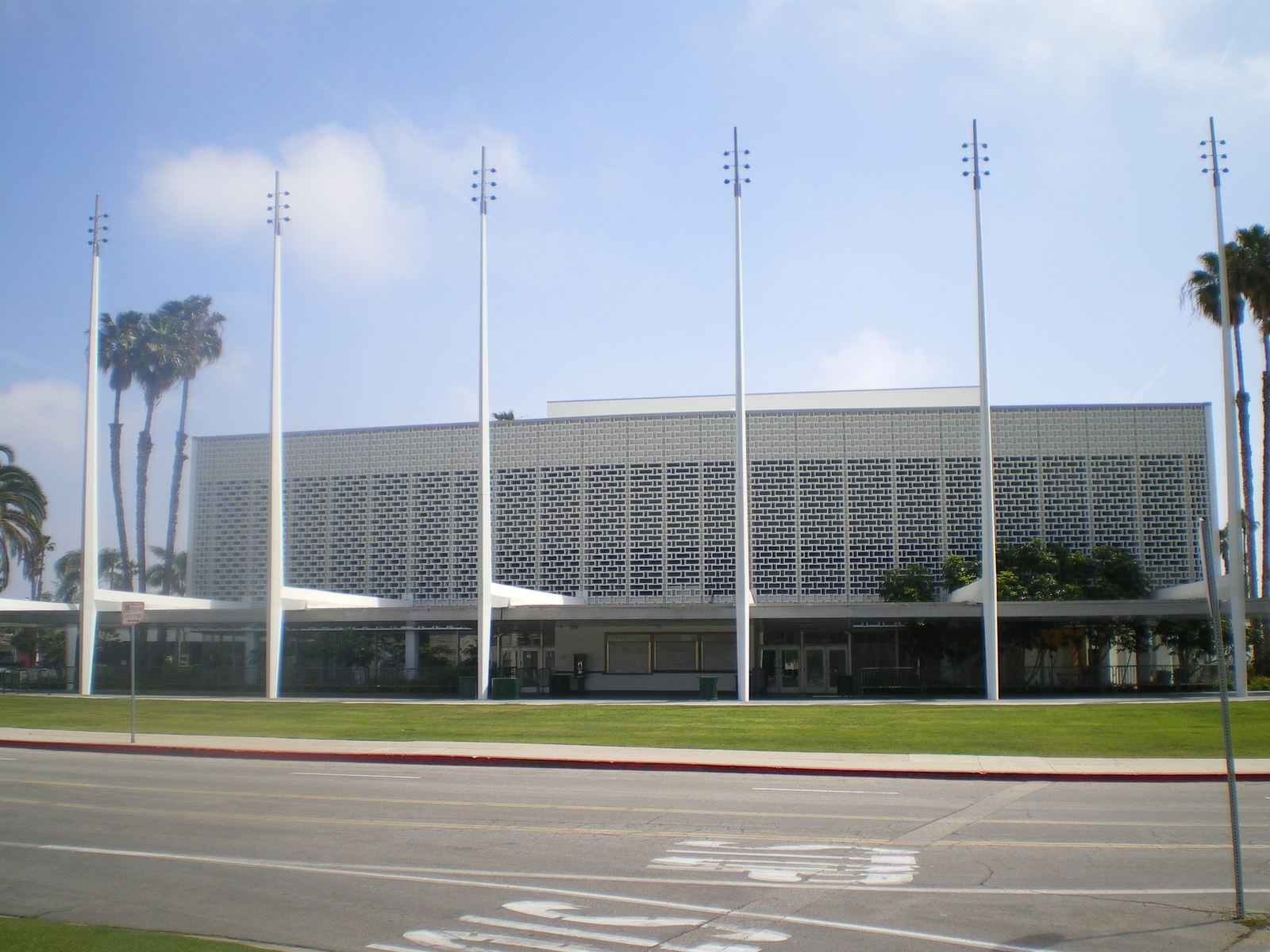
The Santa Monica City Council meets Tuesday at 5:30 p.m., and item 11.C asks it to let the city manager negotiate and execute an exclusive negotiation agreement with Goldenvoice|AEG Presents, LLC over the Civic Auditorium at 1855 Main Street. We read the four-page staff report, prepared by Economic Development Administrator Nia Tang and forwarded by City Manager Oliver Chi. It is worth reading, mostly for what it declines to promise.
The Civic has been closed since June 2013. The city's own page on the building says regular operation was suspended that month "due to the loss of redevelopment funds needed to rehabilitate the facility," which is the polite way of describing what happened when California dissolved its redevelopment agencies. Thirteen summers later, the item on the agenda is not a renovation. It is permission to study one.
What item 11.C actually grants
Six months. The staff report sets an initial six-month period for the city and AEG to evaluate the Civic's potential as a live entertainment venue, extendable by up to two 90-day periods — a ceiling of one year before anyone has to say anything binding. During that window AEG retains its own technical experts to assess existing conditions, identify structural and building improvements, estimate redevelopment and operating costs, test market demand and identify financing strategies. At the end, AEG presents findings: a recommended scope, an implementation strategy, a financial approach and a preliminary schedule.
What the agreement does not do is stated three separate times in four pages. It does not approve a redevelopment project. It does not grant development rights. It does not obligate either party to enter into a lease, a disposition and development agreement, or anything else. The environmental finding staff wants adopted is CEQA's common-sense exemption, Section 15061(b)(3), on the reasoning that negotiating cannot disturb a building.
The money detail is the one worth circling. Under the ENA phase, AEG reimburses the city for staff, consultant and legal costs through a cost recovery deposit, held in a deposit account for the Civic Center Auditorium project; AEG has also agreed to cover the cost of any additional analyses the city decides it needs. Santa Monica is being asked to spend a year of attention, not a year of general fund.
Why AEG, and why now
Because they are already working together on the sand. The staff report says the city partnered with Goldenvoice, an AEG Presents subsidiary, to plan and implement the Ocean Way Festival, and that the collaboration is how staff came to ask AEG whether it would look at the Civic at all. The festival is not hypothetical: Goldenvoice has it booked for September 26 and 27 on the beach between the Pier and Bay Street, with The Killers and Olivia Dean at the top of a bill that also includes Jack White, Khruangbin and Sublime, two-day general admission from $399 and no on-site parking. The city announced the partnership in a December 17 release describing an annual event of 30,000 to 35,000 people running fall 2026 through fall 2028.
Council direction came on July 14, when members authorized Chi to negotiate an ENA with AEG. The Daily Press's agenda preview that week listed the closed-session item as real property negotiations over 1855 Main Street, with Chi opposite Goldenvoice chief operating officer Melissa Ormond and AEG Presents executive vice president and general counsel Shawn Trell, on price and payment terms. Tuesday is the public half of a conversation that has been running privately for four weeks.
What the last exclusive agreement produced
This is the second promoter-led attempt in two years, and the first one is the reason the second one is written the way it is. The city's own FAQ on the previous ENA gives the dates plainly: approved April 8, 2025, expired October 8, 2025, six months, with Revitalization Partners Group. Talks with RPG had begun the previous July.
RPG's pitch was a $360 million restoration, and it wanted the site on a $1-a-year lease. City staff estimated the project would generate an internal rate of return of only 3 to 7 percent, against an industry standard of 8 to 12; the group put average ticket prices at $125. Those figures were reported by the Santa Monica Daily Press, which also captured the sentence that ended it. "We haven't received anything from RPG related to financial, business pro forma details," Chi said. Mayor Pro Tem Caroline Torosis, per the same report: "We've been told that now for close to two years on this project, and I haven't seen us move the ball to the goal." Council Member Dan Hall put his objection on the calendar rather than the pro forma: "My doubts are because it has been several extensions and several deadlines missed."
The council voted 4-3 on October 14, 2025 not to extend. Council Members Barry Snell and Ellis Raskin and Mayor Lana Negrete had favored a three-month extension instead. The city's announcement three days later said RPG's final submission "lacked the financial specificity and business planning details needed to responsibly extend exclusive rights to a single developer," and committed the city to a highest-and-best-use analysis instead — the same study Tuesday's report says AEG's work is meant to complement rather than replace.
RPG did not go away. In November it told the Lookout it would keep developing its proposal and bring design, financial and timeline plans back to staff and council, on a schedule a representative described as "no specific time frame that we are aware of other than soon." Negrete told the same outlet she remains "committed to exploring all viable paths forward for that space while keeping transparency at the center." Nothing in an exclusive agreement with AEG forecloses a later one with somebody else; exclusivity has an expiration date printed on it.
The paperwork that made any of this possible
A city cannot simply hand surplus public land to a promoter, and the clearance took years. Council adopted a resolution declaring surplus properties on October 11, 2022. On November 7, 2023, the state Department of Housing and Community Development certified Santa Monica's compliance with the Surplus Land Act and granted provisional authorization to proceed with disposition of the Civic under Government Code section 54230.5. The staff report cites both as the reason the city may now enter an ENA at all. The building also has a parcel number, 4290-013-901, which is the least romantic sentence anyone has ever written about a room where the Academy Awards were held.
What is sitting empty
It was voted into existence. The Santa Monica Conservancy's account records the 1954 bond measure — Proposition "U," campaigned under the slogan "I'm for 'U'" — passing 21,377 to 4,280, better than five to one. Welton Becket & Associates designed it with Louis Naidorf as lead designer; it opened in 1958, and the L.A. Conservancy notes the AIA gave it an Honor Award in 1960. The Motion Picture Academy held its ceremony there from 1961 to 1968, in front of a live audience of 2,500 and a television audience considerably larger. The city designated it a landmark in 2001.
Then the arithmetic caught up. Santa Monica Next, arguing in a February 2025 opinion piece that the site's roughly $100 million in land value ought to weigh on the decision, put the Civic's pre-closure operating deficit at as much as $2 million a year. Council authorized suspension of the renovation project in August 2012. Regular operations ended the following June. The Conservancy's summary of the request-for-proposals rounds that followed is one sentence long and explains the thirteen years: "Only one credible offer was received in these RFP processes and it asked the city for $20 million in gap funding to make the project feasible, which the city could not agree to."
What each outcome does
Approve, and the clock starts on a six-month study by an operator that is already booking 30,000 people onto the city's own sand in seven weeks — with Santa Monica's costs reimbursed and its options legally intact. AEG comes back with a number, and the number is the whole point; the last partnership died for want of one.
Reject, and the highest-and-best-use analysis proceeds without an operator's read attached to it, which is the position the city has been in since October and which has so far produced a study rather than a venue.
Either way the building does nothing on Tuesday. It has been doing nothing for thirteen years, in the International Style, behind a concrete screen, on a parcel the state has already cleared for disposal. The vote is about whether somebody with a balance sheet finally puts a price on ending that — and the honest reading of item 11.C is that Santa Monica has learned to ask for the price first.
Comments 0