 ™
™The Cheapest Round of Golf in Los Angeles Is $16. On December 3 It Buys 43 Minutes of Daylight.
The city posts a Super Twilight rate at all seven of its 18-hole courses, and it posts the hour that rate starts. Since September 1 the discount opens at 5 p.m., against a sunset that began the month at 7:18. From November 1 it opens at 4 against a sunset at 5. All seven ranked — and the city's own pages disagree about what Balboa costs.
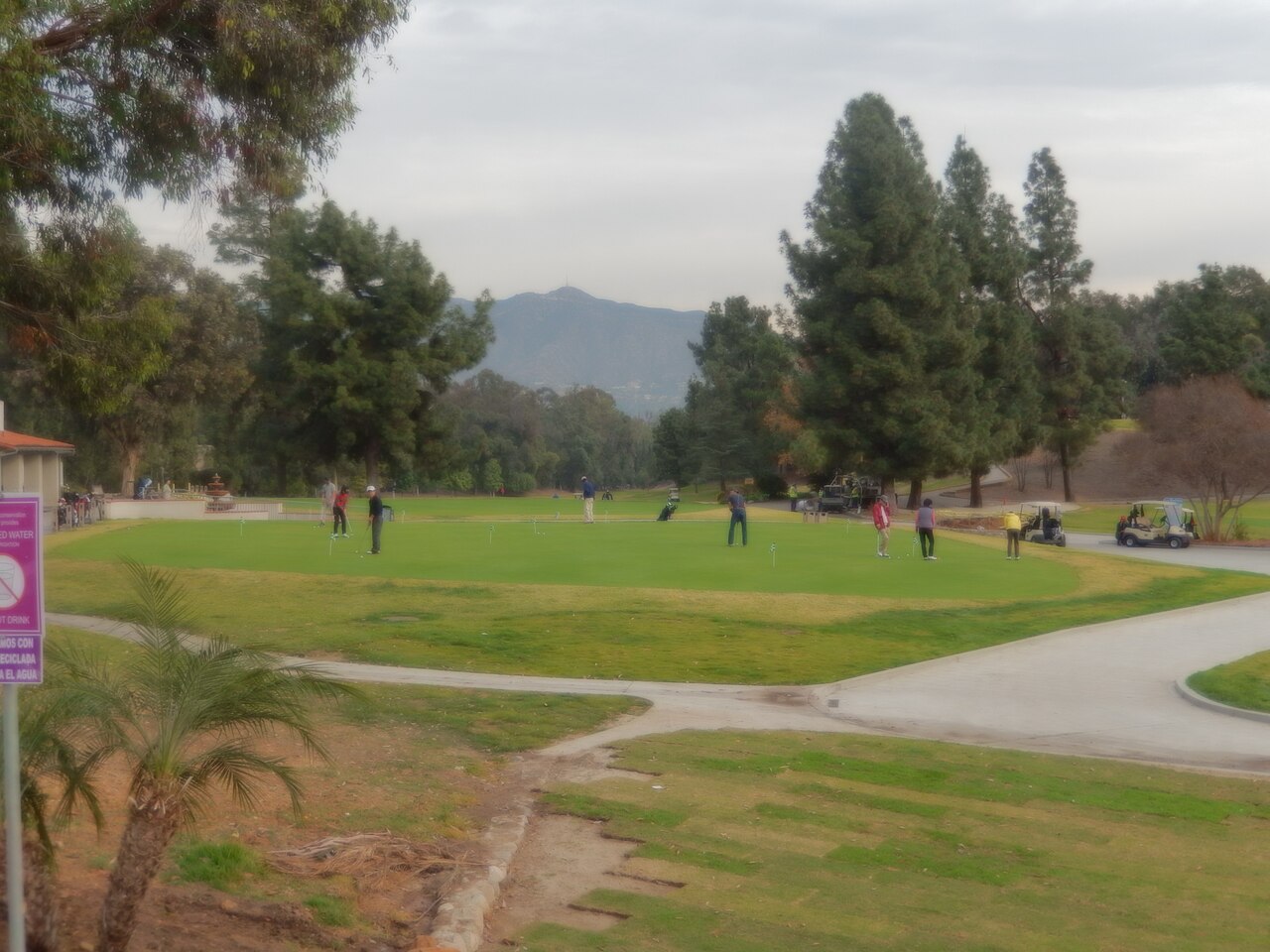
Los Angeles runs twelve golf courses, and the interesting thing about its price list is not what it charges. It is what it is charging for. Look down the city's Green Fees page and the rows announce themselves in holes — "18 Holes," "9 Holes" — until you reach the two cheapest lines on every table, "Twilight" and "Super Twilight," which name no number of holes at all. They can't. What the city is selling after four o'clock is not a round. It is the remaining daylight, at a discount, and the city publishes exactly how much of it there is going to be.
So we did the thing the two documents invite. We put the city's 2026 Twilight and Super Twilight schedule — which sets the start times in five seasonal steps — next to the U.S. Naval Observatory's rise-and-set tables for downtown Los Angeles, and measured the gap. On August 14, when we first measured it, Super Twilight opened at 6 p.m. and the sun set at 7:41: one hour and 41 minutes, with civil twilight running out at 8:07. That was the good news. On September 1 the schedule stepped to 5 p.m. and the gap widened to two hours 18 minutes, the best it gets all year. Then it collapses. From November 1 the rate opens at 4 p.m. against a 5:00 sunset — 60 minutes. At the year's earliest sunset — 4:43 p.m., which the tables put on December 3 through 6 — the cheapest golf in Los Angeles buys 43 minutes of sun.
Divide August's 101 minutes by eighteen holes and you get 5.6 minutes a hole. The city knows this, which is why five of the seven courses carry an amenity line reading "Back Nine Play (Valid only for first hour of daylight)" — nine holes is a unit the Golf Division thinks in when the light is short. It simply doesn't print one on the twilight row.
The criteria, stated once. Every course here is a city 18-hole course, and the number that sets the order is its weekday Super Twilight green fee — the cheapest legal way onto that particular golf course, from the city's posted sheet. What breaks ties is what the fee has to cover before dark: yardage from the back tees, the course's own rating and slope, and what the city says is on the property. We compared the central fee sheet against all seven individual course pages line by line, and counted the minutes against the almanac. Nobody from this desk swung a club.
1. Harding — $17, and the only good course that is also a short one
Number one is the single course that clears both bars. Harding is 6,714 yards from the tips — second-shortest of the seven, behind only Balboa — rated 71.4 with a slope of 121, and it opened in 1923, the older of the two courses in a park where golf has been played, by the city's own account, for more than a hundred years. It costs $17 on a weekday after Super Twilight and $22 on a weekend. Every course on the sheet rated harder than Harding is also longer than Harding, and the only one that is shorter is rated easier. Short and hard at once: there is exactly one, and it is $17.
The rest of what $17 attaches to is not nothing: Harding is a Golf Digest "Best Places to Play" winner, the clubhouse it shares with Wilson has been rebuilt, and the range beside it is lighted. The city also mentions, on the course's own page, that deer sightings are not uncommon. Two dollars cheaper than the course across the parking lot, and 288 yards less to cover before the light goes. Ranked on golf alone this is the third-best course on the list. Ranked on golf per minute of remaining daylight, it is first, and it isn't close.
2. Hansen Dam — $16, the cheapest rate the city prints
Hansen Dam and Woodley Lakes share the bottom of the fee sheet: $36 for eighteen on a weekday, $24 at Twilight, $16 at Super Twilight, $21 on a weekend evening. No 18-hole course in the city portfolio is cheaper after dark, and the reason Hansen Dam sits above its price twin is the difficulty: 6,801 yards, a 72.1 rating and a slope of 124, the third-hardest number the city posts anywhere, behind only Rancho Park and Wilson. It is another Golf Digest award winner, built on the face of a flood-control dam, which is where the elevation change between its two nines comes from.
One caution, and it is the city's own inconsistency: the central fee page lists the senior 18-hole rate here at $24, while Hansen Dam's own page lists it at $22. Sixty-year-olds should bring the second number and a willingness to argue.
3. Woodley Lakes — $16, and the only one you might actually finish
Same sixteen dollars, opposite argument. Woodley Lakes opened in 1975, making it the youngest course the city owns, and it was laid out for everybody: wide fairways, large greens, a slope of 119 and PGA Level 1 family tees on all eighteen holes. It also holds nine acres of water hazards, which is the part that costs you golf balls rather than daylight.
On a normal ranking this is the fourth- or fifth-best course in the city. On this one it is third, because wide and flat is the trait that converts a short window into holes played. The restaurant, Best Ball, is newly renovated, which matters here more than it would elsewhere: at the Super Twilight rate you are going to be off the course before most people have eaten.
4. Balboa — $17, and the one price the city posts two ways
Balboa is the narrow, tree-lined half of the Sepulveda Golf Complex — 6,628 yards, a 70.5 rating, a slope of 116, the gentlest numbers on this list. It shares a lighted range, a lounge and a restaurant with Encino across the parking lot, and at $17 after Super Twilight it is the shortest of the seven at the cheaper of the two Super Twilight prices.
It is also the one place where the city contradicts itself in print. The central Green Fees page groups "Encino & Balboa" and posts a weekday 18-hole rate of $38 for both. Balboa's own page posts $36. Encino's page posts $38. Every other rate on both pages matches. Two dollars is not a scandal; two dollars that depends on which municipal page a golfer happened to open is the sort of thing a rate sheet exists to prevent.
5. Encino — $17, and 7,023 yards to get through
Encino is the longest golf course the City of Los Angeles owns: 7,023 yards from the black tees, longer than Wilson, longer than Rancho, rated 71.8 with a slope of 118. It is also, by the city's description, wide open and built for the long hitter, which is a real argument for a mid-handicap player and a real problem for anyone starting at six o'clock in November.
Seventeen dollars is the correct price for it and it still lands fifth, because the constraint in this ranking is not money, it is light. Encino asks you to cover 309 more yards than Harding for the same fee, in the same window of light, on a course whose own selling point is length. That is a fine Sunday morning and a poor Tuesday evening.
6. Wilson — $19, and the fight we are picking on purpose
Here is the pick readers will write in about, so we will make the case plainly. Wilson is the best golf course in this ranking. It opened in 1927, plays 7,002 yards from the tips at a 73.0 rating, has hosted the Los Angeles Open, hosts most of the city championships, and the city calls it one of the most highly touted municipal courses internationally. On any list of Los Angeles municipal golf that is not about the clock, Wilson is first or second.
This list is about the clock. Wilson charges $19 after Super Twilight — the joint-highest rate in the system, tied with Rancho Park — for the second-longest walk in it, on the same window of daylight everybody else gets. Its neighbor charges $17 for 288 fewer yards from the same parking lot, the same lighted range and the same rebuilt clubhouse. Go play Wilson. Go play it in the morning, at $41, when the round you are paying for is a round you can finish.
7. Rancho Park — $19, the highest slope on the sheet and the highest price on it
Last, and this is the famous one. Rancho Park opened with the 1949 U.S.G.A. Public Links Championship, has hosted eighteen Los Angeles Opens plus LPGA and Senior tour events between 1978 and 1994, and was designed by William Johnson and William P. Bell. It is 6,839 yards, par 71, rated 72.8, with a slope of 130 — the hardest number the city posts anywhere, on smallish greens the course page warns you about by name.
It is also the most expensive city golf in Los Angeles at every single line of the sheet: $42 on a weekday, $53 on a weekend, $58 before 9 a.m. on a weekend, $28 at Twilight, $19 at Super Twilight. And the clubhouse is a construction site — the city's construction updates page currently consists of one sentence promising Rancho Park clubhouse updates soon. A slope of 130 is the last thing you want against a shrinking sun, and this is the one course where the fee sheet asks a premium for it.
Sticker vs. door
Sixteen dollars is the sticker at Hansen Dam. Here is the door. Booking any tee time requires a $10-per-person non-refundable deposit, credited toward the green fee at check-in — so the money is not extra, but it is committed. An electric cart seat at Super Twilight is $11; a push cart on an 18-hole course is $8. The L.A. City Golf Player Card is $25 a year, sold in person only at a course, and it is what moves you from booking seven days out to booking nine days out at 6 a.m. — and it is required for anyone 60 or over to get the senior rate at all.
Two players at Hansen Dam on a weekday evening, riding, with cards already in their wallets: $32 in green fees, $22 in cart seats, $54 at the counter. Walking, with push carts: $48. And if either of them cancels — for any reason, at any notice, per the city's own FAQ — the $10 deposit is forfeited, with the separate $10 no-show and short-show penalties still in effect on top. Rain is the exception: the city says staff will cancel and refund on the day, and instructs golfers not to cancel their own reservations when rain is forecast, because self-cancellation forfeits.
The comparable
The same $16, at the same course, on the same evening, also buys a Large bucket of range balls. That is the city's posted price: Small $8, Medium $12, Large $16, Jumbo $20, and at Griffith Park's Top Tracer bays, $10 through $22. Which produces the sentence this whole ranking has been walking toward: the city describes a lighted range at all seven of these courses, and not one of them has a light on the golf course. For sixteen dollars the city will sell you a golf course you cannot see, or a bucket of balls you can hit until closing. Only one of those two products is sold with a sunset schedule attached.
If the point is holes rather than prestige, the city's small courses are the honest answer and nobody ranks them: Los Feliz's nine-hole par-3 is $11 on a weekday and $13 on a weekend, Rancho Park's par-3 is $12 and $14, and the nine-hole executive courses at Roosevelt and Penmar are $19 and $24. Los Feliz at eleven dollars is the best value in Los Angeles municipal golf, and we will take the email.
Rate of the month
Not a fee — a disclosure. On its own FAQ page the city states flatly that tee-time brokering is happening at its courses, that brokers book public tee times, advertise them, resell them for a fee, then cancel and immediately re-book under the buyer's name; that its reservation vendor has put in measures to mitigate bots; and that brokering is now punishable as a misdemeanor under Los Angeles Municipal Code sections 63.55(G) and (R) and 11.00(M). The $10 deposit, the city says in the same answer, exists partly to deter it.
The same page volunteers the context, quoting the National Golf Foundation's finding that Southern California is the most golf-starved market in the continental United States — the most golfers chasing the fewest holes. Which is the real going rate here. The posted number is $16. The thing $16 buys is a tee time in what the city's own citation calls the most golf-starved market in the continental United States, on a course with no lights, for as many holes as the sun still has in it. In mid-August that was 101 minutes; on September 1 it was 138; from November 1 it is 60. Check the date before you check the price.
Comments 0