 ™
Childcare Rivals Rent, So Some California Parents Turn to Credit Cards
Families using at least 20 hours of care a week paid a median $1,517 a month in 2025, the Federal Reserve found.
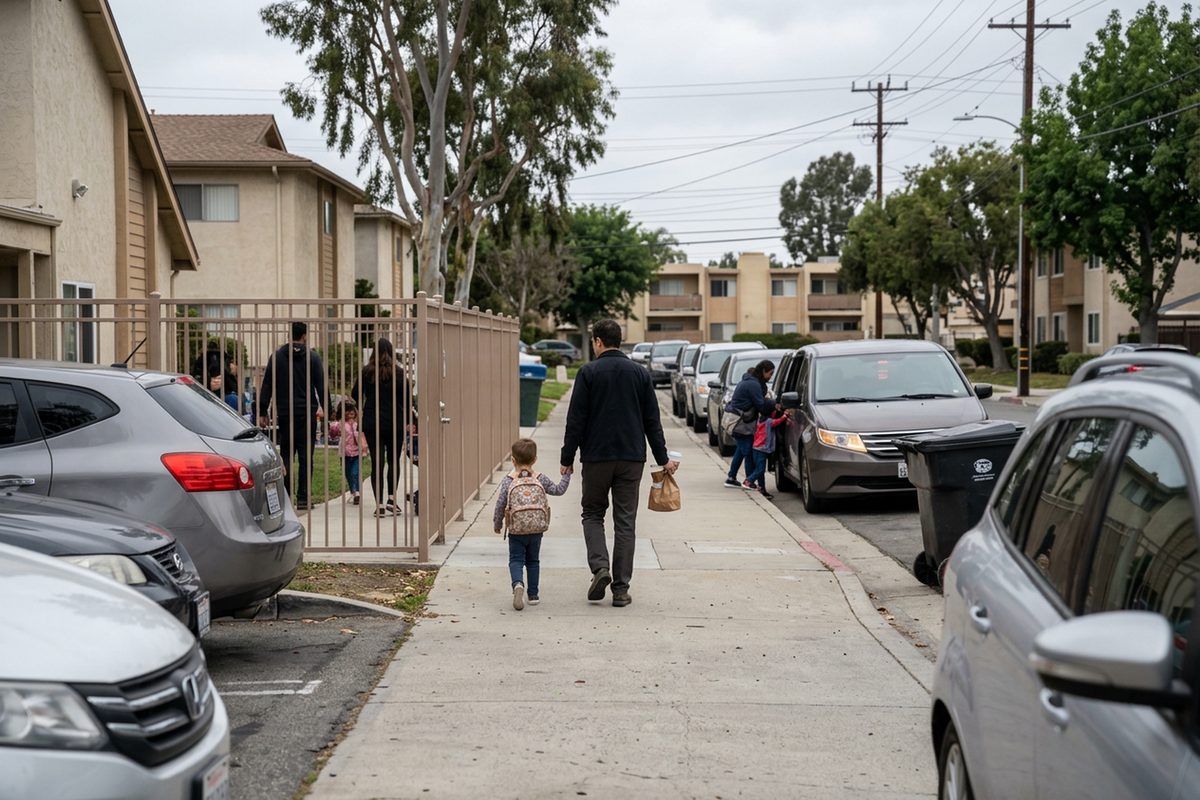
Genny Richard's son is 5, and his full-time Montessori school in Irvine costs her family $2,020 a month. That's more than they pay in rent, LAist reported Tuesday.
She's one of dozens of Southern California parents who told LAist they've gone into debt or spent down savings to keep their kids in care. The Federal Reserve's national numbers show the squeeze. Its household survey, released in May, put the median childcare bill at $1,517 a month in 2025 for families using 20 or more hours of care weekly. Their median rent or mortgage was $2,000.
For most households carrying both bills, care cost at least half of what housing did. And the median is climbing. LAist's review of the Fed's data put it at $1,100 in 2023, a 38% jump in two years.
In L.A. County, full-time care takes 17% of the median household's income, the Public Policy Institute of California calculated. Across California's counties, the share runs from 8% to 21%. PPIC found that L.A. breaks the usual pattern, where richer counties pay more but poorer ones lose a bigger share of their income. Here, both incomes and prices are relatively high.
Pamela Arciaga of Glendale is her household's only earner and didn't qualify for subsidies. She paid $1,000 a month for her 4-year-old to attend preschool three days a week, and her parents drove in from Riverside to watch him on the other days. Groceries and the water and power bills went on cards, because the preschool's monthly invoice came with no payment plan, she told LAist. She ran up about $20,000 in credit card debt and is now paying it off.
Her son has since started transitional kindergarten, which California opened free to all 4-year-olds in the 2025–26 school year, according to PPIC. After-school care still costs her about $300 a month.
Nobody tracks that kind of debt, though. Chloe Gibbs, a Stanford Institute for Economic Policy Research fellow who researches the childcare market, told LAist that card balances don't show what they paid for. "We just see the consumer debt, and we don't know the reason," she said. The Fed's survey measures what care costs, not how families find the money.
For Richard, the debt came in through everything else. Childcare had to come straight out of the bank account, so an urgent care trip for an ear infection and her own bout of pneumonia landed on high-interest cards.
She works at a nonprofit and her husband is a postdoctoral fellow. Over several years, their card balances have climbed into the tens of thousands. "The credit card debt just sort of happened over time," she told LAist.
Richard is due next month, and the family is staying put in a two-bedroom UC Irvine apartment she says is probably smaller than they need. PPIC's county figures show what's coming. The median cost of a year of full-time infant care runs from $11,000 to $29,000 depending on the county, higher at both ends than care for a preschooler.
Source: LAist, retrieved October 27, 2026. Other sources: federalreserve.gov, ppic.org, ppic.org (2).
Comments 0