 ™
™Altman Says 38,000 ChatGPT Queries Equal One Almond. Researchers Can't Check It.
Newsom is weighing two bills that would make California data centers disclose how much water they use.
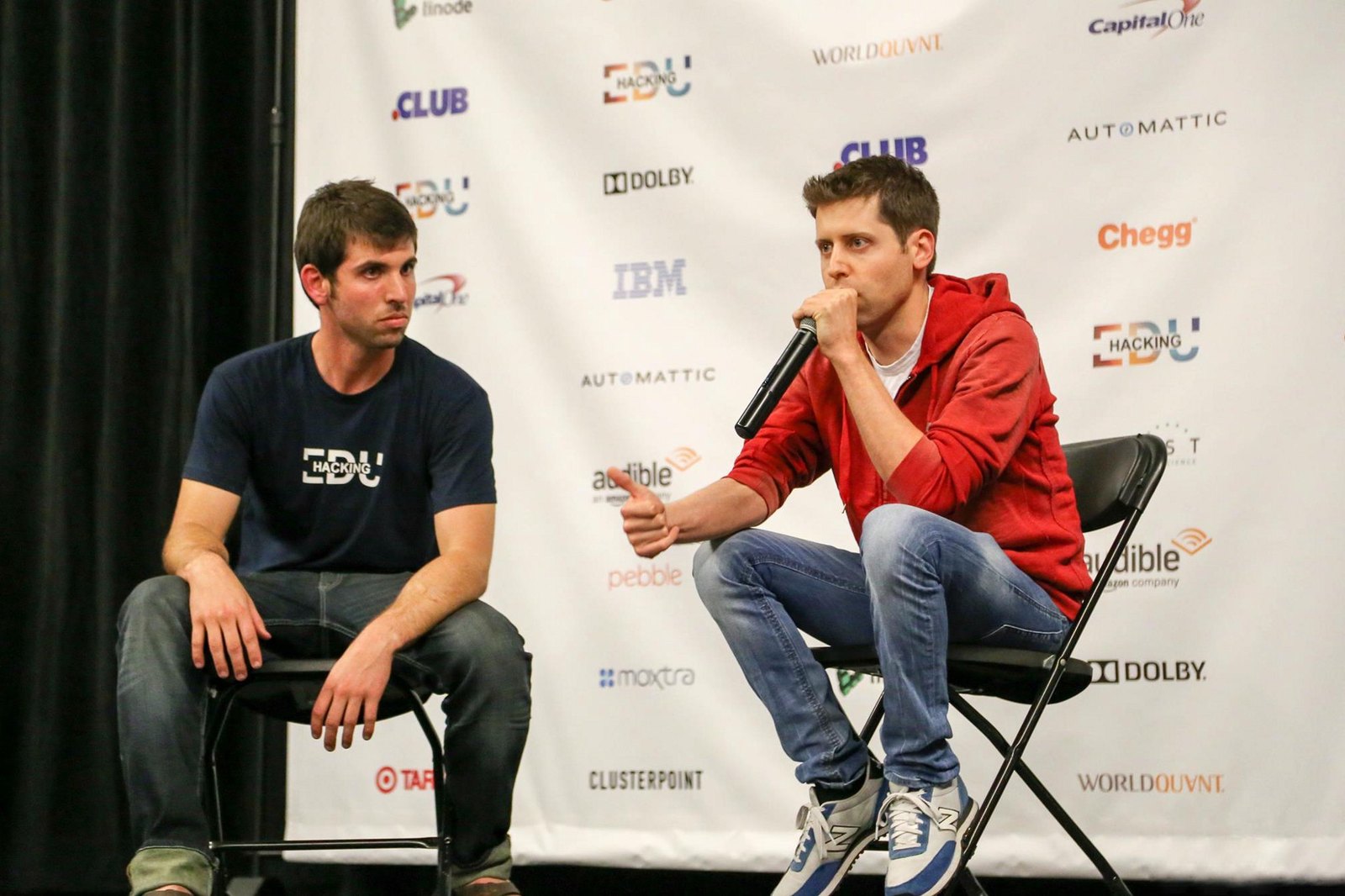
It takes 38,000 ChatGPT queries to match the water in a single California almond, OpenAI chief executive Sam Altman said on the Sources Podcast with Alex Heath. Two university researchers who study water and computing told CalMatters, which fact-checked the claim in a story published September 3, 2026, that the public record isn't good enough to confirm the arithmetic or to knock it down. No California agency publishes what data centers actually draw.
The people who'd feel the answer are the water utilities that have to build for the hottest day of the year, and the households on the same pipes. Data centers usually take treated, drinkable water out of public systems rather than the irrigation water an almond orchard runs, a University of California, Riverside team reported.
Sacramento is already arguing about it. Over the past two weeks lawmakers passed two bills by Assemblymember Diane Papan, a San Mateo Democrat, and both are waiting on Gov. Gavin Newsom, CalMatters reported. The first would make an operator seeking a business permit disclose where its water comes from and how much of it the site uses. The second bars local governments — Los Angeles among them — from approving a new data center until the developer files a water plan and agrees to cover the cost of hooking into the local supply.
It's Papan's second run at this. Newsom vetoed her earlier bill last year, saying he didn't want to lock in reporting rules before knowing what they'd cost tech companies and their customers. Tech and business groups lined up against the new pair too.
“There’s no published data — certainly not for California — and what is public seems all over the place,” Michael Kiparsky, director of the Wheeler Water Institute at the UC Berkeley Center for Law, Energy, & the Environment, told CalMatters.
Altman's own framing was a comparison rather than a disclosure. “If you look at a modern very large data center, it uses the equivalent amount of water as an office building,” he told Heath. Shaolei Ren, a professor of electrical and computer engineering at UC Riverside, told CalMatters that no single figure survives contact with the variables: where the building sits, how hot the day is, what cooling system it runs. Prompt length and the reasoning behind an answer move it too.
What is on the record is a trend. One study cited by CalMatters put direct data center use at roughly 17 billion gallons in 2023. A decade earlier that figure was 5.6 billion gallons. Another projected that hyperscale facilities could use 150 billion gallons between 2025 and 2030. That's about what 4.6 million U.S. households use in a year, per the CalMatters check.
Annual totals hide the spike. Ren's team, in a preprint still under review at a journal, found cooling systems could demand as much as 1.45 billion additional gallons of peak capacity a day. That's comparable to New York City's average daily supply, the study says.
Ren said switching to less thirsty cooling, like dry cooling, could cut water use by up to 50%. It costs more energy, and generating energy takes water.
Call the almond line unsupported rather than false. It's a tidy ratio resting on numbers the industry hasn't published, in a state whose regulators can't yet demand them.
The bills are Newsom's call now. He said no the last time.
Source: calmatters.org, retrieved September 8, 2026.
Comments 0