 ™
™It Costs $30 to Sue in L.A. Small Claims Court. Collecting Costs $90 More.
The filing fee is the cheap part. Here's every fee between a judgment and the money.
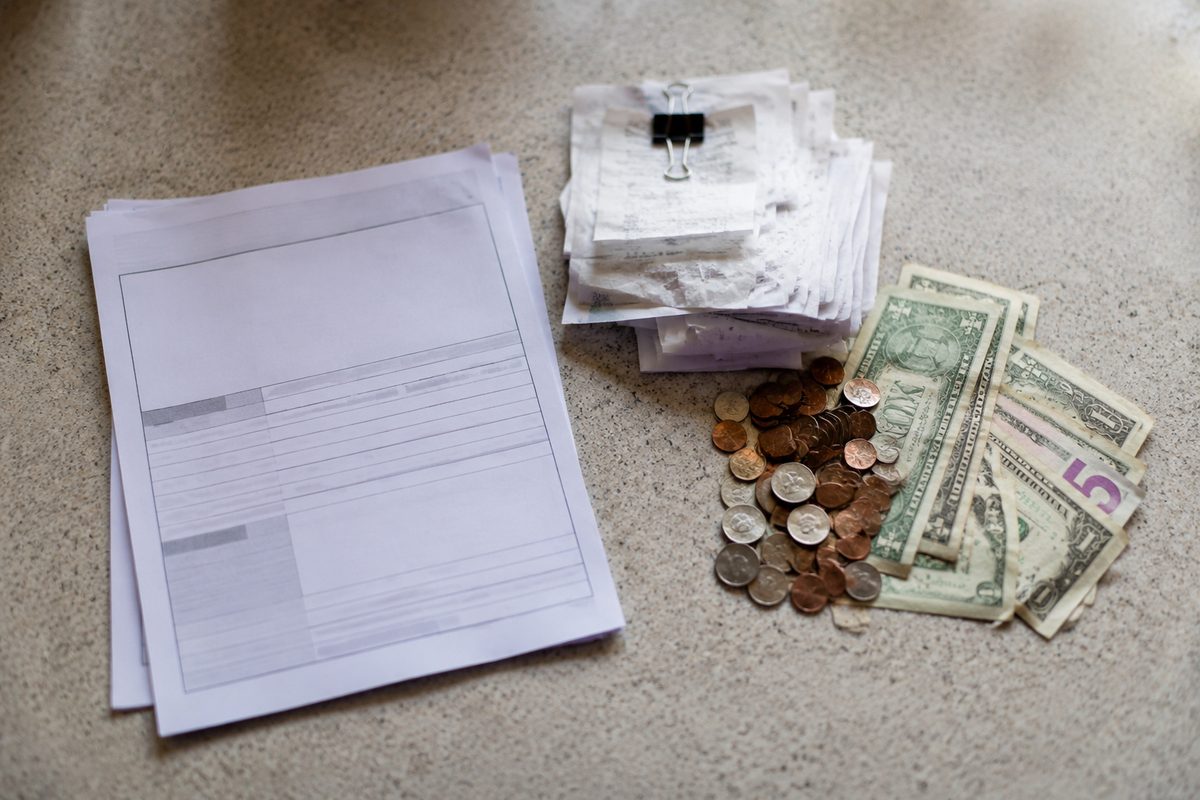
You're wondering whether it's worth it. The filing fee is almost certainly not what stops you: suing someone in Los Angeles small claims court costs $30 if you're asking for $1,500 or less, and never more than $100 to open the case. That's the whole barrier at the front door. The fees that matter come later, after you've won, when the person who owes you the money doesn't hand it over — and those are the ones nobody prices out before they file.
So here's the whole thing, itemized, in the order you'd actually hit each cost. We read the Superior Court's own Civil Fee Schedule dated January 1, 2026 and set every small claims line in it against the fee list Los Angeles County's Department of Consumer and Business Affairs publishes for the public. The two agree on every court fee we compared, which is worth knowing, because the county's page also carries the Sheriff's charges and the court's schedule doesn't.
What it costs to open the case
The filing fee is a ladder, and the rung is set by what you're asking for. The court's schedule cites Code of Civil Procedure section 116.230 for all four rungs:
$1,500 or less: $30. More than $1,500 and up to $5,000: $50. More than $5,000 and up to $12,500: $75 — and that top rung is for claims by natural persons only. $100 if you've filed more than 12 small claims anywhere in California in the previous 12 months, which is the fee the schedule aims at collection agencies and landlords with portfolios, not at you.
If you get the number wrong on the way in, raising it costs a little extra rather than a fresh filing: $20 to move a claim up from the bottom rung to the middle one, $25 from the middle to the top, $45 if you jump the whole ladder at once. And if you can't afford any of it, the county's page points to the same remedy the court does — a Request to Waive Court Fees, filed with the clerk, which the court will process alongside the document it's attached to.
The ceiling is $12,500, and you get two big swings a year
The Superior Court states the limit in one line on its small claims page: "Small Claims Court handles Civil cases asking for $12,500.00 or less." That figure comes from section 116.221, which grants the court jurisdiction over a claim brought by a natural person whose demand does not exceed twelve thousand five hundred dollars. The state courts' own self-help guide states the other half of it plainly: the ceiling drops to $6,250 when you're suing as a business rather than as a person.
There is a limit on how many times you can use the court to get around that ceiling, and it bites above a certain claim size. Under section 116.231, nobody may file more than two small claims actions demanding more than $2,500 anywhere in California in a single calendar year — and each one over $2,500 requires a declaration under penalty of perjury that you haven't already used both. Claims of $2,500 or less aren't counted against you at all.
Getting the papers to the other side, and the three dates that decide whether it counted
A claim nobody was served with is a hearing that doesn't happen. Section 116.340 gives four ways to do it — the clerk mails it by a form of mail providing a return receipt, you have it personally delivered, you use substituted service, or the clerk's combined mail-and-order method — and then sets the dates that decide whether any of them counted.
Fifteen days before the hearing if the person you're suing is in Los Angeles County. Twenty days if they're outside it. And separately, the statute requires proof of service to be on file with the court at least five days before the hearing. Two of those three deadlines are about someone else's calendar. The five-day one is yours alone, it's the easiest to forget, and forgetting it is how a case that was properly served still falls apart.
The Sheriff will serve the papers for you, and the county lists that at $50 for service of a plaintiff's claim. An approved fee waiver covers it.
The Los Angeles steps that aren't in the state's guide
This is where a guide written for California generally stops being enough, because Los Angeles adds requirements of its own.
You have to register for online dispute resolution. The court's small claims page says it without qualification: "All Small Claims litigants must register for Small Claims Online Dispute Resolution prior to their scheduled court hearing." It is a negotiation system, not a hearing — you exchange documents and proposals with the other side before your date, and the county's mediators are available to help for free. The county describes the program as a joint effort it funds and staffs as the lead mediation provider, and says a settlement reached there is filed with the court electronically, at no cost. Registering costs nothing. Not registering is skipping a step the court says is required.
If you plan to appear remotely, your evidence has to arrive before you do. The court's mandatory-use form LASC CIV 278 exists because of a standing order — 2020-SJ-015-0 — that requires a remotely-appearing party to mail copies of every exhibit to both the other side and the courthouse in advance, with the form in the envelope and a mailing label on the outside. The form states the consequence in its own words: "A failure to comply may result in the evidence not being considered by the court." The receipt, the photograph, the text message thread — none of it helps you if it's still on your phone at the hearing.
Electronic filing is a third Los Angeles wrinkle, and it's optional rather than required. The court's small claims e-filing FAQ says any self-represented litigant may keep filing everything on paper at the courthouse, and that the court's own e-filing fee is $2.25 per submission on top of whatever the filing service provider charges. One thing you can't send that way: "evidence may not be submitted electronically." That's the standing order above, still in force.
At the hearing, nobody has a lawyer
The court's page puts it in one line: "There are no lawyers, no rules of evidence, and no juries." Section 116.530 is the rule underneath it: no attorney may take part in the conduct or defense of a small claims action, with narrow exceptions for a lawyer suing over their own affairs.
Read the rest of that section, though, because it is less absolute than it sounds. An attorney may advise you before or after the hearing, may testify to what they personally know, may represent a party on appeal, and may represent a party enforcing the judgment. What's barred is the courtroom itself. A company that can't send its lawyer to the hearing can absolutely send one to the collection.
Postponing costs $10 once the defendant has been served.
If you lose, you can't appeal. That is not a typo.
Section 116.710 gives the appeal to one side of the room. "The plaintiff in a small claims action shall have no right to appeal the judgment on the plaintiff's claim." The defendant may appeal that judgment; the plaintiff may appeal only a claim the defendant filed against them. A defendant who didn't show up doesn't get an appeal either — their remedy is a motion to vacate, which costs $20.
Whoever has the right, the clock is short. Under section 116.750, a notice of appeal is due no later than 30 days after the clerk delivers or mails notice of entry of the judgment, and one filed later "is ineffective for any purpose." Filing it costs $75 — more than the largest filing fee in the whole small claims schedule.
What this means for how you prepare is not subtle. You get one hearing. There is no version of this where you lose, regroup, and argue it better in front of a different judge.
Winning is where the fees start
The judgment is a piece of paper saying you're owed money. It is not the money, and no one at the courthouse will go get it for you.
First you wait. The state courts' self-help guide is explicit that you have to wait at least 30 days from the day the Notice of Entry of Judgment was handed or mailed to you, because that's the window for an appeal or a motion to vacate. During those same 30 days the other side has a job of their own: section 116.830 requires a judgment debtor to complete a form listing the nature and location of their assets and deliver it to you. Willfully not doing it exposes them to the sanctions in section 708.170, which the statute describes as including arrest and attorney's fees. In practice, plenty of people don't send it.
Then the fees. Getting the Sheriff to take money out of a bank account means a writ of execution from the court at $40, plus the Sheriff's $50 for the bank levy. That's $90 spent after you won, and it's the single most useful number on this page — three times the cost of filing the case in the first place. Garnishing wages runs $40 for the writ and $45 to the Sheriff for the earnings withholding. An abstract of judgment, which puts a lien on real estate, is another $40. If you don't know where they bank or work, an application to examine the judgment debtor under oath is $60, and the Sheriff charges $50 to $100 to serve the order for their appearance.
The costs aren't necessarily yours to eat. Section 116.820 entitles the prevailing party to the costs of enforcement, plus accrued interest. Interest is where a small judgment quietly changes size: section 685.010 sets the default at 10 percent a year on the unpaid principal, with a 5 percent rate carved out for judgments on personal, family or household debt under $50,000 — a carve-out that excludes debts arising from fraud or tortious conduct, and that turns on what the money was for rather than on who you are. Which rate applies to a particular judgment is exactly the question to take to a free advisor rather than assume, and there's one below.
You have time, at least. The self-help guide states that a judgment "will expire in 10 years," and can be renewed before it does.
The free help, and the number that reaches it
Section 116.940 requires every county to run a small claims advisory service, delivered in person, by telephone, or by any other means reasonably calculated to get someone timely help — and it names the collection of judgments as one of the subjects those advisors must cover.
In Los Angeles County that service is the Department of Consumer and Business Affairs. It describes the scope on its own services page: its advisors cover starting a case, serving court papers, preparing for court, and collecting or paying a judgment. The department's contact page lists a toll-free number from inside the county, 800.593.8222, a line from outside it at 213.974.1452, and an office at 320 W. Temple St., Room G-10, in downtown Los Angeles. The same department runs free mediation, which is the other thing worth trying before a hearing date arrives.
For scale on how ordinary all of this is: the Judicial Council's newsroom reported in March 2022 that roughly 150,000 small claims cases are filed in California every year, between 50,000 and 60,000 of them in Los Angeles County alone.
One number on the court's own page hasn't caught up
A caution, because you will run into this. The Superior Court's small claims e-filing FAQ, dated March 1, 2023, still describes the top filing tier as "more than $5,000 but less than or equal to $10,000." The $10,000 ceiling was the old jurisdictional limit. The court's January 2026 fee schedule and section 116.221 both say $12,500, and the court's own small claims landing page says $12,500 as well.
The fee is the same $75 either way, so nothing about your payment changes. But it's a useful reminder about which document to trust when two of an agency's pages disagree: the dated fee schedule and the statute win over the FAQ, every time.
Where this leaves you
Work out what you're actually owed, because it sets the filing fee and it can't casually exceed $12,500. Find out where the person or business banks or works before you file, not after, because that information is what the $90 buys its way to and you may already have it on an old check or a pay stub. Serve them 15 days out, and get the proof of service in five days out. Register for the online dispute resolution the court says you must, and mail your evidence in advance if you're appearing remotely. Then call 800.593.8222 and ask an advisor the one question you're least sure about — the service is free, the county is required to run it, and it exists for precisely the part of this you're about to guess at.
Fees, code sections and procedures above were checked on September 2, 2026 against the Superior Court of California, County of Los Angeles Civil Fee Schedule dated January 1, 2026, the court's small claims division page and its small claims e-filing FAQ, the mandatory-use evidence exchange form LASC CIV 278, the Los Angeles County Department of Consumer and Business Affairs' small claims fee and contact pages, the California Courts self-help guide, and Code of Civil Procedure sections 116.221, 116.230, 116.231, 116.340, 116.530, 116.710, 116.750, 116.820, 116.830, 116.940 and 685.010. This page is not legal advice; where a linked source and this page disagree, the source wins. It is re-verified and updated in place at this address.
Comments 0