 ™
™Restaurant 'Admin Fees' Are Legal in California Only if the Menu Says So
Under SB 1524, a mandatory restaurant fee can go on top of menu prices only if it's clearly displayed wherever those prices appear.
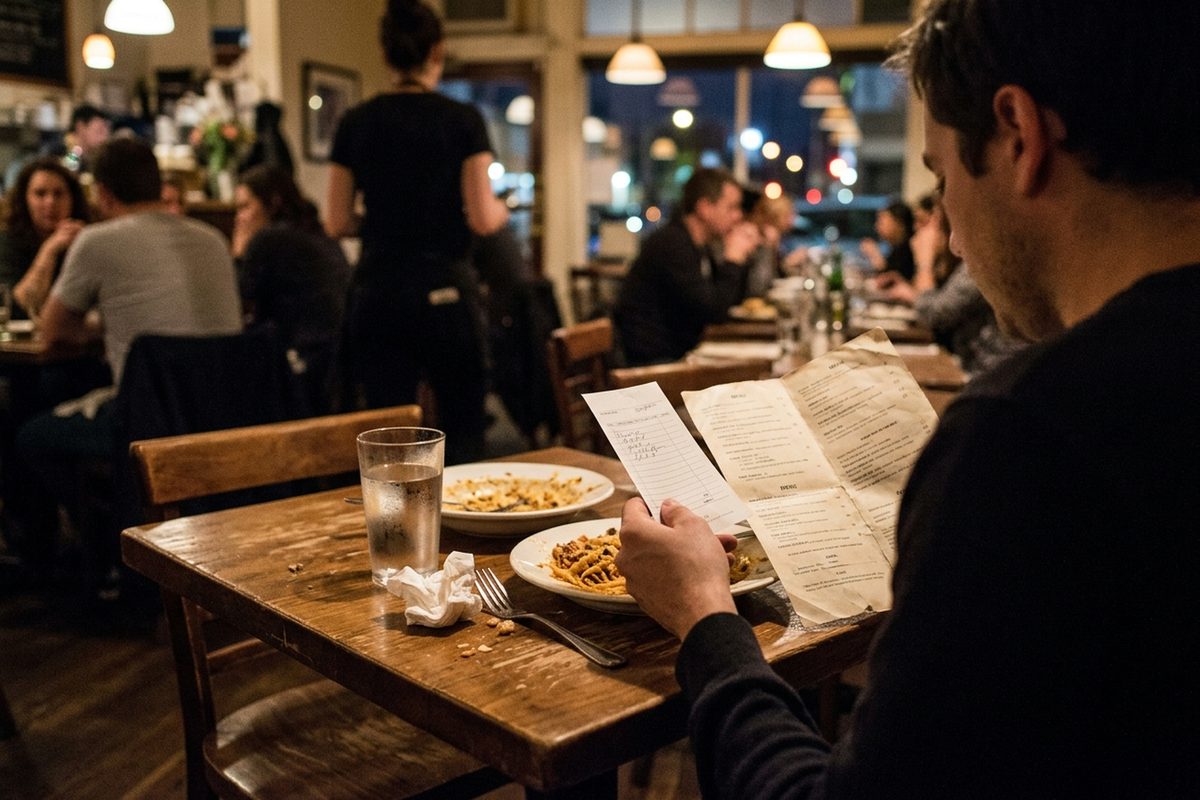
You're wondering if a restaurant can add both a 20% service charge and an "admin fee" to the same check. In California, it can. The catch is the menu: both fees have to be there, in plain view, before you order.
People in L.A. have been passing around a bill like that online. Two state laws decide whether it's allowed: the honest-pricing law, SB 478, and a 2024 amendment for restaurants, SB 1524, according to guidance from the California Attorney General's office.
Start with the general rule. Since July 1, 2024, most businesses have been barred from "advertising, displaying, or offering a price for a good or service that does not include all mandatory fees or charges," the language the Attorney General's guidance quotes from Section 1770(a)(29) of the Civil Code. Government taxes and reasonable shipping costs don't have to be in the price. Everything mandatory does.
Restaurants got their own lane. The Attorney General's office says mandatory fees at restaurants, bars and some other food sellers are exempt from that all-in-price rule, as long as the fee is shown clearly and prominently anywhere the restaurant posts its prices.
The California Restaurant Association, which co-sponsored SB 1524, says the law also requires the fee to come with an explanation of what it's for, on any menu, ad or display that lists food or drink prices. The association says the rule covers a mandatory gratuity, a service charge or any other fee. Gov. Gavin Newsom signed the bill June 29, 2024, as an urgency measure, so it took effect right away.
Then the rule got stricter about how the notice looks. Starting July 1, 2025, the association says, the fee language had to be printed bigger than the text around it, in a contrasting font or color, or set apart with symbols or marks, so a diner's eye actually lands on it.
The law doesn't limit how much a restaurant can charge, though. The Attorney General's office says SB 478 governs how prices get shown, and it doesn't cap how high they go. A fee stacked on top of a service charge isn't illegal by itself. A fee you couldn't have seen coming is the problem.
So check the menu first, because that's where the law puts the burden. Look near the prices for the fee, in type that stands out, with a line saying what the money pays for. If you're ordering from a menu that shows prices and the fee isn't on it, you've learned something before you've spent anything.
Then check the bill against what the menu told you. The Attorney General's guidance makes the restaurant exemption depend on that display. If a mandatory fee shows up on the check that the menu never mentioned, the exemption doesn't cover it, and the general rule is what's left: the price you saw was supposed to include it.
Card fees are their own case. Under the Attorney General's general guidance, a credit card fee usually doesn't count as mandatory if you can avoid it by paying another way, like cash. It becomes mandatory when the business takes only cards.
The tip line is yours. The Attorney General's office says the law doesn't touch tips customers leave voluntarily, which fall under other rules, including Labor Code Section 350. An automatic 20% charge is a fee the menu has to disclose. Anything you write in below it is up to you.
Before you order, take a photo of the menu page with the prices on it. That's where the law says the fee had to be.
Source: State of California, retrieved October 10, 2026. Other sources: calrest.org.
Comments 0