 ™
™Metro Collects 48 Cents Toward a $9.36 Ride. Bass Wants It to Be Zero.
Metro's adopted budget puts fare revenue at $149.6 million — 1.5% of the agency's money, and $25.2 million below last year.
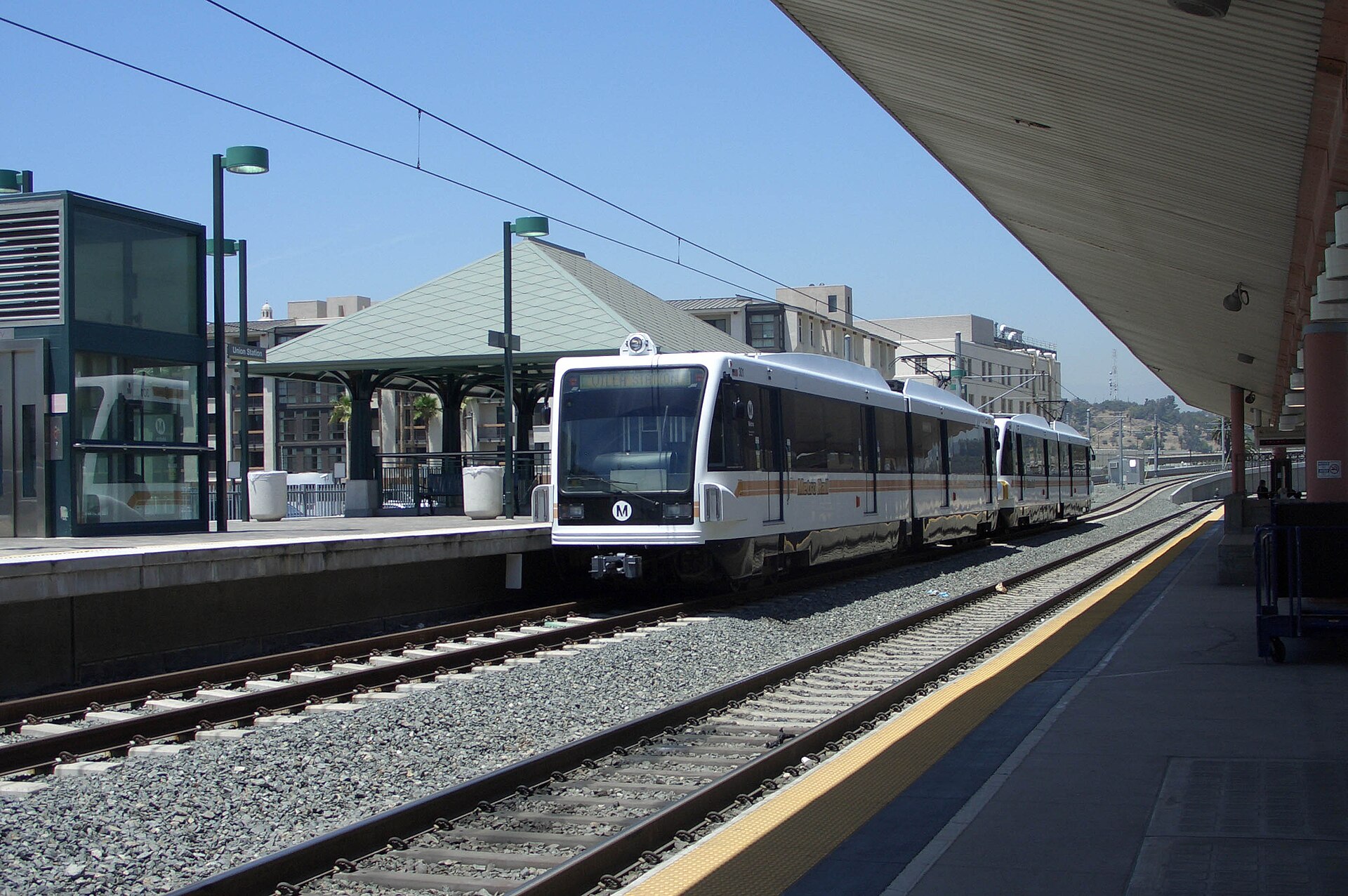
Los Angeles County's transit agency expects to collect $149.6 million in fares in the year that began July 1. It expects to spend $9.69 billion. Both figures are printed in the Fiscal Year 2027 Adopted Budget the Metro board approved in June, and the fare line is down $25.2 million — 14.4% — from the year before. The budget says why, in its own resource assumptions: fare revenue is "expected to remain constrained due to increased utilization of free and subsidized fare programs such as Low-Income Fare is Easy (LIFE), Fare Capping, and GoPass."
Mayor Karen Bass, who took the chair of the Metro board on July 22, wants that line to reach zero. Speaking at the agency's State of the Agency event, she said she wanted to "develop a long-term financial strategy and plan for Metro to finally be fare-free," as Streetsblog L.A. reported. The number she'd be erasing is smaller than most riders assume, and the machinery that produces it is not. We read the adopted budget and the board's own 2021 report on a fareless county, and lined the figures up.
What the fare brings in
$149.6 million. That's the passenger-fare line in the FY27 budget, against total resources of $9,687.2 million — 1.5% of the money Metro has. Each of the four voter-approved half-cent sales taxes that fund the agency — Propositions A and C, Measure R and Measure M — is budgeted at $1.089 billion, individually more than seven times the farebox. Sales tax, the Transportation Development Act and state transit assistance together come to $5.15 billion.
5.1%. The fare recovery ratio the budget projects systemwide for FY27, down from 6.1% in the FY26 budget. Bus recovers 6.0% of its operating cost, rail 3.4%. The direction is not new: LAist reported in August that fares covered 22% of operating expenses in fiscal 2016.
48 cents. Metro's own service statistics put fare revenue at $0.48 per boarding next year, against an operating cost of $9.36 and a public subsidy of $8.78. The FY26 budget assumed 57 cents. Systemwide operating cost is budgeted at $2.90 billion and the subsidy at $2.72 billion.
310.1 million. Budgeted boardings for FY27 — 236.6 million on buses, 73.5 million on rail — up 2.6% from the FY26 estimate. Ridership rises 2.6% and fare revenue falls 14.3% in the same document. That gap is the discount programs doing exactly what they were designed to do.
$36.7 million. What Metro budgets for fare assistance — the LIFE program, which gives approved low-income riders 90 days of unlimited free rides and then 20 free rides a month. The line sits in regional pass-throughs, not operations. Metro will pay out roughly a quarter of what it collects at the gate to help people not pay at the gate.
$1.75. The base fare a rider without a program still pays, capped at $5 a day and $18 a week. Students at participating K-12 schools, adult schools and community colleges ride free on GoPass. The posted price and the collected price have been drifting apart for years; 48 cents is where they are now.
What the fare costs to collect
$74 million. In a September 16, 2021 report to its board — File #2021-0574, the Fareless System Initiative funding plan — Metro put the annual cost of administering the regional TAP fare-collection system at $74 million. Labor accounted for $48.1 million across 282 full-time positions and four unions; non-labor for $26.3 million, including $13.4 million to the vendor Cubic. Measured against the roughly $250 million a year Metro was then collecting, the report called that "approximately 30% of Metro's average annual revenue."
That $74 million is a 2021 figure resting on a pre-pandemic revenue base, and it is the newest accounting of collection costs Metro has published. The FY27 budget book carries no equivalent line; we read it through, and the cost of collecting fares is not broken out anywhere in it.
$26.3 million. What the 2021 report said ending fare collection county-wide would actually save: the non-labor total, with all 282 positions reassigned inside the agency rather than cut. If Metro alone went fareless while the other 25 TAP agencies kept charging, Metro would still administer TAP for the region and the saving would fall to $14.5 million. Switching collection off carries a one-time cost the report put at $151.4 million.
$15.5 million. Faregate Retrofit Phase 3, in the FY27 capital program — the taller gates Metro is installing to stop people walking through. Phase 2 and the faregate pilot before it carry life-of-project budgets of $15.3 million and $14.4 million. The budget lists the TAP-to-Exit program and taller faregates among its named FY27 priorities. It was adopted on June 2, seven weeks before Bass took the gavel.
What zero would cost
$1.1 billion. The 2021 report priced a fully fareless county at $804.9 million a year for Metro plus $263.0 million for the municipal and local operators. Metro's share combined lost fare revenue of about $250 million with $252.9 million in added operating costs to carry the resulting crowds — travel-demand modeling in that report assumed a 45% capacity increase on buses and 31% on rail. A one-time $80 million payment to defease bonds would come on top of the annual bill.
Five years of discount programs have already moved half of that arithmetic. The revenue Metro would forfeit is no longer $250 million; the adopted budget says it is $149.6 million, and falling. The service half hasn't moved at all — the buses and trains a fareless system would need are the same buses and trains, and Metro's transit operations budget is $2.99 billion before anyone adds capacity to it. The 2021 figure is the one still in circulation: LAist, reporting the price tag in August, cited that same staff report.
Who acts next
Bass has said more about the timing than the money. LAist reported on August 12 that she said: "I will be introducing meaningful motions to keep us moving forward. But right now we are not at a place where I can say this is going to happen in the next year or so." Devon Deming, Metro's deputy executive officer for fare programs, told LAist: "To be fiscally responsible, we can't offer a completely fareless system."
Nothing changes without a vote of the board Bass chairs, and the budget that board adopted in June runs to June 30, 2027. It assumes $149.6 million in fares. It also buys $15.5 million of new gates to collect them.
Comments 0