 ™
™The FAIR Plan’s 29.1% Increase Starts October 15. Twelve Discounts Cut the Part That’s Rising.
The largest piece of the increase rides the wildfire portion of your premium. Every discount the plan offers rides it too.
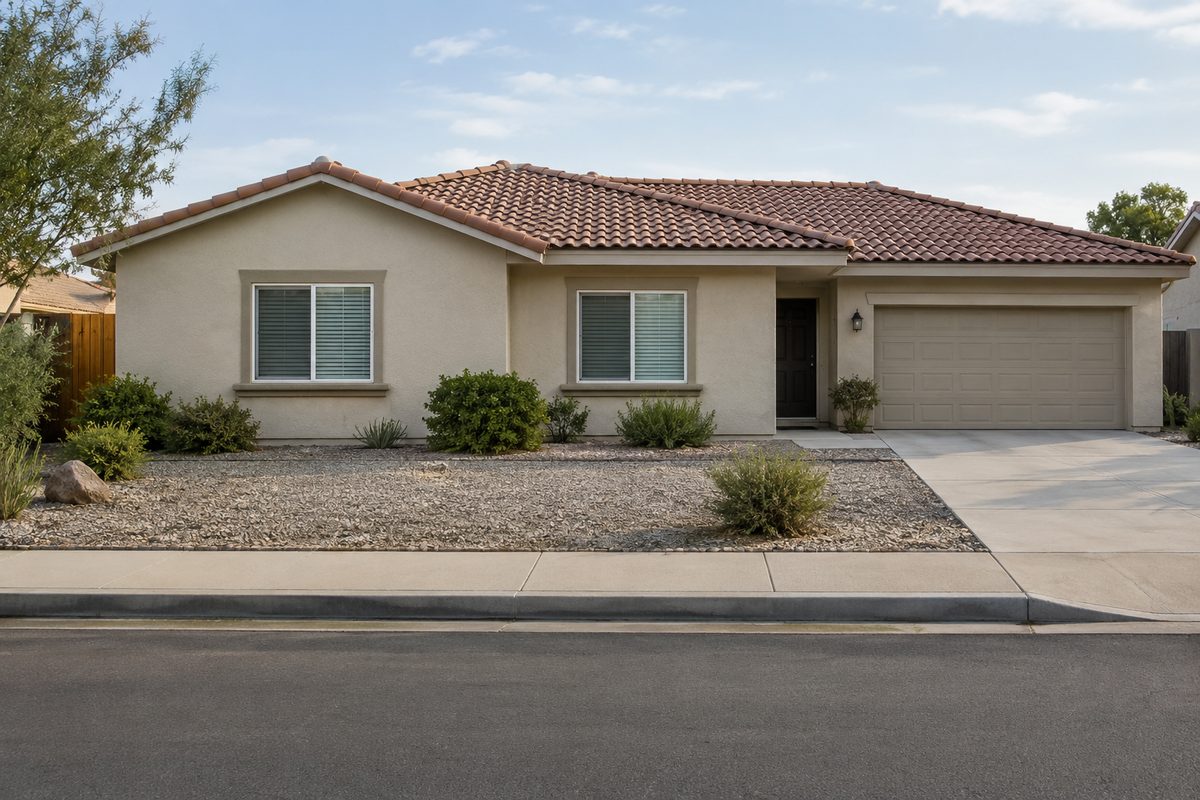
If a California FAIR Plan policy is what stands between your Los Angeles County house and a fire, the number on your next renewal notice is about to change. The Department of Insurance approved an average increase of 29.1% for the state’s insurer of last resort — less than the 35.8% the plan had asked for — and KQED reported it as the largest rate increase the plan has taken in recent history. It arrives on October 15. It reaches you on your own renewal date: the new rates apply as policies renew on or after that day.
You’re wondering whether 29.1% is the number you’ll pay. Probably not, and the reason is the useful part. A statewide average is an average of very different houses, and a FAIR Plan spokeswoman told InsuranceNewsNet that the largest component of the increase sits in the wildfire portion of the premium — so properties at significant wildfire risk will see more than the average, properties at lower risk will see less, and some policyholders will see their premium go down. Hold onto that sentence. The wildfire portion is also the one part of this bill the plan publishes a price list against.
How many of us this is
We pulled the FAIR Plan’s own five-year county table and counted. Los Angeles County held 154,765 FAIR Plan policies as of September 30, 2025, up 37% in a single year from 112,945. Four years earlier the county had 84,363. The statewide total on that same date was 642,010, which makes Los Angeles County close to one policy in four.
It has kept growing since. The plan’s own statistics page puts it at 696,562 policies in force as of June 2026, carrying $768 billion of exposure — a 250% rise in exposure since September 2022. The reason is not mysterious. In its January 7, 2026 accounting of the first year after the Eaton and Palisades fires, the plan said it handled roughly 5,400 claims from those two fires and paid nearly $3.5 billion to policyholders.
The twelve discounts, and what each one asks for
The plan publishes a one-page wildfire hardening discount sheet, last revised in November 2025 and available for policies with an effective date of 11/15/2025 or later. There are twelve discounts, and every one of them is applied to the wildfire portion of the premium — the same portion the October increase is mostly made of. A dwelling policyholder who earns all twelve may see up to 16.4% off that portion. A commercial policyholder who earns all twelve may see up to 13.8%.
Five are about the ground. Vegetation and debris cleared from under decks. Vegetation, debris, mulch and other combustible materials cleared within five feet of the dwelling. Only noncombustible materials in any improvement within five feet, fences and gates included. Combustible sheds and outbuildings more than 30 feet from the dwelling, or as far from it as the lot you control allows. And trees trimmed, brush and debris cleared from the yard, with the property in compliance with state and local defensible-space rules — the sheet names Public Resources Code section 4291.
Five are about the building. A Class-A fire rated roof, which the sheet defines as asphalt fiberglass composition shingles, stone, concrete or clay tile, or metal. Enclosed eaves. Ember- and fire-resistant vents with approved wire mesh covering. Upgraded multi-paned windows, or functional shutters. Six inches of noncombustible material at the bottom of every exterior wall.
The eleventh is a completion discount, offered on top when all ten of those criteria are met at once. The twelfth is a community discount, earned if the structure sits in a Fire Risk Reduction Community on the Board of Forestry’s list or in a Firewise USA site in good standing — and earned at a larger percentage if both are true.
Read that list against your own house and the odds are decent you already have three or four of them and have never told anyone. A clay tile roof is a clay tile roof whether or not it is written on a form. The sheet’s own instruction for claiming any of this is one line: talk to your broker.
The inspection is free, and it comes with a list
This is the part almost nobody uses. Section V of the FAIR Plan’s Plan of Operation — the rulebook the Commissioner approves — says that any person holding an insurable interest in property in California covered by the plan is entitled, on written or oral request, to a prompt inspection of the property by the Inspection Bureau without cost, to determine whether the risk is eligible for coverage or subject to surcharge.
Section VI says what happens next, and this is the sentence worth the phone call. Within three business days of receiving the inspection report, the plan completes an action report advising one of three things: that the risk is eligible, and if surcharged, the improvements necessary before it will provide coverage at an unsurcharged rate; that the risk will be eligible if the improvements noted in the report are made and confirmed by reinspection; or that the risk is not eligible, with the reasons stated.
Two of those three outcomes are a written list of exactly what to fix to pay less. Section V also says a copy of the inspection report goes to the applicant or their agent upon request — which means if you don’t ask, you don’t get it.
What the policy actually covers, which is less than most people assume
The FAIR Plan dwelling policy is a named peril policy, and its own product page is blunt about what that means: it covers only damage caused by the specific causes of loss listed in the policy. Those named perils are fire and lightning, internal explosion, and smoke. Optional coverages cost extra, and the page’s example is vandalism and malicious mischief.
Everything else is a separate purchase. The plan’s Difference in Conditions page says a DIC policy provides coverages that are not available through the California FAIR Plan, such as water damage, theft and liability — and the FAIR Plan does not sell one. That is the gap that surprises people: a burst pipe, a break-in, and a guest’s broken ankle are three things a FAIR Plan policy alone does not answer for. Flood and earthquake are separate again.
There is a ceiling, too. The Plan of Operation sets the maximum limit of liability for dwelling and allied lines at $3 million at one location. Commercial property runs to $20 million per structure with a $100 million aggregate per location, and the businessowners program to a combined $20 million at one location. Above the dwelling ceiling, the rest of the value has to be insured somewhere else.
What can’t be held against you, and what disqualifies you outright
Section IV of the Plan of Operation carries a clause that is older than the fire crisis and still load-bearing: neighborhood or area location, or any hazard beyond the control of the property owner, is not acceptable criteria for declining or surcharging a risk, and does not make a property ineligible. The plan was established by statute in August 1968, in the years when insurers were writing off whole neighborhoods, and it runs on no public or taxpayer money — it is a pool of every insurer licensed to write property business in California, each sharing profits and losses in proportion to its market share.
Eleven categories of property are ineligible outright. The ones most likely to catch a Los Angeles household: a building vacant or unoccupied for longer than a year, unless the vacancy is due to ongoing construction; a building condemned or deemed uninhabitable by a civil authority; a property intended to be demolished; lender-owned property; a residential property used exclusively for storage; and a home capable of being moved that isn’t affixed to a foundation. If your house burned and the lot is now empty, or if the rebuild has stalled past a year without construction underway, that list is the first thing to read.
Substandard conditions are a different matter. Section IV says properties with substandard conditions — substandard construction, heating or wiring, evidence of previous fires, general deterioration, or housekeeping like stored rubbish or flammable materials — remain eligible, but may carry a conditions surcharge. Which is the action report again, from the other direction.
How you get one, and how you’re supposed to leave
You cannot buy this policy yourself. The plan’s application page says a broker performs a diligent search for comprehensive coverage in the traditional market first, and only if coverage isn’t available elsewhere can the broker help determine whether the FAIR Plan is available. Not every broker is registered to work with the plan; there is a broker search on its site. Once a risk is accepted, the Plan of Operation allows premium to be paid in full or in monthly installments, by personal check, cashier’s check, money order, credit card or electronic funds transfer.
And the plan says out loud what it wants to be. The bottom of the discount sheet describes the FAIR Plan as intended to be a temporary safety net, there to support policyholders until coverage from a traditional carrier becomes available, and tells readers a broker may be able to offer options with more comprehensive coverage. Nobody sends you a reminder when that day comes.
The order to do it in
Today: find your renewal date on the declarations page. If it falls on or after October 15, that is the notice that carries the new rate, and everything below should happen before it.
This week: send your broker the discount sheet and go down all twelve, in writing, naming the ones your property already meets. Ask which are already on the policy and which are not. The discounts land on the wildfire portion, which is the portion that is rising.
Same message: request the free inspection, and request a copy of the inspection report. Then hold the plan to three business days for the action report, and treat whatever it lists as the to-do list it is.
Before you renew: find out whether you carry a Difference in Conditions policy, and from whom. If the answer is that nobody is sure, you are carrying fire, lightning, internal explosion and smoke, and nothing else.
Every renewal, without exception: make the broker re-run the diligent search of the traditional market. The FAIR Plan’s own paperwork calls itself temporary. The only way that turns out to be true is if somebody checks.
Rates, dates, coverage terms, discounts, limits and policy counts above were read on September 20, 2026 from the California FAIR Plan’s own published material — its Plan of Operation, its dwelling and Difference in Conditions product pages, its how-to-apply and about pages, its wildfire hardening discount sheet revised November 2025, its key statistics page, its five-year county policy table carrying data through September 30, 2025, and its January 7, 2026 statement on the Eaton and Palisades fires — and from reporting by KQED, InsuranceNewsNet and KMPH on the Department of Insurance’s rate decision. The county policy counts are our own count from the plan’s table. Where a linked source and this page disagree, the source wins.
Comments 0