 ™
™An L.A. Eviction Runs on Fourteen Clocks. Missing the Ten-Court-Day One Ends It Without You.
Ten court days from the day after you're handed the papers. That's the clock that decides whether a judge hears you at all.
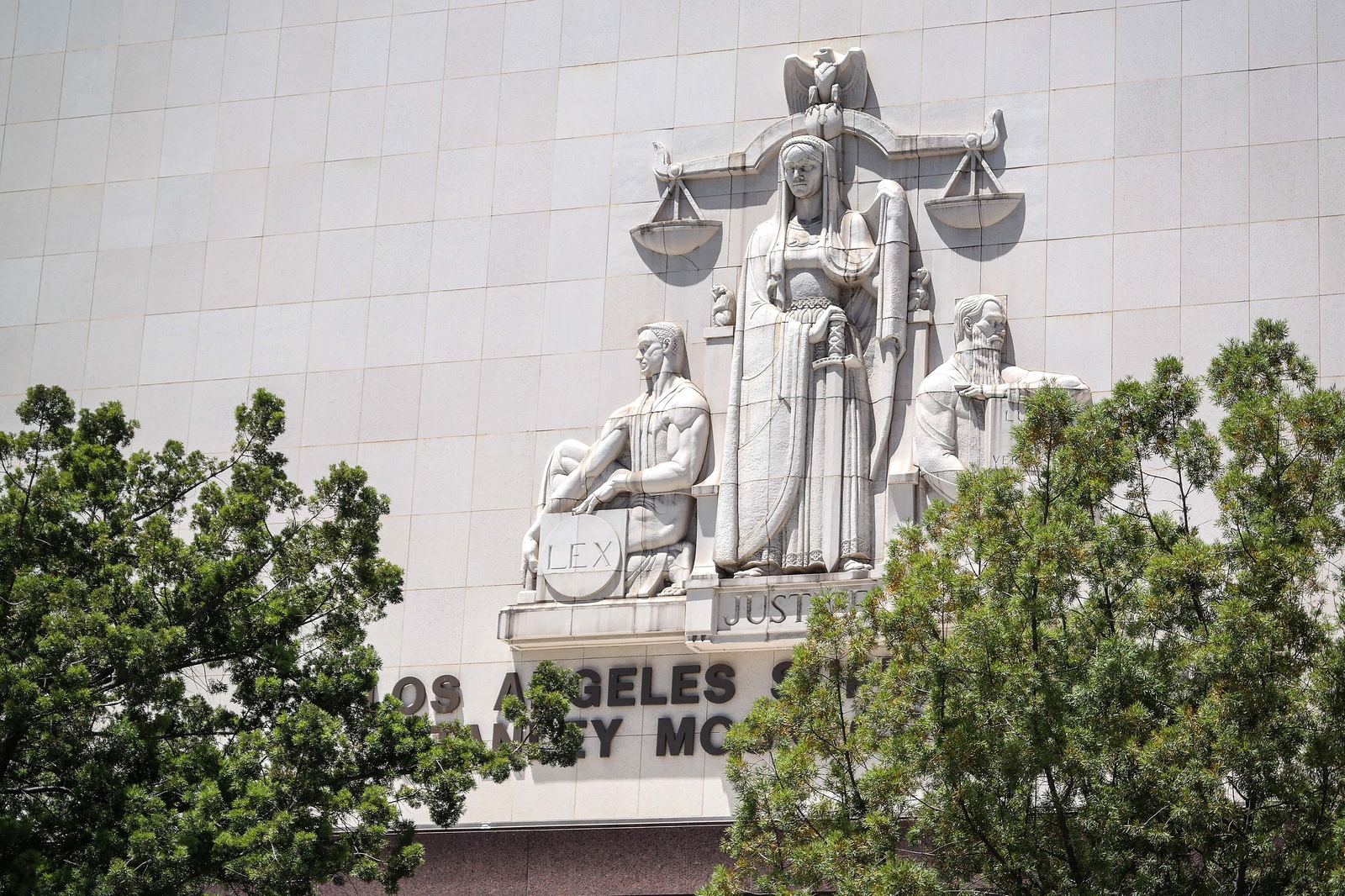
If an eviction has started, one number matters more than the rest of them put together, and it is ten. Ten court days is how long you have to file an answer after somebody hands you the summons and complaint, and it is the deadline that decides whether a judge ever hears your side. Let it pass and your landlord can ask for a judgment without your input at all. Everything else here is a clock too — we counted fourteen, from the notice on the door to the sixty days the court file stays out of public view — but that one is the hinge, and it is shorter than it looks.
One scoping note before the dates, because it changes which half of this page is yours. The court clocks come from California statute and run everywhere in the state. The three-business-day filing rule, the free-lawyer window and the rent threshold come from Los Angeles Municipal Code, and a Los Angeles Municipal Code section reaches the city of Los Angeles and stops at its line. Not an unincorporated pocket with an L.A. mailing address. Not Long Beach, not Pasadena, not any of the county's other cities. We read the statutes and the city's own pages for this piece rather than any summary of them, and every section below links to the one that sets it.
Two rules that come before any clock starts
Both of these are city rules, and both can stop a case before the first day is counted.
The unpaid rent has to be big enough. Since March 27, 2023, a landlord in the city of Los Angeles may not evict a tenant who has fallen behind unless the amount owed is higher than the federal Fair Market Rent for a unit with that many bedrooms — the FMR, the rent figure the U.S. Department of Housing and Urban Development publishes each year for each metro area. The city's own example, on the Just Cause Ordinance page: a tenant in a one-bedroom whose rent is $1,500 can't be evicted over one month of it, because $1,500 is below the one-bedroom FMR. The Los Angeles Housing Department — LAHD, the city agency that regulates rental housing here — says the current HUD values for the Los Angeles–Long Beach–Glendale metro area took effect May 21, 2026. The rule covers units under both city ordinances, which is to say most rental housing in the city.
Two ordinances, in plain English, because the rest of this page uses them. The Rent Stabilization Ordinance, the RSO, is the city's rent-control law and covers most buildings built on or before October 1, 1978. The Just Cause Ordinance, the JCO, has covered nearly everything else since January 27, 2023 — including single-family homes and condominiums. The JCO doesn't cap your rent. It requires the landlord to have a legal reason to end your tenancy, and its protections attach when your first lease ends or after six months, whichever comes first.
The notice has to arrive with a second piece of paper. Under the city's Right to Counsel ordinance, number 188,681, a landlord must attach a Notice of Right to Counsel to any eviction notice served on a tenant. LAHD's program page puts the start date on that requirement at August 20, 2025, and lists the rest: the notice also goes to the tenant at the beginning of a tenancy in the tenant's primary language, and gets posted in a common area of the building. A tenant may raise a landlord's failure to comply as an affirmative defense.
Clock 1 — three days, and the weekend isn't in them
The three-day notice to pay rent or quit is the one most people meet first. Code of Civil Procedure section 1161 writes the count into the statute itself: three days' notice, "excluding Saturdays and Sundays and other judicial holidays." The same exclusion applies to a three-day notice to fix a lease violation. The California courts' self-help guide for tenants states the rule in the reader's language: for pay-or-quit and fix-or-quit notices, don't count weekends or court holidays.
So a three-day notice served on a Thursday does not expire on Sunday. Friday, Monday, Tuesday.
Here is a gap worth naming rather than smoothing over: that page sets out which days are skipped, but it doesn't say whether day one is the day of service or the day after, and the statute's own sentence doesn't settle it either. On the summons, the state's guide is explicit that day one is the day after. On the notice, it isn't. If a single day decides your case, that is a question for a lawyer and not for a calendar.
Clock 2 — thirty days, or sixty
A notice ending a month-to-month tenancy is a different animal, and its length turns on how long you've been there. Civil Code section 1946.1 requires the owner to give at least 60 days' notice — unless the tenant has lived in the dwelling less than one year, in which case 30 days is the floor. One year of residency doubles the notice.
These count differently from the three-day kind. The courts' guide: for move-out-only notices, count every day, weekends and holidays included, but if the last day lands on a weekend or holiday, the deadline moves to the next business day.
In the city, a no-fault move-out costs the landlord more than paper. LAHD's eviction-notices page says a no-fault eviction — owner or family move-in, resident manager, demolition, government order, or pulling the building off the rental market — requires a Declaration of Intent to Evict filed with the department, application fees paid, and relocation assistance paid to the tenant. One amount is written down on the department's own FAQ: where a single-family home is owned by a natural person who owns no more than four dwelling units plus a single-family home on a separate lot in the city, relocation assistance is one month's rent, at the rent in effect when the notice was served.
Clock 3 — the landlord's own three business days
This is the clock almost nobody knows runs, and it runs against the landlord.
Under Los Angeles Municipal Code sections 151.09.C.9 and 165.05.B.5, effective January 27, 2023, a notice terminating a tenancy has to be filed with LAHD within three business days of service on the tenant. The department's pages describe the scope in three slightly different widths — the eviction-notices page says all notices for units under the RSO and the JCO, the Just Cause page says all eviction notices issued to tenants in the city, the renter-protections page says notices for at-fault reasons — and we'd rather print the discrepancy than pick a winner. The three business days are identical in all three.
You can check whether yours was filed. LAHD runs a property look-up that takes an address. The department states the consequence in a single line on the eviction-notices page: a tenant may raise the failure to file as an affirmative defense in an unlawful detainer — the formal name for an eviction lawsuit in California, and the phrase you'll see at the top of the court papers.
Clock 4 — ten court days, and this is the one
Code of Civil Procedure section 1167: when the defendant is served, the response must be filed within 10 days, "excluding Saturdays and Sundays and other judicial holidays." The courts' tenant page on the summons and complaint adds the starting line: day one is the day after the papers were handed to you.
You're wondering whether you read somewhere that this was five days. You did, and it was true until recently. The legislature changed it — the amendment note under section 1167 credits Assembly Bill 2347, Statutes of 2024, chapter 512, effective January 1, 2025 — and a guide, a form packet or a website that still says five days is describing the law as it was two years ago.
What happens if the count runs out is stated plainly by the same page. Your landlord can file papers asking the judge to order you evicted without your input, and after that the sheriff gives you a Notice to Vacate with five days on it. No hearing, no argument, no chance to raise the defenses above.
Clock 5 — twenty days, counted in two different systems
If nobody put the papers in your hand, the count changes shape. When the server leaves them with another person and mails a copy, or tapes them to the door and mails a copy — substituted service and service by posting, in the courts' vocabulary — you have 20 days from the date the server mailed them.
Those 20 days are not one count. The state's guide breaks it in half: the first 10 are regular calendar days, weekends and holidays included, and the tenth day is the day you are considered served. Only then do you start counting 10 court days, which skip Saturdays, Sundays and court holidays. Two counting systems, back to back, inside one deadline — and the second half is the same ten court days everybody else gets.
Clock 6 — fifteen days, if the state has been hiding your address
Section 1167 grants five extra court days where service was completed by mail or in person through the Secretary of State's address confidentiality program — Safe at Home, the program that gives survivors of domestic violence, stalking, sexual assault and related crimes a substitute mailing address. The courts' guide renders that as 15 days, not counting Saturdays, Sundays or court holidays.
Clock 7 — thirty days for a free lawyer, running alongside the ten
The city funds legal representation for tenants sued for eviction, through the Right to Counsel program and its partner, Stay Housed L.A. LAHD's page lists what qualifies you: you live in the city within the program's covered geography, your household income is at or below 80 percent of area median income as HUD defines it for your household size, you don't share a unit with your landlord, and — the clock — you apply within 30 days of receiving the unlawful detainer papers, and are not in default with the court.
Read those last four words next to clock 4, because LAHD puts the collision on the page itself: to avoid a default being entered, you must file an answer with the court within 10 days of service. The lawyer window is 30 days. The window that closes it is 10. The department's own instruction is to apply immediately after receiving the papers regardless of income, at (800) 694-0040 or through Stay Housed L.A.'s legal-help intake
Clock 8 — twenty days to trial
Eviction moves faster than any other civil case in California, and section 1170.5 is why. If the tenant appears, trial has to be held no later than the 20th day after the request to set the trial date is made. Judgment is entered on it, and if the landlord prevails a writ of execution issues immediately on request.
The court may extend that only by agreement of all parties, or after holding a hearing. And an extension has a price attached: where trial slips, the statute directs the court — on a finding that the landlord will probably win — to order the tenant to pay the rent as it comes due into court or into an escrow the court designates, for as long as the tenant stays while the case runs.
Clock 9 — five days on the sheriff's notice, and the lockout nobody else may do
A judgment for possession becomes a writ, and the writ goes to the sheriff. Section 715.010 requires the writ itself to carry the warning: if the property isn't vacated within five days of the copy being served on the occupant — or, where it's posted, five days from service on the judgment debtor — the levying officer removes the occupants and puts the landlord in possession.
Only that officer may do it. Civil Code section 789.3 bars a landlord who intends to end your occupancy from cutting off utilities, changing the locks or using a bootlock, removing outside doors or windows, or carrying your belongings out without your written consent. A landlord who does owes actual damages plus an amount up to $100 for each day the violation continues. The section then says, in as many words, that nothing in it prevents the lawful eviction of a tenant by appropriate legal authorities. That is the deputy holding the writ, and nobody else with a key.
Clock 10 — the stay, which is measured in court days and hours
Five days is short, and the court can add to it. The guide to asking for more time calls it a stay of execution and caps expectations honestly: the judge may give up to 40 more days, and usually gives less. You file a request on pleading paper — there is no court form — bring money to pay for each extra day you're asking for, at the daily rental value listed in the landlord's complaint, tell the landlord, and go to court quickly.
The two deadlines inside it are the ones that trip people. You have to ask the court at least one court day before the move-out date on the sheriff's notice. And you have to tell the landlord or their attorney at least 24 hours before you go in. Earlier is allowed. Later is denial. Some courts also calculate the money owed from the date of judgment rather than from the notice, which makes the number larger, so the guide's instruction is to call your courthouse and ask which way it counts.
Clock 11 — the one with no number on it
If you live in the unit but your name isn't on the judgment, you have a clock that ends at a moment rather than on a date. Under section 1174.3, an occupant who lived there when the case was filed and who wasn't named may object by filing a claim of right to possession, at any time after the writ is served or posted, "up to and including the time at which the levying officer returns to effect the eviction." Filing it counts as a general appearance and carries a court fee. It isn't available if a prejudgment claim of right to possession was properly served on occupants earlier in the case.
Clock 12 — fifteen days for what you left behind
The same writ statute sets the deadline on your property. Anything except a mobilehome left at the unit after the landlord is put back in possession is sold or otherwise disposed of, unless the judgment debtor or other owner pays the reasonable cost of storage and takes the property back no later than 15 days after the landlord takes possession.
Clock 13 — six months to undo a default
If a judgment was entered because you missed the answer deadline or the court date, there is a narrow door back. The courts' set-aside page is blunt that it opens in limited situations — the statutory test in Code of Civil Procedure section 473(b) is "mistake, inadvertence, surprise, or excusable neglect," and the page's own examples are filing the answer a day late by accident, or missing the hearing while in the hospital. You have up to six months after the judgment to file. There is no court form; the motion has to be written in legal format, with an Answer attached if you never filed one, and getting a ruling before the sheriff arrives requires a separate request for a fast decision.
Clock 14 — sixty days on the court file
The last clock decides who can read about this later, and it is the reason speed matters after the case as well as during it. Section 1161.2 tells the clerk to release an eviction file only to a short list: a party or their attorney, a person who supplies the names of a plaintiff and a defendant plus the address including the unit number, a resident who shows proof of residency, or anyone the court authorizes for good cause.
Then the 60 days do their work. The file opens to anyone 60 days after the complaint was filed if the landlord got judgment against every defendant inside those 60 days, and by court order if the landlord wins at trial later than that. Which is the quiet arithmetic underneath a tenant screening report: a case that ended in the landlord's favor fast is a case the public can read. And if a default judgment is set aside more than 60 days after filing, the statute restarts the whole calculation as though the complaint had been filed on the day it was set aside.
Do it in this order
The day a notice appears: photograph it where it was left, with the date. Check the LAHD property look-up to see whether the landlord filed it within their three business days. Check whether the Notice of Right to Counsel was attached to it.
Count the notice the way the rule counts it: pay-or-quit and fix-or-quit skip Saturdays, Sundays and court holidays. Move-out notices count every day and roll forward if the last one lands on a weekend or holiday. Sixty days is the floor once you've been there a year.
The day the summons and complaint arrive: start the ten court days from the next day. Call Stay Housed L.A. at (800) 694-0040 that same day, whatever you earn — the free-lawyer window is 30 days, but it closes the moment a default is entered.
File the answer inside the ten. That filing, and nothing else on this page, is what keeps the default from being entered while the rest is being sorted out.
If a judgment goes against you: the sheriff's notice gives five days. A stay has to be requested at least one court day before the move-out date on it, with the landlord told at least 24 hours before that. Anything left in the unit has to be claimed, and its storage paid, within 15 days of the landlord getting possession.
Comments 0