 ™
™Where an E-Bike Is Legal in L.A. Depends on Its Class Number
Class 3 stops assisting at 28 mph, bars riders under 16, and requires a helmet at every age.
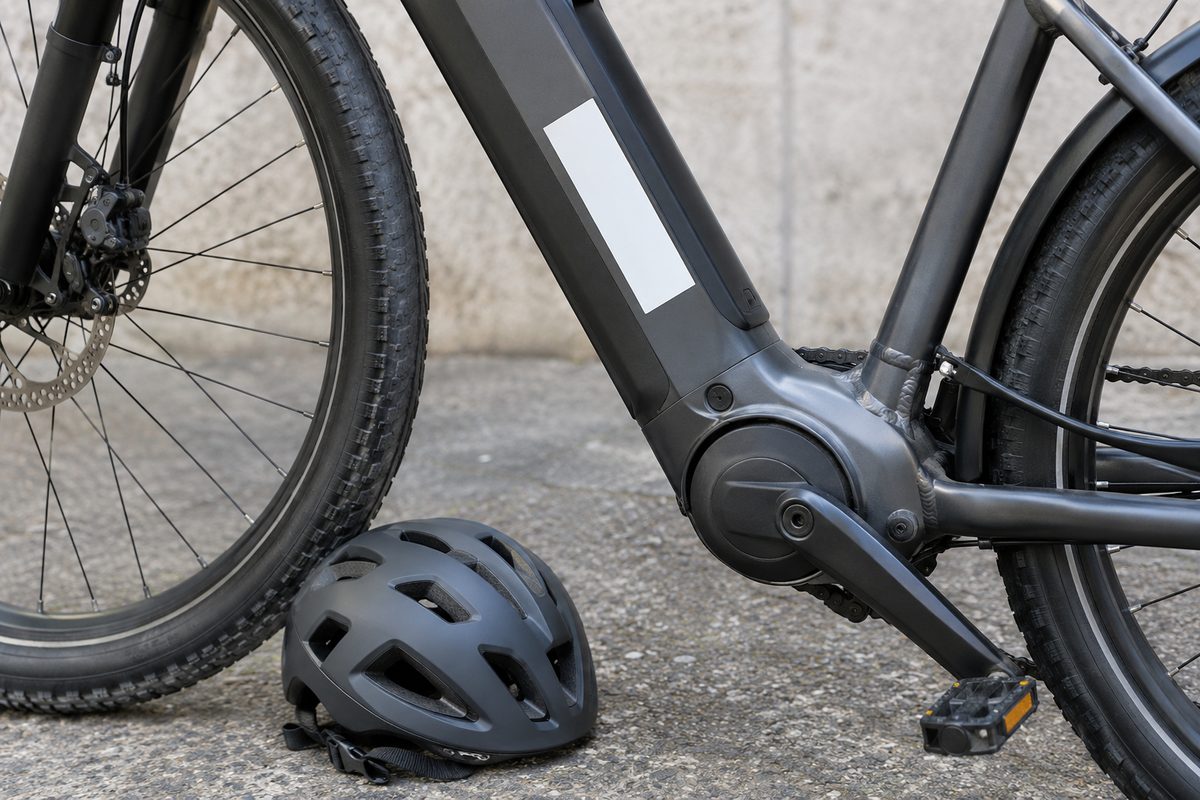
You're wondering whether the bike in your garage is legal on the beach path. The answer starts with a sticker on the frame. California sorts electric bicycles into three classes, and Vehicle Code section 312.5 requires the maker to print the class number, the top assisted speed and the motor's wattage on a permanent label, in Arial, at nine-point type or larger. Find that label before you read anything else, because nearly every rule below hangs off the number on it.
The classes aren't about price or brand. A Class 1 helps only while you're pedaling and quits at 20 mph. A Class 2 has a throttle that can move the bike with your feet still, and it also quits at 20. A Class 3 helps only while you pedal, keeps helping to 28 mph, and has to carry a speedometer. Classes 1 and 3 may also have a walk mode that drives the bike on motor power alone at up to 3.7 miles an hour, which is the one place a pedal-assist motor is allowed to work without your legs.
The same section says what isn't an electric bicycle, and this is the part that catches people who bought something fast. A machine that can do more than 20 mph on motor power alone, or carries more than 750 watts, or has had its pedals taken off, isn't an electric bicycle under state law — and neither is one that's been modified into any of those things. Section 24016 adds two rules on top: anyone who modifies an e-bike in a way that changes its speed has to replace the class label, and selling a product, device or app that can modify an e-bike's speed past its class is illegal.
The three classes, on the same terms
We read the eight Vehicle Code sections that decide this and lined the classes up against the questions a rider actually has: how fast the motor helps, whether there's a throttle, who's old enough, who needs a helmet, and what paperwork it takes.
Class 1 — pedal assist, motor stops at 20 mph. State law sets no minimum age for it. A helmet is required only for riders under 18, which is the rule for every bicycle under section 21212; the helmet has to meet an ASTM or Consumer Product Safety Commission standard, and the fine is capped at $25. Because 312.5 calls an e-bike a bicycle, its rider carries the same rights and duties on the road as any driver under section 21200, stop signs and red lights included.
Class 2 — throttle, motor stops at 20 mph. Same age rules and the same under-18 helmet rule as Class 1. The one legal difference written into 312.5 is the throttle: the motor on a Class 2 "may be used exclusively to propel the bicycle," so the bike can move with nobody pedaling at all. Everything else about where it may go matches Class 1.
Class 3 — pedal assist, motor stops at 28 mph. The restricted one, and the restrictions are specific. Section 21213 says nobody under 16 may operate a Class 3 e-bike, and that every operator and passenger has to wear a fitted, fastened ASTM- or CPSC-rated helmet — at any age, on a street, a bikeway, or any public bicycle path or trail. A passenger in a child seat or a towed trailer is covered by the same sentence. The speedometer isn't optional either; it's in the definition.
What no class requires. You're not registering an e-bike and you're not insuring it. Section 24016 exempts e-bike riders from the Vehicle Code's provisions on financial responsibility, driver's licenses, registration and license plates, all four by name. AB 1909 went further in 2022 and barred local jurisdictions from requiring a bicycle license at all.
There are two stickers to look for now, not one
Senate Bill 1271 rewrote 312.5 effective at the start of last year, and it set a second date that has since arrived. Since Jan. 1 of this year, an electric bicycle, a powered mobility device, or a storage battery for either can't be sold or distributed in California unless it's been tested by an accredited laboratory against a named standard, and unless that lab's logo, wordmark or name and the standard used are permanently affixed to it. The bill names the standards: ANSI/CAN/UL 2849 or EN 15194 for e-bikes, ANSI/CAN/UL 2271 and 2272 for powered mobility devices.
So on anything bought this year there should be two markings, and they do different jobs. The class label tells you where you may ride. The laboratory label is about fire: the same bill orders the State Fire Marshal to adopt fire and electrical safety regulations in the California Fire Code by that date. Rental fleets get the same certification requirement on Jan. 1, 2028. The bill also tells sellers plainly what they may not call a product: a device modified to exceed 20 mph on motor power alone, or to carry more than 750 watts, or to lose its pedals, "shall not be advertised, sold, offered for sale, or labeled" as an electric bicycle.
The sidewalk is the gray zone, and it's a real one
Here the state steps back. Section 21206 lets local authorities regulate the operation of bicycles on pedestrian and bicycle facilities by ordinance, as long as the local rule doesn't conflict with the code. The code writes no sidewalk rule for bicycles itself. It does write one for scooters: section 21235 makes it unlawful to ride a motorized scooter on a sidewalk except as needed to enter or leave adjacent property, a rule that took effect in 2019 and reaches motorized scooters only.
In the City of Los Angeles the ordinance is Municipal Code section 56.15, and every device on its list is human-powered. Its first subsection bars riding a bicycle, unicycle, skateboard, cart, wagon, wheelchair or roller skates on a sidewalk, bikeway or boardwalk "in a willful or wanton disregard for the safety of persons or property" — and the list closes with "any other device moved exclusively by human power." An e-bike isn't moved exclusively by human power.
That gap is not a reading this desk invented. The Westside Regional Alliance of Councils, a coalition of Westside neighborhood and community councils, states it in the background motion it put to its member councils for adoption in May of last year: section 56.15 "has not been updated to include a specific mention of e-bikes." The motion asks the City Council and the mayor to pass an ordinance adding one sentence barring every class of e-bike from sidewalks and boardwalks citywide, and it prints the three subsections the code carries today beside the sentences it wants added. Not one line of the current text mentions an electric bicycle. Until the Council acts, treat the city sidewalk as unsettled rather than permitted, and remember that 21206 means the city next door may already have decided it.
Ocean Front Walk, and the ban that lapsed by accident
One L.A. sidewalk rule is explicit and has been for decades. Section 56.15 bars bicycle and unicycle riding on Ocean Front Walk between Marine Street and Via Marina, with a single carve-out: the bicycle path running alongside it, between Marine Street and Washington Boulevard.
The city used to bar e-bikes from the Venice beach paths too, and the reason it stopped is a drafting accident rather than a decision. The City Attorney's office explained it to the Council in a report dated Sept. 7, 2022, under council file 21-1119: riders had historically been prohibited from the beach paths because e-bikes fell inside the Vehicle Code's definition of "motorized bicycle," and when the Legislature gave electric bicycles a definition of their own in 2016, the old ban stopped reaching them. The report transmitted a draft ordinance that would have added a cross-reference to the new definition and, in its own words, "re-restrict the use of electric bicycles on the Venice Beach bicycle paths."
That isn't what passed. Ordinance 187667, adopted Oct. 26, 2022, approved Nov. 7 and effective Dec. 19 of that year, added the Venice rental rules the report also proposed — vendors within 500 feet of Ocean Front Walk have to hand the device over at least 300 feet inland, and any device displayed outside has to wear an 8.5-by-11 sign in 48-point type reading "This device may not be ridden on Ocean Front Walk and is also subject to other legal restrictions" — and then, in a single sentence, deleted subsection 4 of 56.15 in its entirety. No e-bike cross-reference was added anywhere.
Cross a city line and the pavement changes
State law used to answer the bike-path question itself, and then it handed the question back. Until 2023, as the Legislative Counsel's digest of AB 1909 describes the law the bill replaced, the Vehicle Code prohibited a Class 3 e-bike on a bicycle path or trail, bikeway, bicycle lane, equestrian trail or recreational trail, and separately let a local authority prohibit Class 1 and Class 2 bikes on those same facilities. AB 1909, signed Sept. 16, 2022, cut both halves. It removed the Class 3 prohibition, and it narrowed the local power to equestrian, hiking and recreational trails, which is what section 21207.5 reads as today. The department that runs state parks kept a broader power: it may prohibit any class on any bicycle path or trail in its own jurisdiction. Everything else that bars a class from a path is somebody's local ordinance.
Santa Monica wrote one. The City Council voted on Aug. 28, 2018 to amend the municipal code to prohibit all electric and motorized devices — electric scooters, electric bikes, Segways, motorized skateboards, anything not human-powered — on the Marvin Braude regional beach bike path, on the Santa Monica Pier and in city parks, and the city said so in its own announcement the next day. The same council directed staff to study a speed limit for the path but didn't set one that night. The beach path runs through several cities; each of them writes its own stretch, and nothing on the asphalt tells you where one rulebook ends.
Getting it onto a train, which is easier than the bus
Metro's bikes page allows an electric bicycle on a train if it's the size of a regular bike, and says security personnel may inspect it. Fuel-powered, three-wheeled, tandem and recumbent bikes, anything over six feet long, and all mopeds and trailers aren't allowed on trains at all. The bus is the harder half: Metro says the front racks can't take a motorized bicycle or any bicycle over 55 pounds, which rules out a lot of e-bikes, and the only bike you can carry aboard is a folding one with wheels 20 inches or smaller.
The order to check it in
Read the class label on the frame first. If there isn't one, or the numbers on it exceed 750 watts or 20 mph on motor power alone, what you own may not be an electric bicycle in the eyes of the code, and none of the rules for bicycles apply to it. If the label says 3, nobody under 16 rides it and everyone on it wears a helmet. If it says 1 or 2, the helmet is the law only under 18. On anything bought this year, check for the testing laboratory's mark as well. Then look up the ordinance for the specific city whose pavement you're about to ride, because that's the rule an officer will be holding. In Santa Monica it's already written: no motorized device on the beach path, on the Pier, or in a city park.
Comments 0