 ™
™California's Suit Against Oil Companies Is Frozen Until the Supreme Court Rules
A San Francisco judge paused the case in April, pending the justices' ruling in a Colorado county's suit against Suncor.
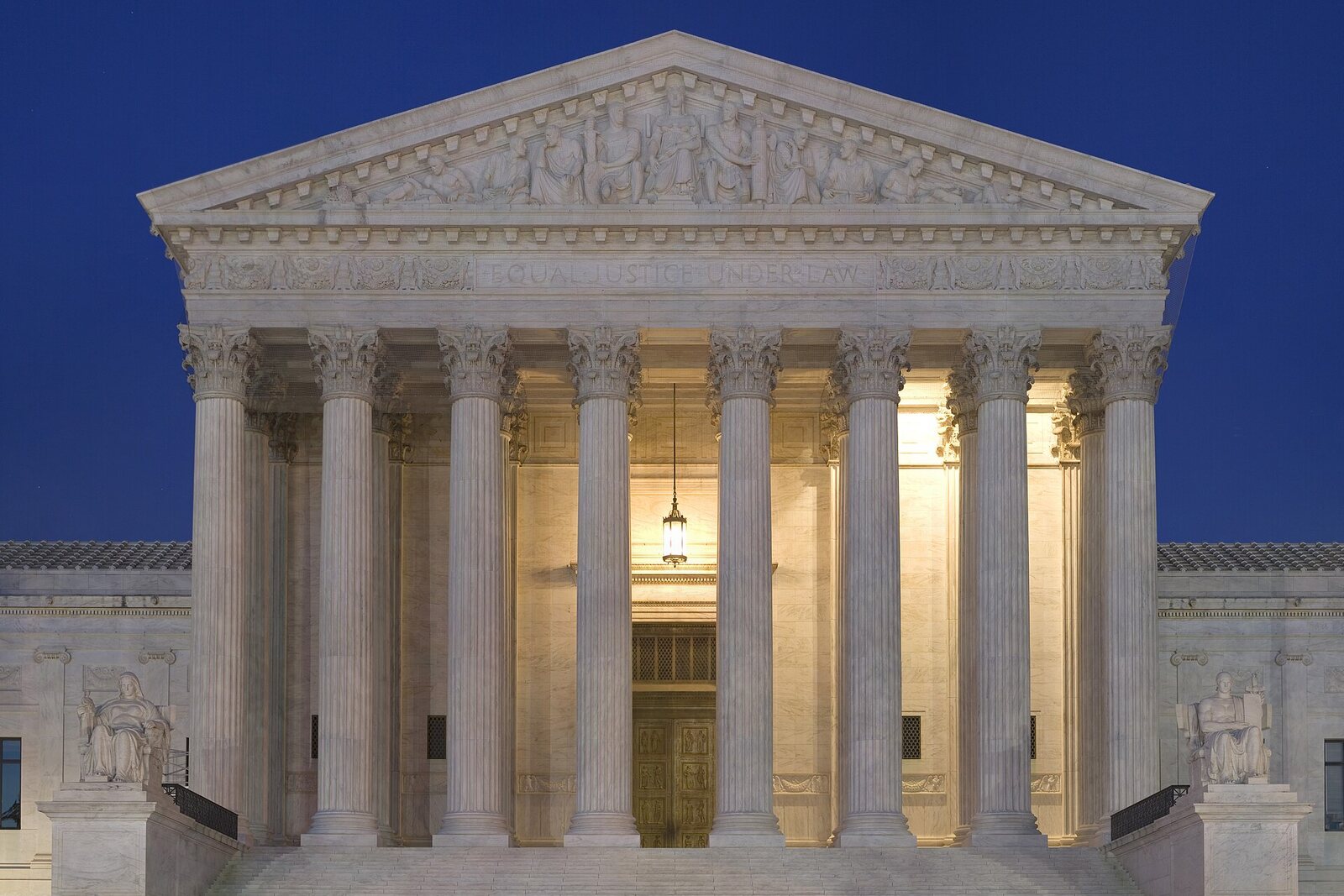
California's lawsuit against five oil companies has been frozen since April. The case it's waiting on is argued in the Supreme Court on Monday, the justices' October calendar shows.
The justices take the bench at 10 a.m. Eastern on the opening day of their term, and the first case on the calendar is Suncor Energy (U.S.A.) Inc. v. County Commissioners of Boulder County, No. 25-170. Boulder County and the city of Boulder sued Suncor and Exxon Mobil in April 2018, saying the companies deceived the public about what burning their products does to the climate.
The question in front of the Court isn't whether that's true. It's whether a state court is allowed to ask.
California's answer to that is already on hold. On April 14 the trial court handling the state's coordinated climate cases stayed every one of them pending the Supreme Court's final resolution of Boulder, finding that the decision “may be dispositive, in whole or in substantial part, of the issues posed in these cases,” the Sabin Center's climate litigation database records. San Francisco Superior Court Judge Ethan Schulman issued the stay, E&E News reported.
Eight sets of plaintiffs sit inside that freeze. Seven are local governments — San Mateo County, Marin County, Santa Cruz County, the cities of Imperial Beach, Santa Cruz and Richmond, and the San Mateo County Flood and Sea Level Rise Resiliency District — coordinated in San Francisco as In re Fuel Industry Climate Cases, CJC-24-005310. The eighth is the state itself.
Attorney General Rob Bonta filed California's complaint in September 2023 against Exxon Mobil, Shell, Chevron, ConocoPhillips, BP and the American Petroleum Institute. It asks for a fund to pay for climate mitigation and adaptation, plus damages and civil penalties, his office said when it sued. The same announcement put the state's climate adaptation bill so far at tens of billions of dollars, with multiples of that still to come.
The companies' defense is jurisdictional. They argue that the Constitution denies any single state the power to regulate emissions that cross its borders, and that the Clean Air Act preempts state tort liability for them in any case, SCOTUSblog's account of the briefing says.
The federal government is arguing alongside them. The solicitor general's office filed a brief on May 21 supporting the oil companies. It argues that Boulder's claims would force multinational producers to pay damages indefinitely and would run into the foreign-relations power the Constitution hands Washington. On Sept. 4 the Court granted the government its own slice of the argument.
California is on the other side of that line. Bonta's name sits on the cover of an amicus brief filed Aug. 3 by Colorado, California and 17 other states, in support of Boulder.
Eight justices will hear it, not nine. On Sept. 28 the clerk of the Court sent counsel a letter saying Justice Samuel Alito would not continue to participate in the case, the docket shows. The letter gives no reason. His financial disclosures list holdings in ConocoPhillips and Phillips 66, both defendants in other climate suits, the environmental-law blog Legal Planet noted.
That leaves three ways out, and each does something different to the files sitting in San Francisco. If the Court holds that federal law bars state-law climate claims, the California suits lose the ground they're built on. If it affirms Colorado, where the state Supreme Court ruled 5-2 for Boulder in May 2025, the stay's condition is satisfied and the coordinated cases go back on a calendar.
And if the eight split four to four, the Colorado judgment stands, binds nobody outside Colorado, and the Supreme Court will have said nothing at all about who pays.
Source: supremecourt.gov.
Comments 0