 ™
™'Mere Presence' Isn't Enough: L.A. Judge Limits ICE Arrests Without Warrants
Agents must now write down the facts showing someone was likely to escape, from Los Angeles to San Luis Obispo County.
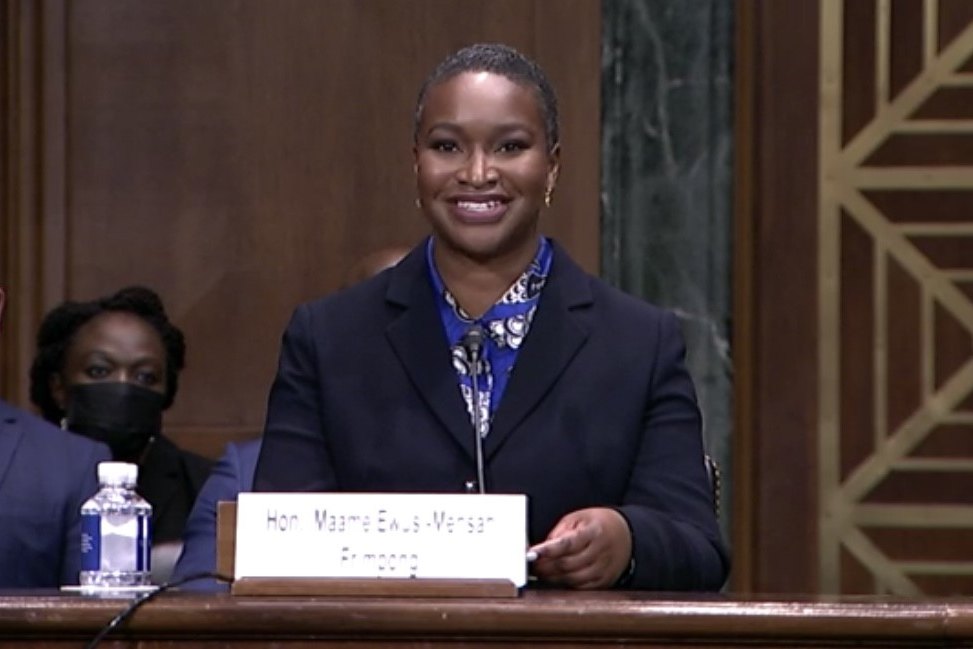
Immigration agents in Southern California can't arrest someone without a warrant unless they first decide the person is likely to flee, a federal judge ordered. The preliminary injunction came from U.S. District Judge Maame Ewusi-Mensah Frimpong, an appointee of President Biden, and reached the public docket on September 16, 2026, the Los Angeles Times reported. It had been filed under seal two weeks earlier, on September 2.
One arrest Frimpong cited happened at a car wash. Agents wrote that the worker was likely to escape because he'd fled from law enforcement. Video of the arrest showed something else, the judge noted: the man hadn't moved between the agent's arrival and the moment the agent called him over. He didn't run, she wrote.
The order tells agents to weigh everything they know at that moment, before they make an arrest without a warrant. They also have to set down the “specific, particularized facts” that gave them probable cause to believe the person would get away before a warrant could be obtained. That documentation has to come before the arrest, not after. Being in the country in violation of immigration law isn't enough on its own, Frimpong wrote.
It covers the Central District of California: Los Angeles, Orange, Riverside, San Bernardino, Ventura, Santa Barbara and San Luis Obispo counties.
Frimpong denied the government's request to stay her order for 14 days.
A Department of Homeland Security spokesperson said Immigration and Customs Enforcement has legal authority to make arrests. Officers question people about their immigration status on reasonable suspicion and arrest on probable cause, the spokesperson said, in keeping with the Fourth Amendment. The Supreme Court has already vindicated the agency on those practices, the spokesperson said.
The ruling grew out of a lawsuit filed in 2025. The American Civil Liberties Union of Southern California, Public Counsel, other groups and private attorneys sued to end stops and arrests they called unlawful, the Times reported. They also sought due-process protections and access to lawyers for people held in immigration detention. The plaintiffs asked for this injunction in June 2026.
Their motion said a review of arrest narratives the government turned over found at least 89 of 113 cases with no escape-risk assessment at all, or with a template in its place — close to 80%.
Daniel Mummolo, a Department of Justice attorney, asked Frimpong at an August 2026 hearing to deny the injunction. There's no warrantless arrest policy, written or unwritten, he told her. Most of the arrest records did address flight risk, he said, and agents weren't required to write it down.
Mayra Joachín, an attorney at the ACLU of Southern California, called it one of the most important rulings yet in the community's effort to stop what she described as a cruel and illegal federal practice of taking people from their families. It should end hundreds of unlawful arrests in the region, she said.
Mohammad Tajsar, another ACLU of Southern California attorney, said warrantless arrests in Washington, D.C., “essentially dried up almost completely” after a similar injunction there. Agents elsewhere have begun carrying field warrants they can sign on the spot, he said, and his side will fight that if it shows up here. Similar practices have been blocked by judges in Portland, Ore., Colorado, Washington, D.C., and the Eastern District of California.
Frimpong didn't require agents to weigh a person's ties to the community. Tajsar said he doesn't see how the analysis works without them — the citizen children, the job, the spouse.
The judge found that two of the plaintiff groups had made a strong enough showing, for now, that the government is following an illegal policy. Whether it actually is gets decided later in the case.
Source: latimes.com, retrieved September 17, 2026.
Comments 0